

Business loan prequalification is a quick, no-hard-hit estimate lenders give you based on soft checks of your credit, revenue, and time in business. It tells you roughly how much you could borrow and on what terms, but it's not a binding offer. Pull together your last two years of tax returns and bank statements, then run a soft prequal to see where you stand.
TL;DR:
- Prequalification offers an estimated loan range, rate, and terms based on soft credit checks, without guaranteeing final approval.
- Lenders assess personal and business credit, revenue stability, time in business, and collateral or guarantees during prequalification.
- Submitting organized documents like tax returns, bank statements, and formation papers speeds up both prequalification and underwriting processes.
- Comparing multiple prequalifications reveals which lenders offer the best terms before applying for a formal loan or preapproval.
- Addressing credit errors, improving cash flow documentation, and timing applications strategically can significantly increase prequalification chances.
Table of Contents
- What Is Business Loan Prequalification, Exactly?
- What Do Lenders Check During Business Loan Eligibility Review?
- What Documents Do You Need for Prequalification?
- Prequalification vs. Preapproval: What's the Difference?
- What Happens After You Prequalify for a Business Loan?
- How to Improve Your Business Financing Prequalification Odds
- How Formosity Funding Supports Business Loan Prequalification
- What Small Business Owners Get Wrong About Prequalification
- Start Your Prequalification With Formosity Funding
- Sources
What Is Business Loan Prequalification, Exactly?
Prequalification is a lender's first-pass screening. You submit basic information, usually revenue figures, time in business, and a soft credit pull, and the lender or marketplace tells you if you're a likely candidate before you commit to a full application.
The soft credit check is the whole point. Unlike a hard inquiry, a soft pull doesn't touch your credit score, which means you can prequalify with several lenders in the same week without hurting your ability to get approved later. That distinction alone is why prequalifying should be your first move, not your last resort.
What comes out of a prequal typically includes:
- An estimated loan amount range, not an exact figure
- Example terms (rate range, repayment length) based on similar borrower profiles
- A general sense of which loan products you'd qualify for, such as a line of credit versus an SBA loan
- No guarantee of final approval, since underwriting still has to verify everything you reported
Think of prequalification as a weather forecast, not a contract. It's directionally useful, but the actual conditions on funding day can shift once a lender verifies your documents.
What Do Lenders Check During Business Loan Eligibility Review?
Lenders look at five things during prequalification, and they weigh them differently depending on the loan type.
Personal and business credit come first. Most banks and SBA lenders want to see good personal credit scores, along with a clean business credit profile if one exists, according to NerdWallet's SBA loan guidance. Personal credit matters even for a business loan because many products, especially SBA loans, hold you personally responsible if the business can't pay.
Revenue and cash flow come next. Lenders want consistent deposits, not just a healthy annual number. For larger loans, many use a payment-to-revenue heuristic, checking whether your monthly loan payment would eat too much of your monthly income, a method PrimeRates describes as similar to a debt-service coverage check.
Time in business matters, but expectations vary. NerdWallet notes many banks and SBA lenders prefer businesses with an established operating history, while online lenders often work with newer businesses at a higher rate.
Collateral and personal guarantees round out the picture:
- SBA-backed loans require an unconditional personal guarantee from anyone owning 20% or more of the business, per SBA Form 148
- Smaller SBA loans may not require collateral at all, though the guarantee requirement still applies, according to SBA's procedural notice on affiliation and lending criteria
- A collateral shortfall alone doesn't automatically sink your application
20% ownership rule: If you or a partner have a significant ownership stake in the business, expect to sign a personal guarantee on any SBA-backed loan, regardless of how the business itself is structured.
Online marketplaces tend to weight cash flow and speed over paperwork depth. Community banks lean harder on relationship history and time in business. SBA preferred lenders sit in between, following the SBA's own SBSS scoring thresholds for small 7(a) loans, which the agency can adjust over time.
What Documents Do You Need for Prequalification?
Most lenders ask for a predictable set of paperwork. Getting it organized before you apply, instead of scrambling after a lender requests it, is the single fastest way to keep the process moving.
- Business tax returns for the last two years
- Bank statements covering the last three to six months
- Profit and loss statement and balance sheet, ideally year-to-date
- Merchant processing statements if you take card payments
- Personal identification, such as a driver's license or passport
- Personal tax returns for the last two years
- Personal financial statement listing your assets and debts
- Business formation documents, including your articles of incorporation or organization
- Ownership list naming everyone who owns 20% or more, since they'll need to sign guarantees
- Contracts or outstanding invoices that show recurring revenue, if applicable
Pro Tip: Scan everything into one folder now, before a lender asks. Redact full account numbers on bank statements and Social Security numbers where the form doesn't specifically require them. It shaves days off underwriting and keeps your data safer in transit.
Prequalification vs. Preapproval: What's the Difference?
Preapproval is a step beyond prequalification. It involves a deeper review, sometimes a hard credit inquiry, and results in a conditional commitment that's much closer to a real offer.
- Prequalification gives you a rough range using self-reported information and a soft credit check
- Preapproval verifies your documents more thoroughly and often includes specific rate and term commitments
- Pursue preapproval first when you're eyeing a specific purchase, like commercial real estate or equipment, where sellers want proof of financing before negotiating
- Stick with prequalification when you're comparison shopping, since running multiple soft prequals won't ding your credit the way multiple hard preapproval applications can
The smart sequence: prequalify with several lenders to see who offers the best range, then move to preapproval only with the one or two that look strongest.
What Happens After You Prequalify for a Business Loan?
Timelines vary sharply by lender type. Online marketplaces can return prequal results in minutes and fund approved loans in a few business days. Community banks often take one to two weeks just to get through initial review. SBA loans, especially standard 7(a) loans, can take several weeks to a few months given the underwriting layers involved.
Once you clear prequalification, here's the typical sequence:
- You receive a conditional offer outlining estimated rate, term, and amount, contingent on document verification
- You submit full documentation, including anything not required at the prequal stage
- Underwriting verifies everything, checking SBSS scores for smaller SBA loans and confirming collateral value if applicable
- The lender issues final terms, which may shift slightly from the conditional offer if verification turns up discrepancies
- You sign and fund, with guarantee documents required from any 20%-plus owner
The most common bottlenecks are missing tax returns, SBSS score issues on SBA loans, and collateral valuations that take longer than expected. Once you have conditional offers in hand, compare them side by side before signing anything.
How to Improve Your Business Financing Prequalification Odds
A few targeted moves before you apply can change the range a lender offers you, sometimes significantly.
Fix your credit first. Pull your personal and business credit reports and dispute any errors immediately. Errors on credit reports are common enough that this single step can bump your score into a better lending tier before you even apply.
Clean up your cash flow story. Lenders read bank statements for consistency, not just totals. Moving irregular deposits into a predictable pattern over a couple of months, and keeping your average daily balance from dipping too low, can improve how a lender scores your revenue stability.
Time your application deliberately. If your business just had a slow quarter, waiting six to eight weeks until stronger months show up on your bank statements often beats applying immediately. Lenders weigh recent months heavily.
Shop prequalifiers safely. Because prequalification relies on soft credit checks, comparing offers from a marketplace alongside a bank or SBA lender costs you nothing in credit score. Compare total cost of capital, not just the headline rate, factoring in fees and repayment length.
- Dispute credit report errors before applying
- Smooth out deposit patterns for two to three months, if you can
- Delay applying after an unusually weak revenue month
- Compare at least two or three prequal offers before choosing a lender
Pro Tip: If two lenders quote similar rates but different terms, calculate the total dollar cost over the full repayment period. A slightly higher rate over a shorter term sometimes costs less overall than a lower rate stretched out longer.
How Formosity Funding Supports Business Loan Prequalification
Formosity Funding runs prequalification through soft credit checks, so you can see estimated offers without risking your score. The platform matches your profile against a nationwide network of lenders, including SBA-capable partners, and surfaces real conditional offers rather than generic rate ranges.
What sets the process apart:
- Instant prequalification with no impact on your credit score
- Matching across working capital, lines of credit, SBA loans, equipment financing, and commercial real estate products
- Dedicated funding specialists who walk you through document requirements before you submit a full application
- A single intake that routes your profile to multiple lenders instead of forcing separate applications
What Small Business Owners Get Wrong About Prequalification
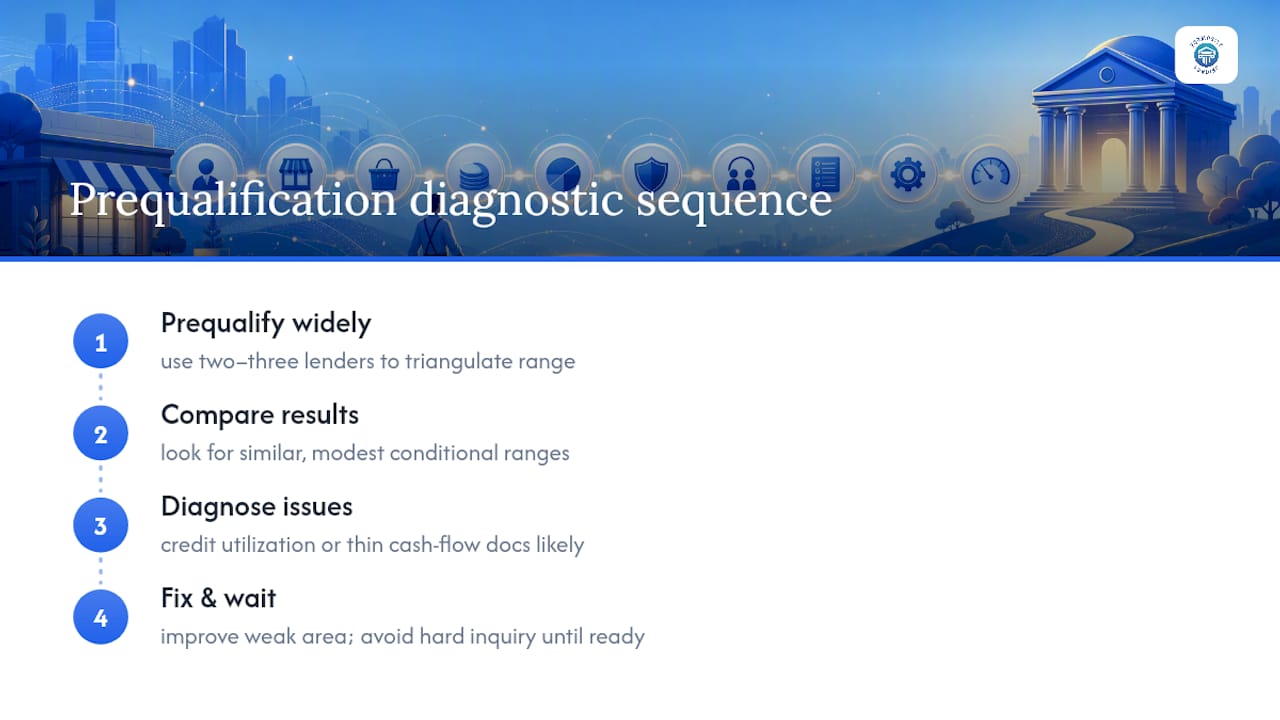
Most advice on this topic treats prequalification as a formality, a box to check before the "real" application. That framing undersells it. A prequal result is diagnostic information. If three lenders come back with similar, modest ranges, that's a signal to fix something, usually credit utilization or thin cash flow documentation, before you burn a hard inquiry on a full application that gets declined.
The conventional wisdom also overweights the definition and underweights the mechanics. Knowing what prequalification means matters less than knowing that a 20% owner has to sign a personal guarantee, or that your last two bad months on a bank statement can shrink your offer more than a mediocre credit score does. Readers don't need another explainer. They need the checklist and the sequencing.
My honest read: prepare your documents like you're already approved, prequalify with two or three sources to triangulate a realistic range, and only then move to full applications. Skipping straight to one lender's application, without comparing conditional offers first, is the single most avoidable mistake I see small business owners make.
— Alvin
Start Your Prequalification With Formosity Funding
Formosity Funding gives you a faster path than applying lender by lender on your own. Instead of filling out separate applications and risking multiple hard inquiries, you run one soft prequalification and get matched against a nationwide network of lenders in minutes.
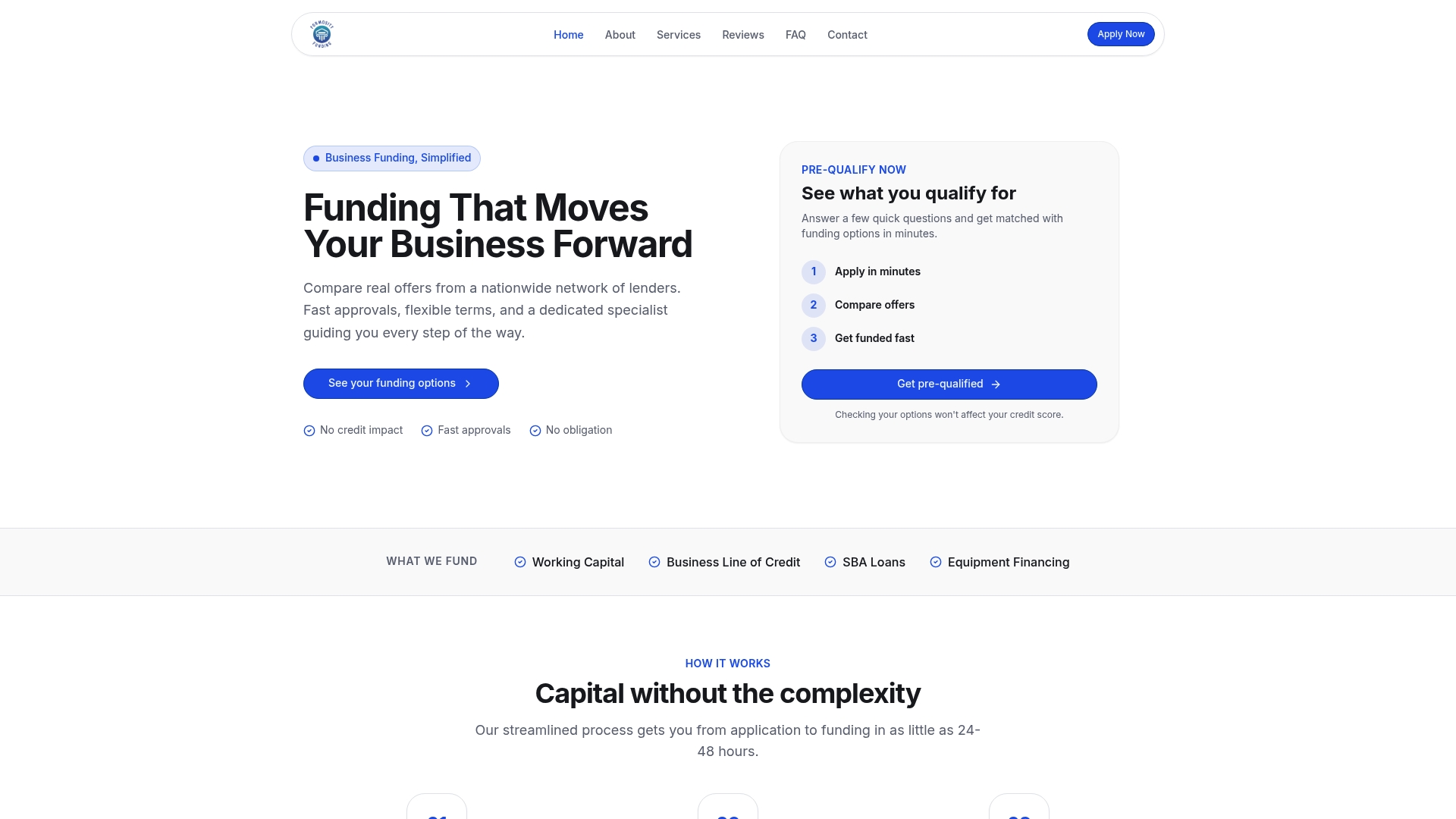
Once you're matched, a dedicated funding specialist walks you through which conditional offers fit your situation, whether that's working capital, an SBA loan, or equipment financing. There's no cost and no credit impact to see what you qualify for. Visit the business funding options page to start your prequalification and compare real offers side by side before you commit to a full application.
Sources
The SBA rules and lending criteria referenced throughout this guide come from primary and industry sources: