

If you need short-term flexibility and want to preserve cash, lease. If you want ownership and maximum upfront tax write-offs, finance. That's the short answer, and it holds for most small businesses in 2026.
- Lease when: equipment turns over quickly, cash flow is tight, you want bundled maintenance, or you'd rather deduct payments as rent than deal with depreciation schedules.
- Finance when: the equipment has a long useful life, you want to build equity, or you plan to claim Section 179 or bonus depreciation to front-load your tax deductions in year one.
Two authoritative anchors shape this decision: IRS guidance on what separates a true lease from a conditional sales contract (including Rev. Rul.
Key Takeaways
For most small businesses, the lease-vs-loan decision comes down to one question: do you need to own the asset, or do you just need to use it?
| Point | Details |
|---|---|
| Lease for short-term use | Choose a lease when equipment turns over in three years or less, cash is tight, or obsolescence risk is high. |
| Finance for ownership and tax benefits | A loan gives you Section 179 and bonus depreciation eligibility, making it the stronger choice for long-lived assets and high-income years. |
| 2026 bonus depreciation is permanent | Notice 2026-11 made 100% first-year depreciation permanent for qualifying property acquired after January 19, 2025, strengthening the case for financing. |
| Run the total-cost model | Compare after-tax cash outflows over your actual holding period, including residual/buyout, interest, and placed-in-service timing. |
| Formosityfunding speeds the comparison | Pre-qualify with no credit impact and receive multiple real equipment financing offers through Formosityfunding's lender marketplace. |
Table of Contents
- What's the difference between an equipment lease and a loan?
- How do equipment loans work for small businesses?
- How do equipment leases work, and why does the IRS "true lease" test matter?
- What U.S. tax rules actually shift the lease-vs-loan decision in 2026?
- A simple worked example: leasing vs. buying a $50,000 piece of equipment
- Questions to ask before you sign a lease or loan agreement
- What terms and timelines should you expect?
- Where can you find equipment financing in the U.S.?
- What small-business owners usually get wrong about this decision
- Formosityfunding connects you to competitive equipment financing offers fast
- Sources
What's the difference between an equipment lease and a loan?
| Dimension | Equipment Loan | Equipment Lease |
|---|---|---|
| Legal ownership | You own it from day one | Lessor owns it; you have right-to-use |
| Tax treatment | Depreciation + interest deduction; Section 179 / bonus depreciation eligible | Payments deducted as rent (operating lease); finance lease may allow depreciation |
| Monthly payment | Higher (includes principal paydown) | Lower; minimal or no down payment |
| Total cost | Lower if held long-term; no residual | Higher if you buy out at FMV; lower if you return |
| Typical term | 3–7 years | 1–5 years; renew, return, or buy at end |
| Balance sheet | Asset + liability recorded | Operating lease: off-balance-sheet (GAAP); finance lease: on-balance-sheet |
| Maintenance/residual risk | You bear all maintenance and resale risk | Lessor bears residual risk (operating); wear-and-tear fees apply |
The bottom line: loans cost more upfront but often cost less over the full holding period, especially when accelerated depreciation is in play. Leases cost less month-to-month but can carry hidden end-of-term exposure.
How do equipment loans work for small businesses?
A loan buys the equipment outright. You're the legal and tax owner from the moment the deal closes, which means the asset sits on your balance sheet alongside the debt used to acquire it.
Common loan structures
Term loans and equipment notes are the most common forms. You borrow a fixed amount, repay it over an agreed schedule (typically 3–7 years), and each payment splits between principal and interest. The lender often takes a security interest in the equipment itself, which reduces collateral requirements compared to unsecured debt.
SBA 7(a) and SBA 504 loans are worth considering when you need longer terms or lower down payments than a conventional lender will offer. The SBA Lender Match tool connects you with participating lenders and is a practical first stop if you're not sure whether you qualify for an SBA-backed option.
Ownership and depreciation
Because you own the asset, you can depreciate it under IRS Publication 946, claim a Section 179 deduction to expense the full cost in year one (subject to annual limits), or take bonus depreciation under Notice 2026-11. All of these flow through Form 4562 on your tax return. The interest portion of each payment is also deductible as a business expense.
What lenders look at
Underwriters focus on cash flow coverage (your debt-service coverage ratio, or DSCR), business credit history, time in business, and the age and condition of the equipment being financed. Most conventional lenders want at least two years of operating history and will ask for a personal guarantee from owners with significant equity stakes.
Loans usually win when:
- The equipment has a useful life of five years or more.
- You want to build equity and eventually own the asset free and clear.
- You plan to claim Section 179 or bonus depreciation to maximize first-year deductions.
- The equipment holds its value well and resale is a realistic exit.
Pro Tip: Ask your lender for the amortization schedule before signing. The interest front-loading on a 60-month note can be significant in years one and two, and knowing the exact split helps you model your actual after-tax cost.
How do equipment leases work, and why does the IRS "true lease" test matter?
A lease gives you the right to use equipment, not ownership. That distinction sounds simple, but it drives everything from your monthly payment to how the IRS treats your deductions.
Operating vs. finance leases
An operating lease functions like a rental. Payments are lower, the lessor retains ownership and residual risk, and you return the equipment at the end of the term. Under GAAP, operating leases are generally off-balance-sheet, though ASC 842 requires a right-of-use asset and liability for most leases regardless.
A finance lease (formerly called a capital lease) is closer to ownership. The present value of payments covers most of the asset's value, and you typically have a bargain purchase option at the end. Under GAAP, finance leases are on-balance-sheet, and for tax purposes the IRS may treat them as conditional sales contracts rather than true leases.
End-of-term options
Most leases offer three paths at expiration: return the equipment, renew the lease, or purchase at fair market value (FMV). Some leases include a bargain purchase option at a nominal price (often $1). That last structure is where IRS scrutiny intensifies.
The IRS recharacterization risk
The IRS determines whether an agreement is a true lease or a conditional sales contract based on the substance of the deal, not the label on the contract. Under Rev. Rul. 55-540, the IRS looks at factors including:
- Whether total payments approximate the purchase price of the equipment.
- Whether the lessee has a bargain purchase option at a nominal price.
- Whether payments are designated as building equity rather than rent.
- Whether the lessee bears the risk of loss or gain on the asset's value.
- Whether payments materially exceed fair rental value for comparable equipment.
If the IRS recharacterizes your lease as a conditional sale, your rental deductions disappear and you're left with depreciation instead, potentially in a different year than you planned.
Leases usually win when:
- Equipment becomes obsolete quickly (technology, medical devices, vehicles).
- Cash is tight and a lower monthly payment matters more than ownership.
- The lessor bundles maintenance, insurance, or upgrades into the payment.
- You have no intention of keeping the equipment past the lease term.
Watch for wear-and-tear charges and early termination fees in the fine print. These can add thousands of dollars to your actual cost if you return equipment in less-than-perfect condition or need to exit the lease before the term ends.
The equipment finance industry supports more than $1.3 trillion in U.S. economic activity annually, which means there is no shortage of lenders and lessors competing for your business. That competition is leverage you should use.
What U.S. tax rules actually shift the lease-vs-loan decision in 2026?
Tax timing is often the deciding factor, and 2026 is a particularly important year to get this right.
The core contrast: a true lease lets you deduct payments as rent in the year paid. A loan or conditional sale gives you depreciation plus an interest deduction, with the option to front-load the entire cost in year one through Section 179 or bonus depreciation.
IRS classification: true lease vs. conditional sale
The IRS classifies agreements based on economic substance, not contract labels. A true lease produces rental deductions. A conditional sales contract produces depreciation and interest deductions. The Rev. Rul. 55-540 factors (covered in the lease section above) are the IRS's primary analytical tool.
One critical nuance: even if your accountant records a lease as an operating lease under GAAP, the IRS can still treat it as a conditional sale for tax purposes. Run the tax classification analysis separately from your accounting treatment. They are not the same test.
Notice 2026-11 and permanent bonus depreciation
Notice 2026-11 implements the One, Big, Beautiful Bill's permanent 100% additional first-year depreciation for qualifying property acquired after January 19, 2025. If you finance equipment and are treated as the tax owner, you can potentially deduct the entire purchase price in the year you place the asset in service. That's a significant shift from the phased-out bonus depreciation schedule that applied in prior years.
Section 179 and Form 4562
Section 179 lets you expense qualifying equipment costs in the year of purchase, subject to annual limits and a taxable income cap. It's available only to owners, not lessees under a true lease. Both Section 179 and bonus depreciation are reported on Form 4562. Publication 946 details which property qualifies and how to calculate the deduction.
Who benefits most from accelerated depreciation?
- Businesses with high taxable income in the purchase year.
- Businesses that expect lower income in future years (making front-loaded deductions more valuable now).
- Businesses buying equipment with a long depreciable life where spreading deductions over 5–7 years would be less efficient.
Leases, by contrast, deliver steady, predictable deductions over the lease term — which can actually be preferable if your income is low now and expected to rise, making future deductions more valuable.
Pro Tip: The "placed in service" date controls which tax year you claim accelerated depreciation. If you're financing equipment late in the calendar year, confirm the installation date with your vendor before closing. A December 31 delivery that slips to January 2 costs you an entire year of deductions.
This article provides general information, not tax advice. Consult a qualified tax professional before making elections under Section 179, bonus depreciation, or any other provision.
A simple worked example: leasing vs. buying a $50,000 piece of equipment
Tax timing and cash flow are the two levers. Here's how they play out on a concrete example.
The winner depends on your tax rate and how long you keep the equipment. In this example, financing wins on total after-tax cost when bonus depreciation is available; leasing wins on year-one cash flow.
Assumptions:
- Equipment purchase price: $50,000
- Loan: 7% interest rate, 5-year term, 10% down ($5,000), monthly payment approximately $891
- Lease: $950/month, 3-year operating lease, FMV buyout option at end (estimated $12,000)
- Tax rate: 25% (combined federal/state estimate)
- Bonus depreciation election: 100% in year one under Notice 2026-11 (loan scenario only)
Reading the numbers: The loan scenario generates more total deductions because bonus depreciation lets you write off the full $50,000 in year one. The lease produces smaller, steadier deductions with no buyout cost if you return the equipment.
If you keep the equipment past year five, the loan wins clearly because you own an asset with remaining value. If the FMV buyout on the lease comes in higher than $12,000, the lease's total cost rises fast.
To run this yourself:
- Get the exact loan amortization schedule from your lender.
- Get the lease payment, term, and estimated FMV buyout in writing.
- Apply your marginal tax rate to each year's deductions.
- Compare after-tax cash outflows over your expected holding period.
- Add residual value (what you'd sell the equipment for) to the loan column.
The cells that drive the result: residual/buyout price, your marginal tax rate, the interest rate, and the placed-in-service date for depreciation purposes.
Questions to ask before you sign a lease or loan agreement
The single most important question is whether you need to own the equipment or just use it. Practitioners consistently frame the lease-vs-loan choice as "need to use vs. need to own." Everything else flows from that.
Run through this checklist with your CFO or CPA:
- Intended useful life. Will you use this equipment for three years or ten? Loans favor longer holds; leases favor shorter ones.
- Obsolescence risk. Does this category of equipment change rapidly (software, imaging equipment, EVs)? If yes, the ability to return and upgrade at lease end has real value.
- Cash availability. Do you have a better use for the down payment a loan requires? Preserving capital for inventory, payroll, or growth may outweigh ownership benefits.
- First-year tax deduction priority. Is your taxable income high enough this year to absorb a large Section 179 or bonus depreciation deduction? If not, the deduction's value is limited.
- Revenue stability. Can you reliably cover a higher loan payment for five years? Leases offer lower payments and more flexibility if revenue is uncertain.
- Balance-sheet and covenant effects. Do your existing loan covenants restrict additional debt? An operating lease may keep the liability off-balance-sheet under certain structures.
- Maintenance capacity. Do you have in-house maintenance capability, or does bundled service from a lessor reduce your operational risk?
- End-of-term plans. Do you want to own the equipment outright, return it, or upgrade? Know this before you sign.
- Buyout price reasonableness. If the lease includes a purchase option, is the price genuinely at FMV, or is it a bargain option that could trigger IRS recharacterization?
- Early-termination exposure. What does it cost to exit the lease in year two if your business changes? Get the exact penalty in writing.
Red flags in lease contracts:
- A buyout option priced at $1 or another nominal amount (strong IRS recharacterization signal).
- Total payments that equal or exceed the equipment's purchase price.
- Vague language about who is responsible for maintenance, repairs, or upgrades.
- Wear-and-tear definitions that are broader than standard industry practice.
- Early termination fees that equal several months of remaining payments.
Small businesses often underestimate how much maintenance and residual clauses drive end-of-term costs. Always ask the lessor for historical examples of what customers actually paid at lease end.
What terms and timelines should you expect?
Pre-qualification for equipment financing can happen in hours. Full underwriting, from application to funded deal, typically runs 2–5 business days for straightforward transactions and 2–4 weeks for larger or more complex deals requiring full financial review.
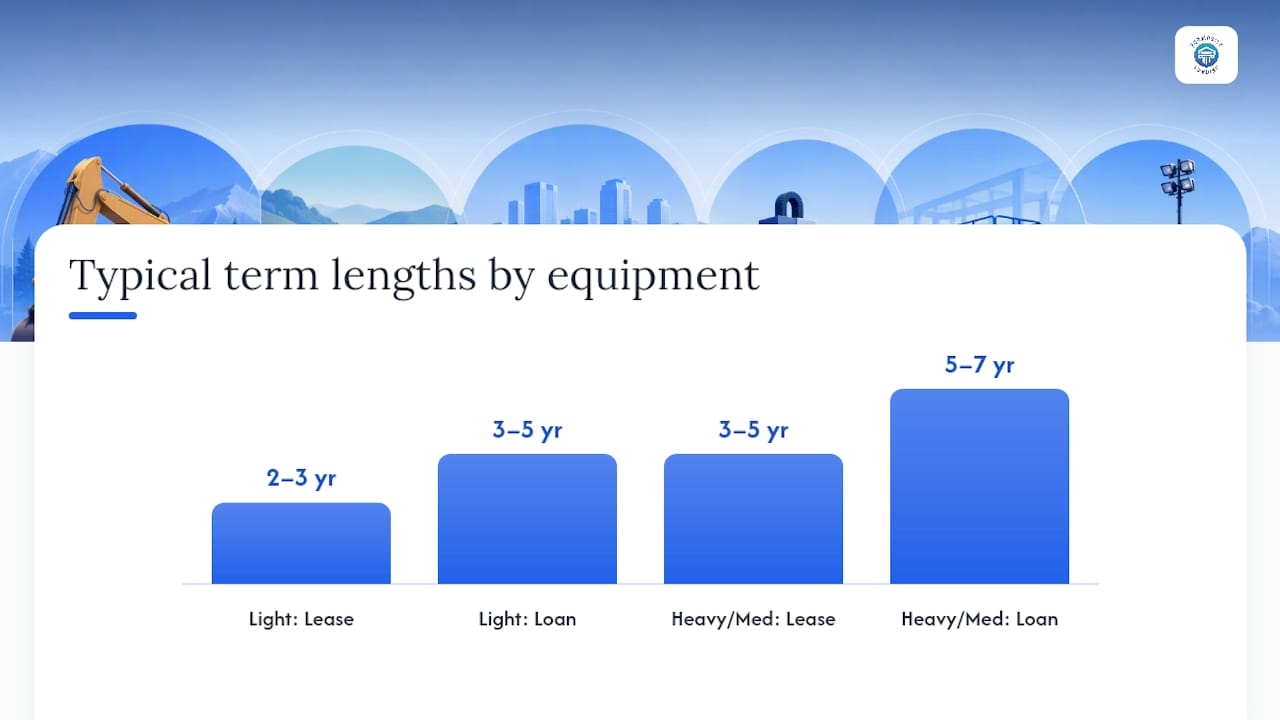
Typical term lengths by equipment type:
- Light vehicles and technology: 2–3 year leases; 3–5 year loans.
- Heavy machinery and manufacturing equipment: 5–7 year loans; 3–5 year leases.
- Medical and imaging equipment: 3–5 year leases (obsolescence-driven); 5–7 year loans.
Common buyout structures:
- Fair market value (FMV): Price set at end of term based on appraised value. Protects you from overpaying but introduces uncertainty.
- $1 buyout: Nominal purchase at lease end. Treated by the IRS as a conditional sale; depreciation rules apply from day one.
- Fixed-price buyout: A set purchase price agreed at signing. Predictable, but verify it's reasonable relative to expected FMV.
Documents most lenders and lessors will ask for:
- Two to three years of business tax returns and financial statements.
- Recent bank statements (typically three to six months).
- A formal equipment quote or invoice from the vendor.
- Proof of business registration (articles of incorporation or equivalent).
- Certificate of insurance naming the lender or lessor as loss payee.
One negotiation point most borrowers overlook: the residual value assumption in a lease is negotiable before signing. A lower residual means higher monthly payments but a cheaper buyout. A higher residual means lower payments but a larger check at the end. Neither is inherently better; it depends on whether you plan to buy.
Where can you find equipment financing in the U.S.?
Marketplaces are the fastest route when you want multiple competitive offers side-by-side. Direct lenders can be better when you have an existing banking relationship or need highly specialized equipment financing.
Your main channels:
- Regional and community banks: Competitive rates for established customers with strong credit. Slower approval process; relationship-dependent.
- National equipment lenders: Specialize in specific asset classes (construction, medical, transportation). Deep expertise but narrower product range.
- Captive finance arms: Manufacturer-affiliated lenders (think dealer financing). Convenient and sometimes subsidized, but limited to that manufacturer's equipment.
- Independent lessors: Flexible structures and faster decisions. Often more willing to work with newer businesses or non-standard equipment.
- SBA-backed options: The SBA Lender Match tool connects you with lenders offering SBA 7(a) and 504 loans, which can provide longer terms and lower down payments for qualifying businesses.
- Marketplaces like Formosityfunding: Best when you want to compare multiple real offers quickly, have limited time, or want a dedicated specialist to guide you through the process without impacting your credit score during pre-qualification.
Use a marketplace when your credit profile is mixed, when you're not sure which lender type fits your equipment category, or when speed matters. Approach a direct lender when you have an established relationship and already know the terms you want.
What small-business owners usually get wrong about this decision
Most owners treat the lease-vs-loan question as a math problem when it's really a planning problem. The numbers matter, but the timing of when you need the deduction, whether you'll actually use the equipment for its full depreciable life, and what your balance sheet can absorb at signing often matter more.
My practical rule of thumb: if you'll use the equipment for three years or less, lean toward leasing unless the tax benefit from bonus depreciation is so large it changes the after-tax math dramatically. For five years or more, financing almost always wins on total cost, especially now that permanent bonus depreciation under Notice 2026-11 lets you write off the full purchase price in year one.
The most common misstep I see: a business owner finances a $40,000 piece of technology equipment on a five-year loan because they want to "own it," then replaces it in year three because a better version came out. They've paid interest for three years, taken depreciation they can't fully use, and now have a used asset worth a fraction of the loan balance. A three-year lease with a return option would have cost less and left them free to upgrade. The obsolescence question isn't hypothetical — answer it honestly before you sign.
One more thing: don't assume your bank's first offer is the best one. The equipment finance market supports more than $1.3 trillion in annual activity, which means there are dozens of lenders competing for your deal. A marketplace like Formosityfunding lets you see multiple real offers without a hard credit pull, which is worth doing before you commit to any single lender's terms.
Formosityfunding connects you to competitive equipment financing offers fast
Getting the right equipment financing offer shouldn't require calling six lenders and waiting a week for each one to respond.
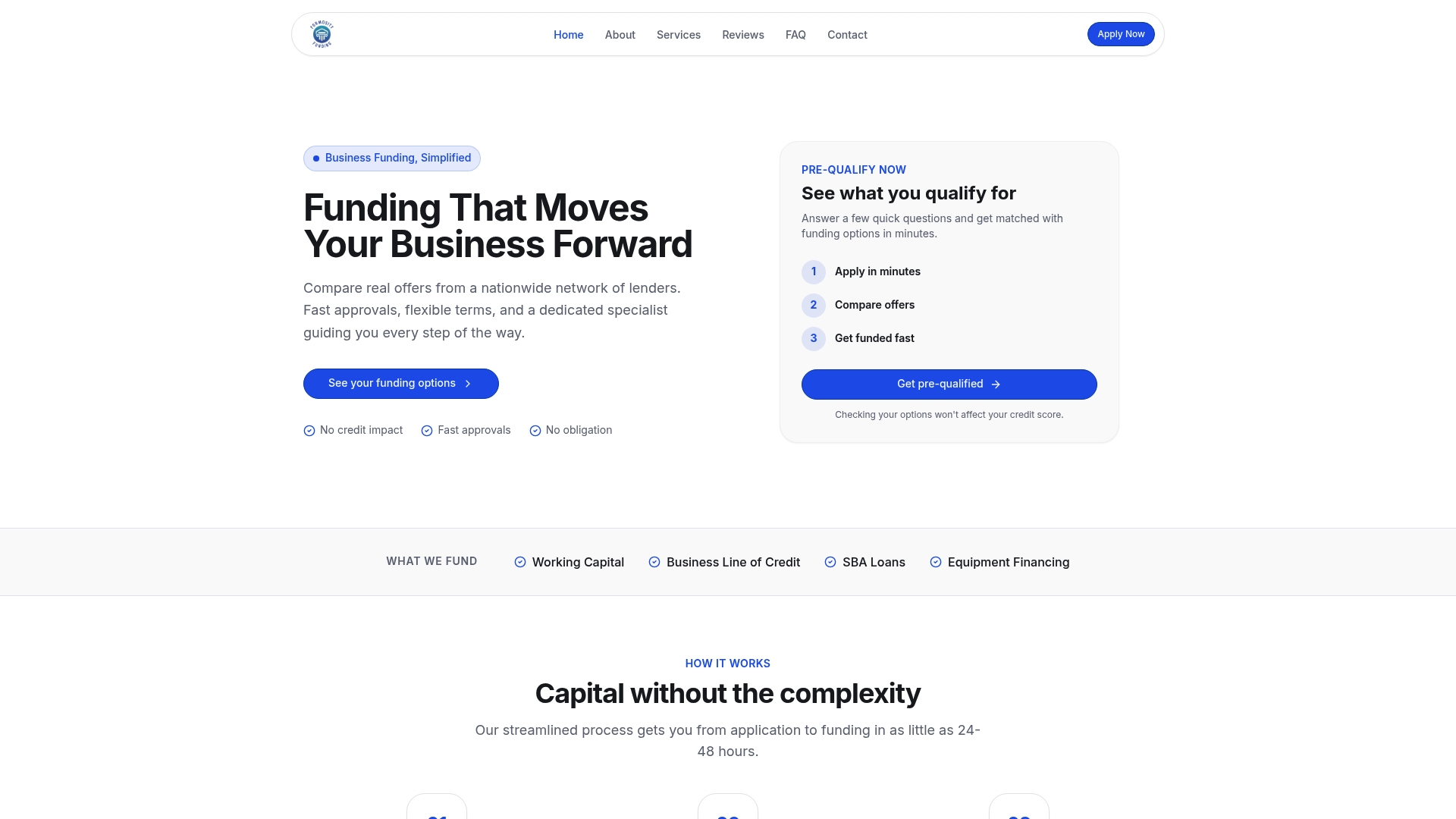
Formosityfunding's marketplace connects small and medium-sized businesses with a nationwide network of lenders for equipment financing, working capital, SBA loans, and more. Pre-qualification takes minutes and has no impact on your credit score. From there, you receive multiple real loan and credit offers tailored to your business profile, and a dedicated funding specialist walks you through the comparison so you're not decoding fine print alone.
To get started, you'll typically need recent bank statements, a basic business profile, and the equipment quote from your vendor. Most applicants receive offers within one business day.
See your equipment financing options at Formosityfunding and compare real offers before you commit to any single lender.
Sources
The guidance in this article draws on IRS primary sources, SBA resources, and practitioner analysis. Each source below is worth bookmarking if you're working through this decision with your CPA.
- Treasury, IRS issue guidance on the additional first year depreciation deduction amended as part of the One, Big, Beautiful Bill | Internal Revenue Service
- Leasing vs. Financing Decision Guide for 2026 -
- Leasing vs. Financing: Leasing vs Financing equipment as a business expense
Verify any tax election or deduction with a qualified tax professional before filing. Rules change, and the right answer for your business depends on facts specific to your situation.
This article is general information, not a substitute for advice from a qualified financial advisor. Consult a qualified financial professional about your own circumstances before acting on anything here.