

A blanket lien gives a lender a security interest in virtually all your business assets, including inventory, equipment, and receivables you own now or acquire later. The trade-off is straightforward: you gain access to larger loan amounts or better pricing, but you hand over broad control of your balance sheet. Before signing anything, read the collateral schedule line by line, ask for specific carve-outs, and confirm exactly how the lender plans to file the UCC-1.
TL;DR:
- Blanket liens generally cover all current and future business assets, including inventory, receivables, and equipment, which can restrict future borrowing opportunities.
- Filing a UCC-1 financing statement establishes the lender's claim, with priority typically based on the date of filing, and must be controlled for bank accounts to be perfected.
- Default allows lenders to repossess and sell collateral, but a sale must be commercially reasonable, and existing liens can deter other lenders from extending additional credit.
- Negotiating specific carve-outs for key assets and establishing release schedules can preserve some flexibility once the loan is paid off.
- Alternatives to blanket liens include single-asset liens, equipment financing, unsecured loans, or splitting funding across multiple lenders, depending on asset value and growth plans.
Table of Contents
- What Is a Blanket Lien Business Loan?
- How Blanket Liens Get Filed, Perfected, and Ranked
- What Happens If You Default on a Blanket Lien Loan
- When Does a Blanket Lien Actually Work in Your Favor?
- How to Negotiate Carve-Outs and Remove a Blanket Lien Later
- Alternatives to Accepting a Blanket Lien
- Why Trust This Guide on Blanket Lien Loans
- The Bottom Line on Blanket Liens
- A Note From Formosity Funding
- Get Better Lien Terms With Formosity Funding
- Where to Verify Blanket Lien Rules Yourself
- Sources
What Is a Blanket Lien Business Loan?
A blanket lien business loan is financing secured by nearly everything your company owns, not just one machine or vehicle. The clause that creates this reach usually reads something like "all assets now owned or hereafter acquired," meaning the lien automatically attaches to inventory or equipment you buy after closing, not just what's on the books the day you sign.
That's different from a specific asset lien, which ties collateral to one item, like a delivery van or a piece of manufacturing equipment. It's also distinct from a personal guarantee, which puts your individual assets on the hook regardless of what the business owns. A blanket lien stays on business property unless you've separately signed a personal guarantee.
You'll run into blanket liens most often with:
- SBA 7(a) loans, where the SBA's collateral guidance makes broad liens routine once a loan exceeds what single-item collateral can secure
- Conventional bank term loans above a certain mid-sized threshold
- Larger secured business lines of credit where the lender wants coverage across your whole asset base
Smaller loans and equipment-specific financing tend to skip this structure entirely, since the lender only needs the one asset being financed.
How Blanket Liens Get Filed, Perfected, and Ranked
Three things have to happen before a lender's claim on your assets actually means anything legally: attachment, perfection, and priority. Attachment happens the moment you sign the security agreement and the lender gives value (the loan funds). Perfection is the public step that protects the lender's claim against other creditors, and priority determines who gets paid first if multiple lenders have claims on the same asset.
Here's the sequence in practice:
- The lender files a UCC financing statement, known as a UCC-1, with your state's Secretary of State office (typically your state of incorporation or formation).
- The filing lists your business as debtor, the lender as secured party, and describes the collateral, often as broadly as "all assets now owned or hereafter acquired."
- Filing date determines priority: the first lender to file generally has first claim if you default, with one major exception for purchase-money security interests, where a lender financing a specific piece of equipment can jump ahead of an earlier blanket lien on that item.
- Deposit accounts and securities work differently. A blanket UCC-1 filing alone doesn't perfect a lender's interest in your bank accounts; that requires "control," typically a separate agreement with your bank.
Pro Tip: Run your own UCC search through your Secretary of State's website before you sign anything new. If an existing filing shows up that you didn't expect, ask your current lender or attorney to explain it before you take on additional secured debt.
The after-acquired property clause is what makes blanket liens dynamic rather than static. It's the legal basis letting the lien follow your business as it grows, which is exactly why the schedule language matters so much at signing.
What Happens If You Default on a Blanket Lien Loan
Default consequences hinge on what's actually pledged. Blanket liens typically reach inventory, accounts receivable, equipment, and the proceeds from selling any of it. Common exceptions include specifically carved-out licenses, certain payroll or trust accounts, and any equipment already financed under a separate purchase-money agreement.
If you fall behind, the lender can move to repossess collateral or pursue judicial remedies, depending on your state and loan documents. Any sale of seized collateral has to meet the commercially reasonable standard under UCC 9-610, meaning the lender can't dump your equipment at a fire-sale price just to close the file faster. That standard protects you, but it doesn't stop the sale from happening.
The ripple effects extend well past the immediate default:
- Other lenders see the existing blanket filing and often decline to extend additional secured credit, since there's little unencumbered collateral left to claim
- Vendors offering trade credit may tighten terms once they learn how much of your asset base is already pledged
- Selling the business or restructuring debt gets harder, because a buyer or new lender has to negotiate around the existing lien
One distinction worth repeating: a blanket lien attaches to business property, not your personal assets, unless you also signed a personal guarantee. Many small business loans bundle both, so read your loan documents for a separate personal guarantee clause rather than assuming the blanket lien alone covers your house or savings.
When Does a Blanket Lien Actually Work in Your Favor?
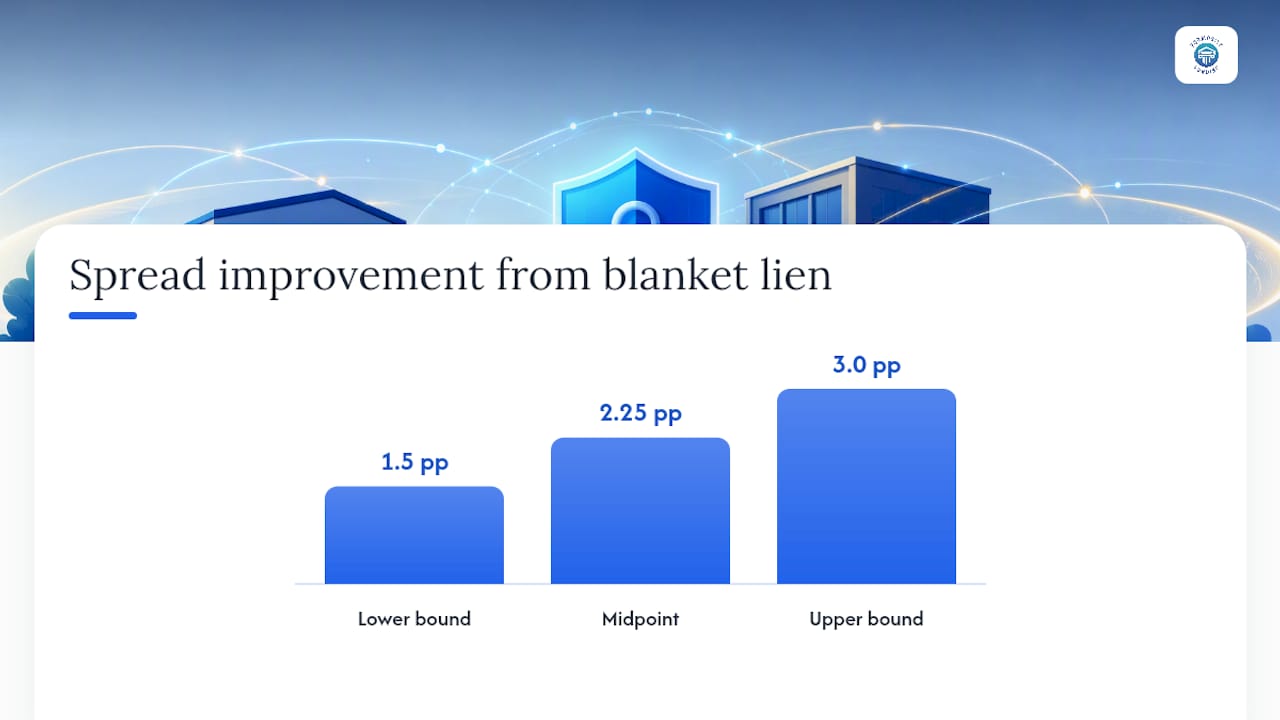
Lenders price risk, and a blanket lien lowers their expected loss if you default, since they have a claim across your whole asset base instead of one machine. That reduced risk commonly shows up as measurably better pricing, sometimes 1.5 to 3 percentage points better on the spread, compared with a loan secured by a single asset. For a business borrowing $300,000, that difference adds up fast over a five-year term.
The pros:
- Access to larger loan amounts than single-asset collateral would typically support
- Better rates in many cases, since the lender's risk is spread across more collateral
- Simpler paperwork for the lender, which can speed approval
The cons:
- Limited room to pledge the same assets to a second lender later
- Difficulty layering in equipment financing or a second line of credit without lender consent
- Cash sweep provisions in some agreements that route receivables collections through the lender first
If you're planning major growth, an asset sale, or a second financing round within the next year or two, weigh those plans against the lien's restrictions before you sign.
How to Negotiate Carve-Outs and Remove a Blanket Lien Later
You have more leverage at the term sheet stage than you think. Lenders often have pre-approved fallback positions on carve-outs, but they won't offer them unless you ask.
- Request specific carve-outs before closing. Payroll accounts, certain licensed contracts, and equipment you plan to finance separately are the items lenders sometimes exclude. Core inventory and accounts receivable rarely move, since those are usually the assets the lender values most.
- Ask for a release schedule tied to loan paydown milestones, so specific asset categories get freed as your balance drops.
- If you expect to add secured financing within the next year, negotiate a subordination or intercreditor agreement now rather than after closing, when the current lender has no incentive to cooperate.
- Once you pay off the loan, request a UCC-3 termination statement in writing and confirm the lender actually files it with the state.
Pro Tip: If your lender drags out filing the UCC-3 after payoff, put your request in writing and keep a copy. Lenders that fail to file a termination when obligated can face statutory penalties, and having a paper trail makes that claim far easier to pursue.
Alternatives to Accepting a Blanket Lien
Not every loan needs to be secured by everything you own. Common alternatives include single-asset liens tied to one piece of equipment or property, equipment financing where the machine itself is the only collateral, unsecured loans (usually smaller and carrying higher rates), and splitting one large ask into smaller tranches from multiple lenders.
Each shifts risk differently:
- Single-asset liens limit lender exposure to one item, which usually means a smaller loan ceiling
- Equipment financing keeps the rest of your balance sheet free for future borrowing
- Unsecured loans skip collateral entirely but typically cost more and cap out at lower amounts
A blanket lien makes sense when your asset base is thin relative to the loan size you need, or when the rate improvement clearly outweighs the flexibility you're giving up. Match the collateral structure to your loan size, your existing asset base, and how soon you'll need to borrow again.
Why Trust This Guide on Blanket Lien Loans
This guide draws on how Formosityfunding works daily with lenders across SBA, equipment, and working capital products, including many that use blanket liens as standard collateral. Alvin covers business financing structures and lender requirements for Formosityfunding's readers. For the filing mechanics behind these liens, see our breakdown of what a UCC filing means for your loan and our guide to SBA loan collateral requirements.
The Bottom Line on Blanket Liens
Blanket liens are a reasonable trade for most borrowers who need larger loans and can't offer single-asset collateral to match. Before you close: read the collateral schedule in full, negotiate carve-outs before signing rather than after, and calendar the UCC-3 termination request for payoff day. Check separately whether you've also signed a personal guarantee.
A Note From Formosity Funding
We help borrowers spot blanket lien language early and push for carve-outs that protect future flexibility. If you're comparing offers, talk to a funding specialist before you sign anything.
— Alvin
Get Better Lien Terms With Formosity Funding
Formosityfunding is the alternative to negotiating blanket lien terms alone against a single lender's paperwork. Instead of accepting the first term sheet that lands in your inbox, our marketplace matches you with multiple lenders at once, so you can compare collateral requirements side by side before committing to anything.
Pre-qualifying takes minutes and doesn't touch your credit, which means you can walk into any negotiation already knowing what other lenders would offer for the same deal. Our funding specialists review term sheets with borrowers regularly and can flag lien language worth pushing back on before you sign. Whether you need an SBA loan, equipment financing, or a working capital line, start by exploring your funding options with a specialist who can walk you through exactly what collateral each offer requires.
Where to Verify Blanket Lien Rules Yourself
For UCC mechanics, consult Cornell's Legal Information Institute. For SBA collateral rules, see the SBA's loan guidance. Run UCC searches and file terminations through your state's Secretary of State office.