

Invoice financing is a loan or line secured by your unpaid invoices, and you keep control of collections. Factoring is a sale of those invoices to a factor who typically takes over collecting from your customers. Factoring tends to fund faster and qualify easier, especially for weaker-credit borrowers, but it usually costs more. Financing works out cheaper when your business collects reliably and wants to keep customer relationships in-house.
TL;DR:
- Invoice financing usually advances 70% to 90% of invoice value with longer setup times but lower overall costs for businesses with strong internal collections.
- Factoring offers faster funding, often within 24 to 48 hours, and is more accessible for businesses with lower credit scores because approval depends mainly on customer payment history.
- Fees for both options include setup, transaction, and monthly minimums, which vary widely and should be carefully modeled against realistic invoice aging scenarios.
- Recourse factoring puts the credit risk on the business if customers do not pay, while non-recourse covers only insolvency, though disputes often still remain the business’s responsibility.
- Using a marketplace for quotes can help compare effective costs side by side, factoring in reserve releases, ancillary fees, and the specifics of your customer base.
Table of Contents
- Invoice Financing vs Factoring: What Invoice Financing Actually Is
- What Is Invoice Factoring, and How Does It Differ From Financing?
- Invoice Financing vs Factoring: A Side-by-Side Breakdown
- How Do You Compare the Real Cost of Each Option?
- Which Financing Structure Fits Your Business Profile?
- Recourse vs Non-Recourse: Who Actually Bears the Risk?
- What Should You Verify Before Signing a Term Sheet?
- How Formosityfunding Helps You Compare Receivables Financing Options
- A Straightforward Next Step
- Get Matched With the Right Receivables Solution
- Sources
- FAQ
Invoice Financing vs Factoring: What Invoice Financing Actually Is
Invoice financing, sometimes called accounts receivable financing, is a loan or revolving line of credit secured by your outstanding invoices. You still bill your customers and collect payment yourself. The lender simply advances cash against the value of those unpaid invoices and gets repaid, with interest, once you collect.
Lenders typically advance 70% to 90% of an invoice's face value upfront, holding the rest as a reserve released once the invoice clears or the loan balance is paid down. Expect a lien on your receivables, usually filed as a UCC-1, plus regular reporting on your accounts receivable aging. Some lenders want personal guarantees; most want at least a year of revenue history and reasonably clean books.
Pricing looks more like traditional loan pricing: an interest rate on the outstanding balance, sometimes an origination fee, occasionally a monthly maintenance fee. Setup can take one to three weeks for underwriting, but once the line is open, draws against new invoices often fund within a day or two. That speed after setup is the appeal. The tradeoff is that qualification leans more heavily on your business's own credit and financial history than on your customers' creditworthiness.

What Is Invoice Factoring, and How Does It Differ From Financing?
Factoring is the outright sale of your invoices to a factor at a discount, not a loan against them. The factor advances most of the invoice value immediately, then pays you the remaining reserve, minus fees, after your customer pays in full. You are trading a slice of the invoice's value for speed and for handing collections to someone else.
There are two structures worth knowing. Notification factoring tells your customer to pay the factor directly, which means the factor is now the one calling about overdue invoices. Non-notification, or confidential, factoring keeps you as the visible point of contact, though the factor still owns the receivable behind the scenes and monitors payment.
Funding speed is factoring's strongest selling point. Because approval focuses on your customers' payment history rather than your own balance sheet, factors can often turn around a first funding in a few days, sometimes 24 to 48 hours once the relationship is set up. The U.S. Chamber of Commerce notes factoring is often more accessible for businesses with lower credit scores precisely because underwriters weigh customer credit more than the seller's own history. You give up collection control and pay for the convenience. Businesses that staff up quickly or serve a handful of large, reliable payers tend to use it, according to Allianz Trade.
Invoice Financing vs Factoring: A Side-by-Side Breakdown
The two products solve the same cash-flow problem in structurally different ways. Here's where they actually diverge:
- Ownership and control: With financing, you own the receivable and manage collections the whole way through. With factoring, you sell the receivable, and the factor usually owns the collection relationship.
- Underwriting focus: Financing underwriters look mainly at your business's credit, revenue, and financial statements. Factoring underwriters look mainly at your customers' credit and payment history, per the U.S. Chamber of Commerce.
- Advance rates and reserve drag: Financing often advances 70% to 90% against invoices as loan collateral. Factoring typically advances 70% to 95%, per MCA Guide, but the reserve sits with the factor until your customer actually pays, which can tie up more of your cash if collections run slow.
- Speed to first funding: Factoring generally onboards and funds faster because the underwriting bar on your own business is lower. Financing setup usually takes longer upfront but can be cheaper to run once established.
If you have strong internal collections, decent business credit, and want to keep customer relationships private, financing usually wins. If you need cash fast, have thin credit history, or would rather outsource collections entirely, factoring usually wins. Businesses caught in between often run both models past a couple of lenders before deciding, since the "right" answer changes with your customer concentration and payment cycle length.
How Do You Compare the Real Cost of Each Option?
Headline rates are close to useless on their own. MCA Guide puts typical factoring discount fees at 1% to 5% per 30 days, with advance rates ranging from 70% to 95% depending on industry and payer credit.
The better comparison metric is effective cost per dollar advanced. Take the total fees you'd pay over a realistic collection period, divide by the cash you actually put to use (the advanced amount, not the invoice face value), and you get a number you can stack against other offers. Tzortzis Capital makes the point bluntly: real cost depends on the discount rate, the advance rate, how long invoices actually take to pay, and the ancillary fees layered on top. A nominal 1.5% rate on a 90-day invoice can easily beat a 2.5% rate on an invoice that pays in 20 days.

Pro Tip: Ask every lender or factor for their fee schedule in writing before you sign anything, then run the same 60-day and 90-day aging scenario through each one. The spread between quotes often widens once slow-paying customers enter the math.
Watch for these add-ons, since they rarely show up in the headline rate:
| Fee type | What it covers | Typical impact |
|---|---|---|
| Setup or origination fee | Onboarding, underwriting | One-time, 1% to 2% of facility size |
| Wire or ACH fee | Moving funds to your account | $15 to $40 per transaction |
| Lockbox or processing fee | Managing payment collection | Monthly flat fee |
| Monthly minimum | Guaranteed factor revenue | Charged even in slow months |
| Termination fee | Early contract exit | Can equal several months of fees |
Model these against realistic invoice aging, not the best-case scenario the sales rep quotes you.
Which Financing Structure Fits Your Business Profile?
Certain industries gravitate toward one model because of how they invoice and get paid. Staffing agencies, trucking companies, and distributors commonly lean on factoring because they carry high invoice volumes and long payment cycles, a pattern Allianz Trade confirms is widespread across those sectors. Professional services firms with a handful of long-standing corporate clients often prefer financing, since they'd rather not have a factor calling their biggest account about a late payment. Subscription and recurring-revenue businesses sometimes skip both and look at revenue-based structures instead, since their receivables profile doesn't map cleanly to either product.
Before you apply to either type of lender, gather your documents and review quote-to-cash operations and downstream cash flow impacts to ensure optimal invoice hygiene and readiness.
- Accounts receivable aging report, ideally 90 days back
- Your top five customers by invoice volume, with payment history
- Any existing UCC filings against your receivables
- Recent financial statements or bank statements
- Gross margin figures, since thin margins limit how much fee load you can absorb
Red flags worth walking away from include vague monthly minimums buried in an addendum, "non-notification" promises that aren't actually written into the contract, and covenants that let the lender sweep your entire bank account rather than just the pledged receivables. If your business has strong banking relationships and predictable revenue, a traditional AR line from a bank may beat either option on price, though it will move slower to fund.
Recourse vs Non-Recourse: Who Actually Bears the Risk?
Recourse factoring is the default arrangement in this market. If your customer never pays, you're on the hook to buy back the invoice or reimburse the factor, which is why recourse deals price cheaper than non-recourse ones, according to Allianz Trade.
Non-recourse sounds like it removes your risk entirely. It doesn't. Most non-recourse agreements only cover the customer's insolvency or bankruptcy, not disputes over the goods or services you delivered. If your customer refuses to pay because they claim the work was defective or the shipment arrived damaged, that dispute risk usually stays with you even under a "non-recourse" label. A sample receivables purchase agreement filed with the SEC shows how detailed these carve-outs get in practice, spelling out exactly which default scenarios shift risk to the factor and which don't.
Because non-recourse coverage is narrower than most buyers expect, you should negotiate for clear definitions of "insolvency" and "dispute" in the contract, and expect to pay a real premium for genuine non-recourse protection. For a deeper breakdown of how the two structures split risk, see our recourse versus non-recourse comparison.
What Should You Verify Before Signing a Term Sheet?
The quote you get on a phone call and the contract you actually sign are rarely identical. Before signing, confirm these line items match what was verbally quoted:
- Advance rate and how it's calculated (face value vs. net of prior deductions)
- Fee model: flat, tiered by aging bucket, or spread daily
- Exact timing of reserve release after customer payment
- Monthly minimum volume requirements and what happens if you fall short
- Per-transaction fees for wires, same-day funding, or account maintenance
Operationally, read the setoff clause carefully. It usually lets the factor apply funds from one invoice against a shortfall on another, which can blindside you if you're not expecting it. Check how "dilution" is defined, since a broad definition (returns, discounts, disputes all counted) can quietly shrink your advance. Confirm whether UCC filings are limited to the receivables being financed or blanket over all business assets.
Pro Tip: Negotiate the advance rate and the termination fee together. Factors will often give ground on one if you push hard on the other, but rarely both at once.
How Formosityfunding Helps You Compare Receivables Financing Options
Formosityfunding works as a marketplace, matching your business with lenders and factors across its nationwide network rather than pushing one product. That matters here because the right structure depends heavily on your customer concentration, aging, and industry, and a single-lender shop can't show you what a factor down the street might quote instead.
Having your aging report, top five payers, existing contracts, and any prior UCC filings ready before you apply speeds up matching considerably. Comparing quotes side by side across multiple lenders is really the only reliable way to see effective cost differences, since the same headline rate can hide very different reserve and fee structures. For more on how these solutions stack up against other short-term options, see our cash flow financing overview.
A Straightforward Next Step
Model your real cost under a realistic aging scenario, not the best case. Then pull two or three quotes side by side. Pre-qualification lets you compare real offers without a credit hit before committing to either structure.
— Alvin
Get Matched With the Right Receivables Solution
This marketplace is an alternative to chasing quotes from individual lenders one by one. Instead of calling five factors and three banks separately, you submit one application and get matched against a nationwide network that includes both AR financing lines and factoring arrangements.
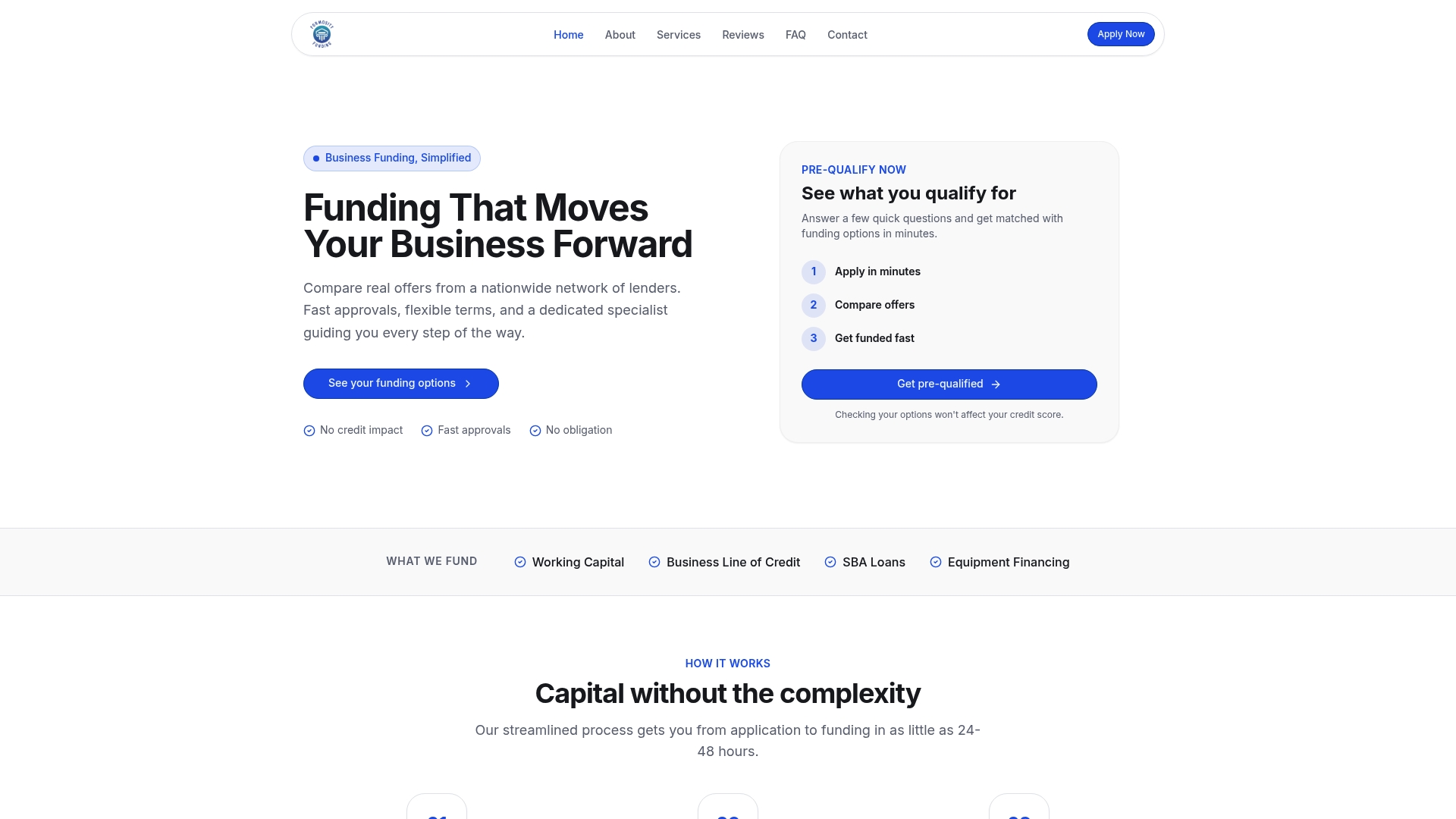
Pre-qualification takes minutes and doesn't affect your credit score, so there's no downside to seeing what's actually available before you commit. Have your aging report and top customer list handy. A dedicated funding specialist walks you through which real offers fit your business, whether that's working capital, a business line of credit, or another funding path. If receivables funding isn't quite the right fit once you see the numbers, the same application can surface other options, including a Business HELOC for businesses with real estate equity to leverage. Start your pre-qualification today and see your real offers side by side.
Sources
For deeper detail on the mechanics covered here, the U.S. Chamber of Commerce breaks down qualification differences, Allianz Trade covers recourse structures, and the GAO's audit techniques guide outlines factoring controls and oversight standards.
This article is general information, not a substitute for advice from a qualified financial advisor. Consult a qualified financial professional about your own circumstances before acting on anything here.
- Invoice factoring finance: Factoring vs discounting vs financing explained — Allianz Trade
- Invoice Factoring vs. Invoice Financing: Key Differences | U.S. Chamber of Commerce
- Invoice Factoring Rates 2026: Fees Explained | MCA Guide
- EX-99.1 Receivables purchase agreement (example) — SEC filing
FAQ
What Are the Disadvantages of Invoice Financing?
The main drawbacks are cost and collateral exposure. You're paying interest and fees on borrowed money secured against your receivables, and if customers pay slowly, your reserve stays tied up longer than expected, straining the cash flow you were trying to fix in the first place.
Is Invoice Financing a Good Idea for a Small Business?
It can be, if your business has decent credit and reliable collections but needs cash faster than your payment terms allow. It's a weaker fit if your own credit history is thin, since financing underwriting leans more on your business profile than factoring does, per the U.S. Chamber of Commerce.
What Are the Risks of Invoice Financing and Factoring?
Both carry the risk of hidden fees eating into your margin if you don't model effective cost carefully, and factoring specifically carries the risk that "non-recourse" coverage is narrower than expected, since disputes over goods or services often still fall on you rather than the factor, according to Allianz Trade.
Can Small Businesses Get Invoice Financing or Factoring?
Yes, and factoring in particular tends to be more accessible for small businesses with weaker credit, since approval hinges more on your customers' payment history than your own balance sheet. Formosityfunding's marketplace can match small businesses with lenders and factors suited to their specific funding needs.
How Much Does Invoice Factoring or Financing Cost?
Factoring discount fees typically run 1% to 5% per 30 days, with advance rates between 70% and 95% depending on industry and customer credit, per MCA Guide. Financing costs resemble traditional loan pricing, with interest rates that vary by lender and borrower profile, so getting multiple quotes is the only way to know your real number.