

A business credit card wins for frequent, smaller purchases you can repay monthly, fast approvals, and employee spend controls; a business line of credit wins when you need larger or seasonal cash that might sit outstanding for weeks or months. Plenty of owners end up using both: a card for routine operating expenses, a line of credit as backup when cash flow gets tight.
TL;DR:
- A business line of credit is more suitable for larger or seasonal cash needs, with lower interest rates than credit cards if held beyond one month.
- Credit cards are better for routine expenses, small recurring payments, and expenses that can be paid in full each month to avoid high interest rates.
- Applying for a line of credit generally requires detailed financial documents, while credit cards require only basic business and personal information.
- Owners should use both products simultaneously: a card for predictable monthly expenses and a line of credit for unpredictable or larger costs.
- Pre-qualification tools can help compare offers from multiple lenders without affecting credit scores, aiding in selecting the best product for your needs.
Table of Contents
- Credit Card vs Line of Credit: A Quick Comparison
- How a Credit Card and a Line of Credit Actually Work
- What Credit Cards and Lines of Credit Really Cost
- What Lenders Actually Ask For
- Real Scenarios: Which Product Actually Fits
- Five Questions to Decide Right Now
- Getting Ready to Apply for Either One
- What Actually Trips Up Business Owners Here
- Compare Real Offers Before You Commit to Either
- Sources
- FAQ
Credit Card vs Line of Credit: A Quick Comparison
The two products overlap in purpose but differ sharply in mechanics. A credit card gives you a revolving account tied to a physical or virtual card, charged at the point of sale. A business line of credit gives you an approved limit you draw from directly into your bank account, paying interest only on what you actually pull out.
- Access to funds: Cards work at checkout, online, or through employee and virtual cards. Lines of credit deposit cash into your account when you initiate a draw.
- Typical APR: Cards often run 20% or higher on carried balances. Lines of credit frequently land in the single digits to mid teens, depending on your financials.
- Typical limits: Cards commonly max out in the low tens of thousands. Lines of credit can scale well past that for established businesses with strong financials.
- Speed to funding: Cards approve in minutes to days. Lines of credit usually take longer, since underwriting reviews bank statements and tax history.
- Best for: Cards fit daily operating spend and rewards. Lines of credit fit larger draws, payroll bridges, and inventory buys.
How a Credit Card and a Line of Credit Actually Work
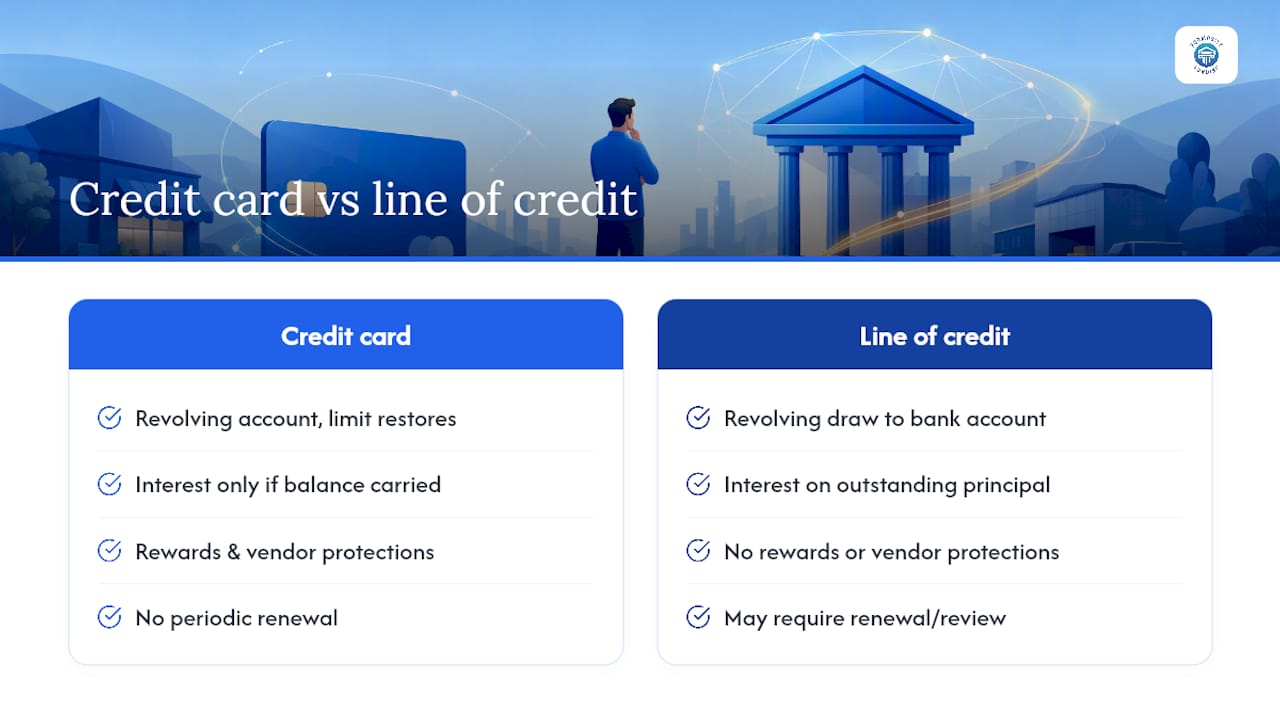
A business credit card is a revolving account. You spend against your limit, and once you pay it down, that capacity opens back up. Interest only accrues if you carry a balance past the due date, which is why cards paid in full monthly can be nearly free money, complete with rewards and vendor protections built in.
A line of credit works on the same revolving principle but with a different delivery mechanism. Instead of swiping a card, you request a draw, and the lender deposits funds into your bank account. Interest applies only to the outstanding principal, not your full approved limit. Some lines of credit require periodic renewal or a review of your financials to keep the facility active.
The bookkeeping differs too. Card transactions post automatically with vendor detail attached, which simplifies expense categorization. Line-of-credit draws show up as a lump deposit, so you'll need to track what that cash actually funded.
What Credit Cards and Lines of Credit Really Cost
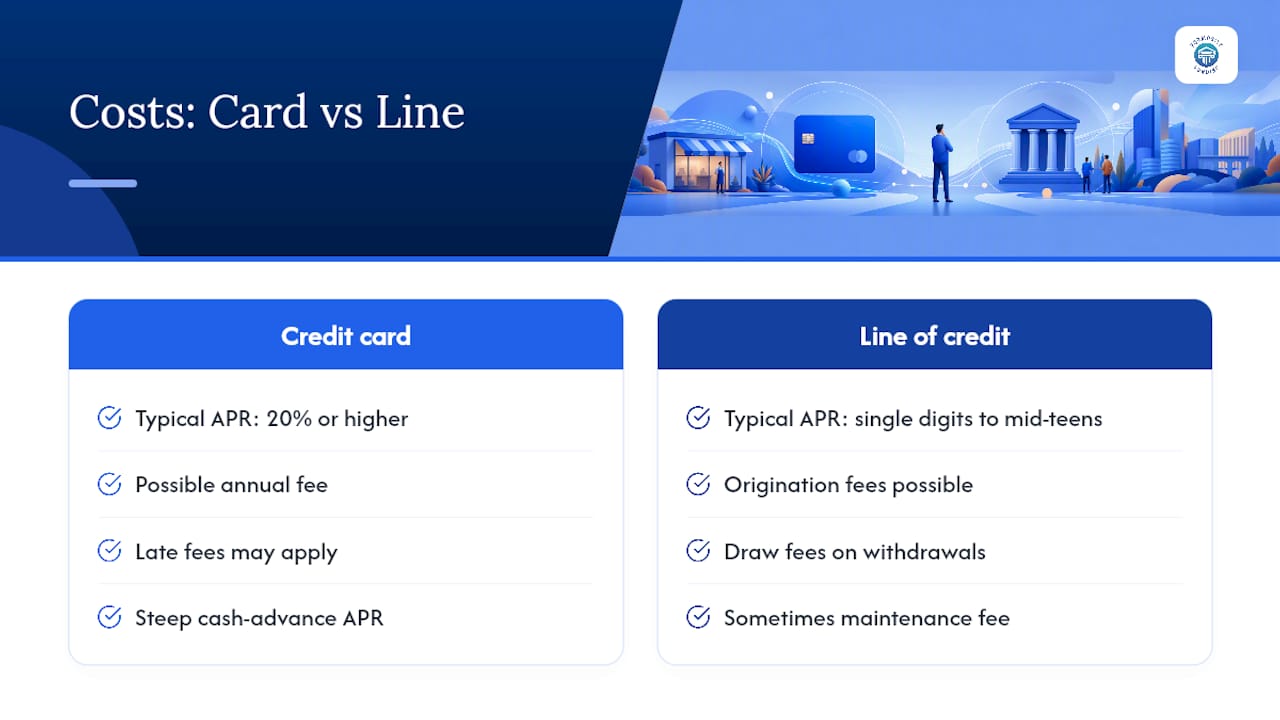
Credit cards typically charge 20% or higher on any balance you carry past the due date, plus a possible annual fee, late fees, and a steep cash advance APR if you pull cash against the card. Lines of credit tend to run cheaper on a percentage basis, often single digits to mid teens depending on your revenue and credit profile, but they carry their own fee structure: origination fees, draw fees, and sometimes a maintenance fee just to keep the line open.
The rule of thumb: multiply the amount you need to borrow by how long you'll likely carry it. Short, small draws you'll clear within a billing cycle rarely justify a line of credit's paperwork. But once you're borrowing a larger sum, or expect to carry it beyond 30 to 90 days, a line of credit usually costs less overall than letting a card balance compound at 20%-plus.
What Lenders Actually Ask For
Cards and lines of credit sit at opposite ends of the underwriting spectrum. A card application often just needs a personal guarantee and basic business details, which is why newer businesses can usually get one within days. A line of credit, especially at higher limits, asks for real financial history.
- For a card: basic business information, an owner's personal credit profile, and a signed personal guarantee in most cases.
- For a line of credit: recent bank statements, one to two years of tax returns, a profit and loss statement, and sometimes collateral for larger limits.
- Fintech lenders: often move faster and accept less time in business than traditional banks, but that speed usually comes at a higher rate.
If your business is under a year old with thin financials, a card may simply be the only door open to you right now. A line of credit becomes realistic once you have consistent revenue and clean records to show for it.
Real Scenarios: Which Product Actually Fits
- Recurring software subscriptions and vendor bills: put these on a card. You know the amount, it repeats monthly, and paying in full avoids interest entirely.
- Employee travel and expense management: virtual and employee cards give you spend limits per person, which a line of credit can't replicate as cleanly.
- Payroll during a slow month: a line of credit bridges the gap better, since you're pulling a lump sum you'll repay over weeks, not days.
- Seasonal inventory buildup before a busy quarter: larger draws held for 60 to 90 days favor a line of credit's lower rate.
- A one-off equipment purchase under $5,000 you can clear next statement: a card works fine and might even earn rewards on it.
A rough heuristic: anything under $5,000 that you'll repay within a month leans card. Anything over $10,000, or anything you expect to carry more than 30 days, leans line of credit.
Five Questions to Decide Right Now
Run through these before you apply for anything:
- How much do I actually need? Small, defined amounts favor a card. Larger or uncertain amounts favor a line of credit.
- How long will I likely carry the balance? Under a month, card. Over a month, line of credit.
- Do I need deposited cash, or am I paying a vendor directly? Payroll and many vendors require deposited funds, which only a line of credit provides.
- How fast do I need the money? Cards typically approve faster if you're in a genuine time crunch.
- Do I want rewards and spend controls, or lower long-term cost? Cards win on the former, lines of credit on the latter.
Watch for two red flags: financing a long-term need on a card because it was easier to get, and leaning on repeated cash advances instead of applying for a proper line of credit. Both quietly drain cash through compounding high-rate interest.
Pro Tip: If you're not sure how long you'll hold a balance, assume it's longer than you think. Most owners underestimate how long a "temporary" cash gap actually lasts.
Getting Ready to Apply for Either One
Lenders move faster, and price you better, when your paperwork is already in order. Before applying for a card or a line of credit, gather:
- Three to six months of recent business bank statements.
- One to two years of business tax returns.
- A current profit and loss statement and balance sheet.
- Ownership information and both business and personal identification.
A few accounting habits pay off fast: keep business and personal accounts fully separate, reconcile deposits monthly instead of quarterly, and clean up the last three months before you submit anything. Formosity Funding's pre-qualification process reviews your profile against its lender network without affecting your credit, which means you can see realistic options before committing to a full application.
What Actually Trips Up Business Owners Here
The most common mistake isn't choosing the wrong product outright. It's using a credit card as a substitute for real financing when a cash need drags on for months instead of weeks. That 20%-plus APR compounds quietly until the "convenient" card balance becomes the most expensive debt on the books.
The owners who get this right rarely pick one product and stick with it forever. They run a card for the predictable stuff and keep a line of credit in reserve for the swings they can't fully predict. That combination, more than any single product choice, is what actually protects cash flow.
— Alvin
Compare Real Offers Before You Commit to Either
A marketplace platform can help you see what you actually qualify for, without guessing your way through separate card and line-of-credit applications one lender at a time. Instead of applying blind, you may get matched against a nationwide network of lenders and see real offers side by side.
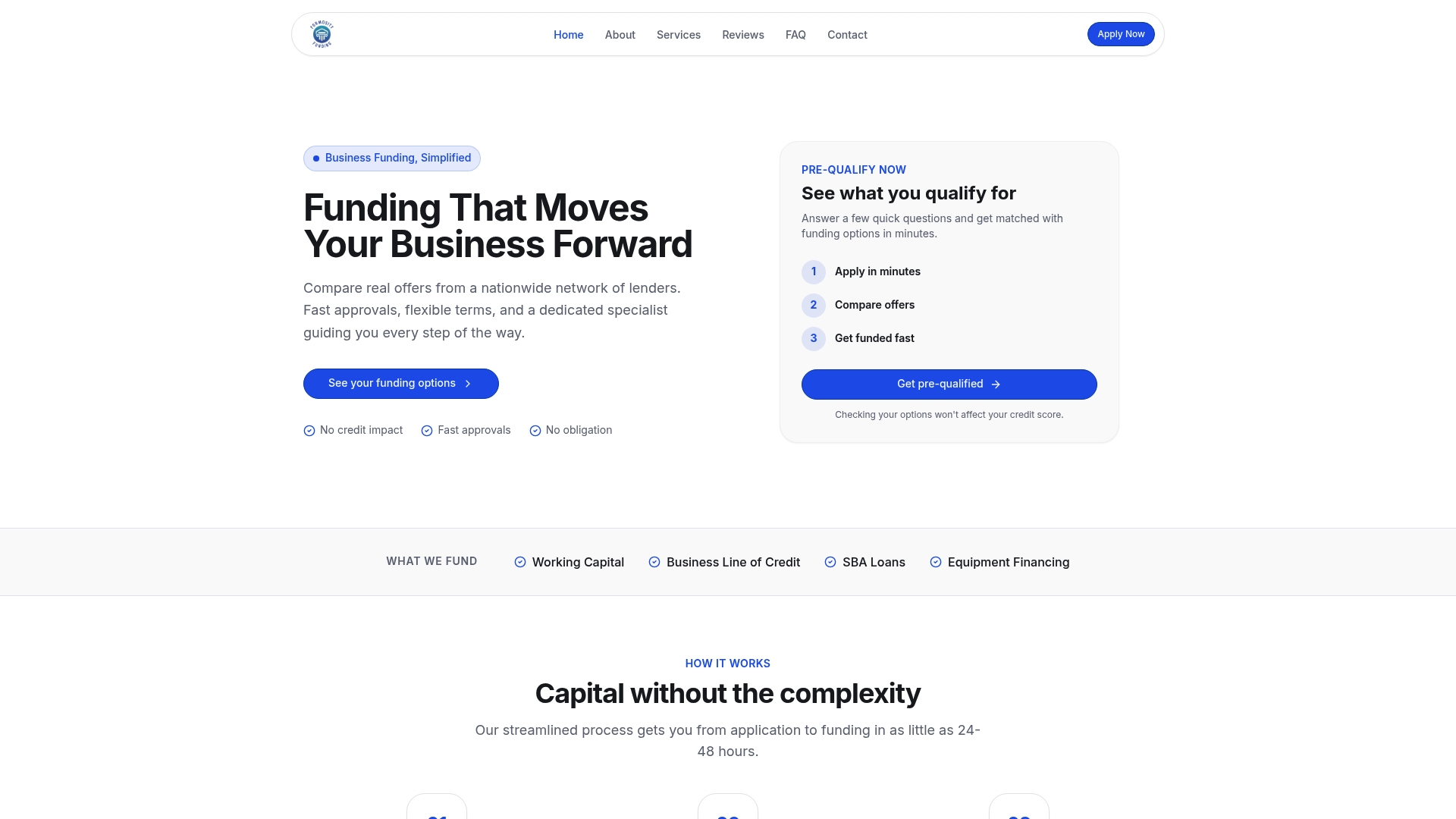
Pre-qualifying through Formosity Funding's funding options doesn't touch your credit score, so there's no downside to checking before you decide between a card, a line of credit, or both. A dedicated funding specialist walks you through the offers and helps you match the terms to how long you'll actually need the money. If you're ready to see what's available, start your pre-qualification with Formosity Funding today.
Sources
Rate ranges and mechanics drawn from Bankrate, Bank of America, Mercury, and FitSmallBusiness. See also Formosity Funding's rate guide.
- What is a business line of credit? — Bankrate
- Line of credit vs business credit card: overview — Bank of America
- Business credit card vs business line of credit: Which to use? — FitSmallBusiness
FAQ
Is a Line of Credit Cheaper Than a Credit Card?
Usually, yes, for larger amounts or balances carried longer than a billing cycle. Card APRs often exceed 20% once you carry a balance, while lines of credit frequently price in the single digits to mid teens.
Can I Get Both a Business Credit Card and a Line of Credit?
Yes, and many businesses do exactly that, using a card for daily operating expenses and a line of credit as backup for larger or seasonal cash needs.
What Documents Do I Need for a Business Line of Credit?
Most lenders want recent bank statements, one to two years of tax returns, a profit and loss statement, and sometimes collateral, depending on the limit requested.
How Fast Can I Get Approved for a Business Credit Card?
Cards typically approve within minutes to a few days since they require less documentation, often just a personal guarantee and basic business details.
How Does Formosity Funding Help Me Choose Between These Options?
Formosity Funding matches your profile against a nationwide lender network and shows real offers through a pre-qualification process that doesn't affect your credit score.