

Government contract financing exists, but it is discretionary, not guaranteed. Most small businesses end up covering bid and performance costs with SBA-backed loans or private working capital while they wait on contract payments. Check the solicitation for financing clauses first, then start pre-qualifying with lenders (marketplaces can help) so you are not scrambling once you win the award.
TL;DR:
- Contract financing is not guaranteed and depends on agency discretion, with small businesses often relying on SBA-backed loans or private funding to bridge cash gaps.
- Progress payments match expenses closely but lag behind, while performance-based payments are easier to audit and tied to milestones, affecting cash flow timing.
- Private financing options like invoice factoring and lines of credit often close faster than SBA loans but generally cost more in fees, so matching the tool to your timeline is crucial.
- Building a detailed cash-flow forecast aligned with contract milestones and securing collateral early improves chances of timely funding and reduces risks of default or asset loss.
- Combining multiple financing tools and pre-qualifying while awaiting a contract award helps small businesses manage cash flow more effectively and avoid delays once the contract is awarded.
Table of Contents
- What Types of Government Contract Financing Exist?
- When Do Contracting Officers Offer Financing vs. Expect Private Funding?
- Financing Options for U.S. Small Businesses: SBA and Private Paths
- What Documents Do Lenders and Contracting Officers Actually Check?
- How to Get Financing for a Specific Solicitation
- What Are the Real Risks of Government Contract Financing?
- How Do You Manage a Funded Contract Responsibly?
- Do Primes and Subcontractors Finance Contracts Differently?
- How Do Delayed Government Payments Change Your Financing Needs?
- What Do Successful Financing Scenarios Look Like?
- A Practical Take on Financing Government Work
- Get Matched to Contract Financing Through Formosityfunding
- Sources
- FAQ
What Types of Government Contract Financing Exist?
Federal Acquisition Regulation (FAR) Part 32 defines contract financing as any payment made before the government accepts finished goods or services. This isn't a loan from the government. It's an early-payment mechanism built into specific contracts, and it comes in three main shapes.
- Advance payments hand over cash before you deliver anything, usually secured against future performance.
- Progress payments reimburse a percentage of your incurred costs as work moves forward, common on large manufacturing or construction contracts.
- Performance-based payments release funds tied to measurable milestones rather than raw costs, which agencies increasingly prefer because they're easier to audit.
Progress payments hit your working capital differently than performance-based ones. Progress payments track your spending in near real time, so cash keeps pace with expenses. Performance-based payments lag behind, since you often front the cost of a milestone before the payment clears.
The government does not hand out financing for free. FAR Part 32 requires contracting officers to secure the government's interest, often through liens on your inventory, work in process, or receivables tied to that contract. If you default, the government can recover its financing through that collateral before other creditors touch it.
When Do Contracting Officers Offer Financing vs. Expect Private Funding?
Contracting officers don't offer financing by default. FAR 32.104 tells them to weigh your actual financial need, the size of your predelivery expenditures, and whether the contract clears specific dollar thresholds before including any financing clause. If your business can reasonably fund the work itself, the officer has no obligation to offer it.
Defense contracts follow a related but distinct playbook. DFARS Part 232 lays out DoD-specific rules, including accelerated payment timelines for small businesses and stricter security requirements when the Department of Defense does extend financing.
Before you assume help is coming, scan the solicitation itself:
- Search the contract clauses section for anything referencing FAR 52.232 series clauses.
- Look for explicit mention of progress payments, performance-based payments, or advance payment terms.
- Note any dollar thresholds mentioned. Contracts below certain values rarely carry financing provisions at all.
Pro Tip: If a solicitation is silent on financing, treat that silence as your answer. Build your bid budget around private funding rather than betting on a clause that may never show up.
Financing Options for U.S. Small Businesses: SBA and Private Paths
Winning a contract and having the cash to perform it are two separate problems. The U.S. Small Business Administration runs the most accessible government-adjacent lending programs, but private lenders fill gaps SBA loans don't cover.
SBA-backed programs:
- 7(a) loans cover working capital, equipment, and even ownership changes, with government guarantees that make banks more willing to lend to newer contractors.
- 504 loans finance major fixed assets like real estate or heavy equipment, useful if a contract requires a facility upgrade.
- Microloans cover smaller gaps, often under $50,000, for startups without long financial track records.
- Lender Match connects you to SBA-approved lenders based on your business profile, cutting out weeks of cold outreach.
Private alternatives:
- Working capital loans and business lines of credit fund day-to-day operations between invoices.
- Invoice factoring, sometimes called factoring government receivables, lets you sell unpaid invoices to a factor for immediate cash instead of waiting on net-60 or net-90 terms.
- Equipment loans finance machinery or vehicles a contract specifically requires.
- Surety-related financing helps cover bonding costs, which many contracts mandate before you can even bid.
Winning a first federal contract often costs more than owners expect. The SBA notes that some businesses spend between $80,000 and $130,000 pursuing their first award, with a return that can take up to two years to materialize. That gap is exactly what these financing tools exist to bridge.
SBA loans typically take longer to close than private options but carry lower rates. Private working capital and factoring close faster, often within days, but cost more in fees. Match the tool to your timeline, not just the price tag.
What Documents Do Lenders and Contracting Officers Actually Check?
Before anyone hands you money, they want proof you can execute and repay. Contracting officers and lenders look at overlapping but distinct evidence.
- SAM.gov registration and your Unique Entity Identifier (UEI) — no federal payment moves without this on file.
- NAICS code and size standard confirmation — this determines your small business eligibility for set-asides and SBA programs.
- Recent financial statements — profit and loss, balance sheet, and often two to three years of tax returns.
- Cost breakdowns for the specific contract — labor, materials, overhead, tied to contract line items.
- A cash-flow forecast mapped to contract milestones — showing exactly when money goes out and when payment comes in.
Lenders pay close attention to your working capital gap (the space between paying costs and receiving payment), receivables aging, existing backlog, and whatever collateral or personal guarantee you can offer.
Pro Tip: Build your cash-flow forecast around the contract's actual payment schedule, not a generic monthly average. A forecast that mirrors milestone dates convinces both a lender and a contracting officer that you understand your own numbers.
How to Get Financing for a Specific Solicitation
- Read the solicitation's payment clauses first. Confirm deadlines, financing provisions, and whether any FAR 52.232 clauses apply before you build your bid budget.
- Assemble your document package. Pull SAM.gov registration, financial statements, and cost breakdowns, then build a cash-flow forecast tied to contract milestones.
- Pre-qualify in parallel, not in sequence. Run SBA Lender Match and check private options, including a marketplace, so you have offers in hand before award notification.
- Compare terms against your actual timeline. Weigh rate against speed. A slightly pricier line of credit that closes in a week beats a cheaper loan that closes after your first milestone deadline.
- Secure any required bonding or collateral, then sync funding to your delivery schedule so cash lands before each cost hits, not after.
What Are the Real Risks of Government Contract Financing?
Financing gets you cash now, but every dollar comes with strings attached later. Repayment obligations don't pause just because a government payment is running late. Miss a lender's schedule and you're facing default consequences on top of contract performance pressure.
Government-provided financing carries its own exposure. Accept advance or progress payments and the government secures its interest with a lien on your inventory, work in process, or receivables. Default on contract performance, and the government's claim on that collateral takes priority. You could lose the assets you needed to keep the business running.
Audit risk climbs too. Progress payments and performance-based payments both require documentation showing costs match what you billed for. Sloppy record keeping here doesn't just slow reimbursement. It can trigger a formal review that delays every future payment on the contract.
Private financing carries a quieter risk: over-leveraging against a contract that gets modified, delayed, or terminated for convenience. Government contracts can be canceled with limited notice, and a line of credit sized around expected contract revenue becomes a liability fast if that revenue disappears. Match your financing size to what the contract actually guarantees, not what you hope it pays out.
How Do You Manage a Funded Contract Responsibly?
Getting financing is the easy part. Managing it inside an active government contract is where most small contractors slip.
Track every dollar against the specific contract line item it funds. Mixing financing across multiple contracts or general operations makes an audit nightmare out of what should be a clean paper trail.
Stay current on reporting requirements. Progress payment and performance-based payment schedules typically require periodic cost or milestone reports to the contracting officer, and missing a report can pause your next disbursement even when the work itself is on track.
Keep your lender and your contracting officer informed of the same reality. If a milestone slips, tell both parties before either one finds out on their own. Contracting officers have more flexibility to modify terms than most contractors assume, but only if they hear about a problem early.
Reconcile your cash-flow forecast against actuals monthly, not just at contract close. A forecast built once and forgotten stops being useful the moment your first invoice pays late. Treat it as a living document tied to the same milestones your financing is structured around.
Do Primes and Subcontractors Finance Contracts Differently?
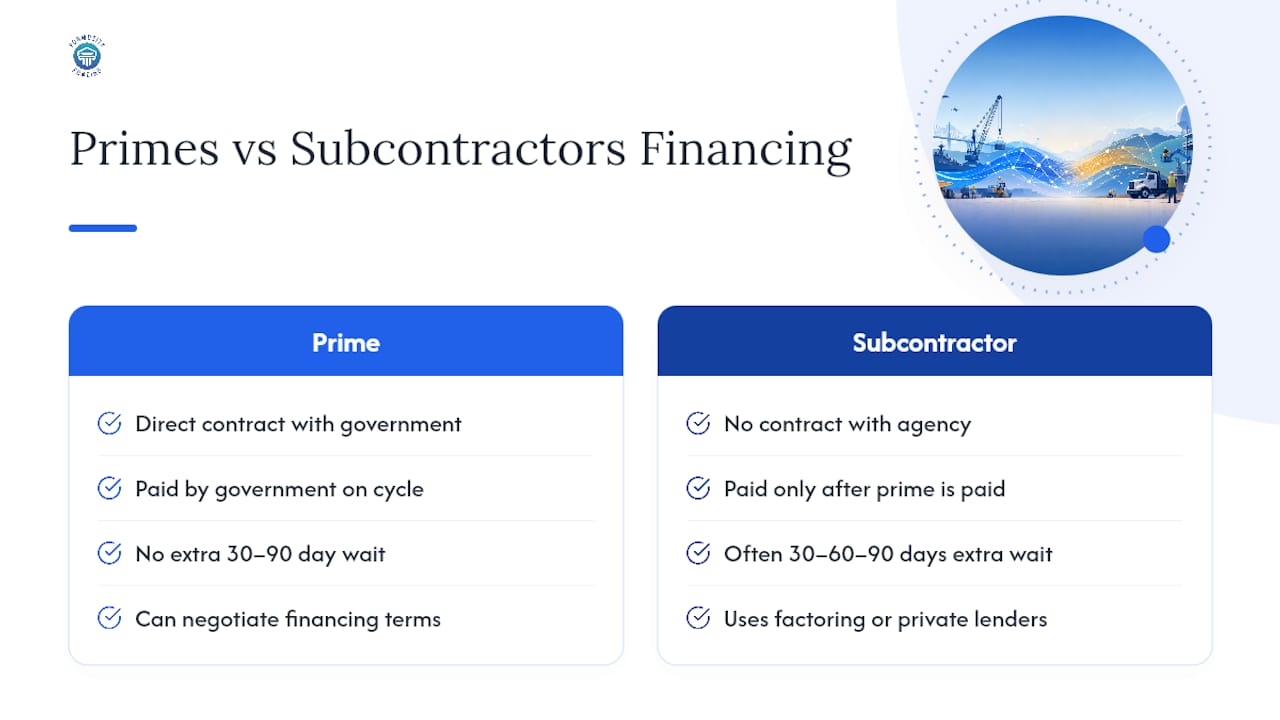
Prime contractors carry the direct financing relationship with the government and the lender. They negotiate payment terms, hold any financing clauses, and bear the collateral obligations FAR Part 32 attaches to advance or progress payments.
Subcontractors sit one step removed from that structure, and it usually means longer waits. A prime typically pays subs only after receiving its own payment from the government, so a sub can face 30, 60, or even 90 extra days beyond the prime's payment cycle. That gap is exactly why factoring government receivables shows up more often among subcontractors than primes. Selling an invoice for immediate cash beats waiting on a payment chain with two links instead of one.
Subs also have less leverage to negotiate financing terms directly with the government, since they have no contractual relationship with the agency at all. Their financing options run almost entirely through private lenders or through negotiated terms with the prime itself, such as requesting faster internal payment cycles or partial upfront costs for materials.
Primes managing multiple subs face a different challenge: they need enough working capital or credit capacity to keep the whole supply chain moving, even when their own government payment is delayed. A prime that finances only its own costs and ignores the cash needs of its subs risks losing reliable subcontractors mid-contract.
How Do Delayed Government Payments Change Your Financing Needs?
Federal payments rarely arrive exactly on schedule. Invoice processing delays, funding lapses, and administrative backlogs can push payment 30 to 60 days past the terms written into the contract, and that delay lands directly on your working capital.
A contractor sized to survive on net-30 terms can find itself covering payroll and materials for an extra month with no incoming cash. That's when a business line of credit earns its cost. Unlike a term loan, a line of credit sits ready and only charges you for what you draw, which makes it a natural buffer against payment timing you can't control.
Recurring delays call for a structural fix, not a one-time patch. Contractors who see payment lag across multiple contracts often shift toward invoice factoring as a standing tool. Instead of waiting on the government's timeline, they convert receivables to cash the moment an invoice is submitted and let the factor collect on the government's actual schedule.
Watch your backlog-to-cash ratio if you hold several government contracts at once. The more contracts running simultaneously, the more exposure you carry to a single agency's payment slowdown. Diversifying which agencies you contract with spreads that risk the same way diversifying customers would in any other business.
What Do Successful Financing Scenarios Look Like?
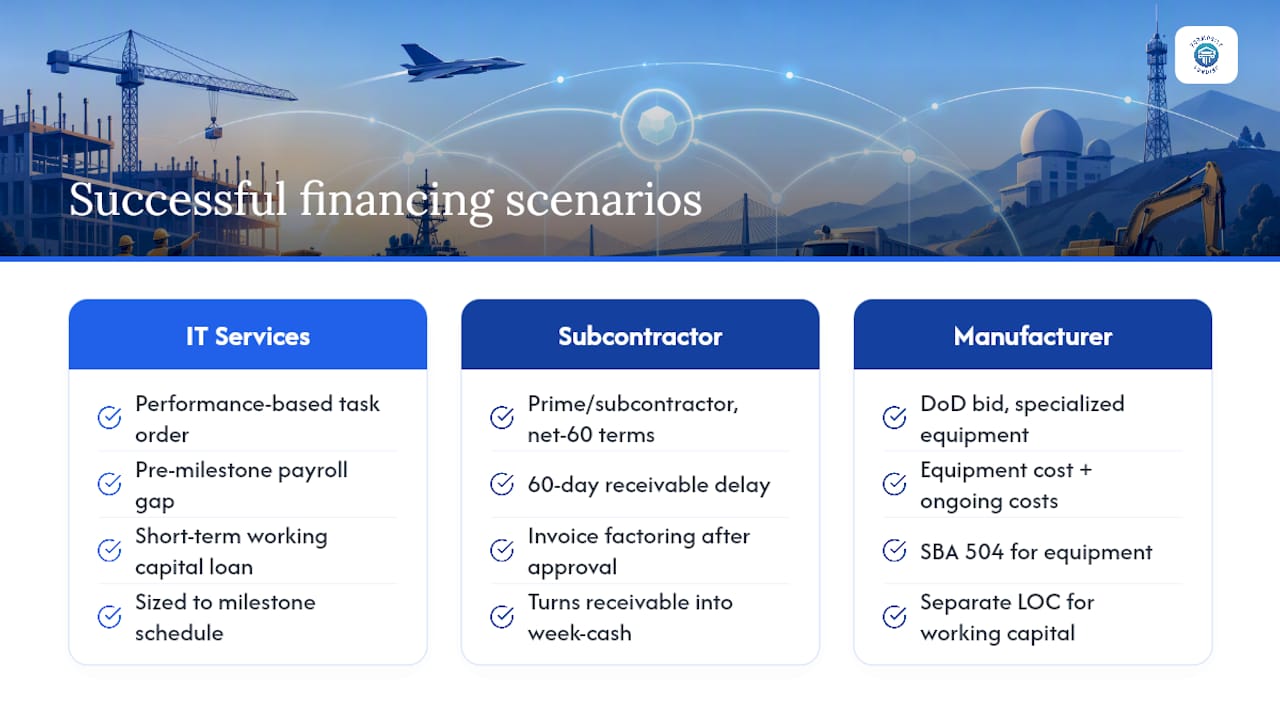
A small IT services firm awarded a task order with performance-based payments tied to quarterly deliverables can hit a cash gap in the weeks before each milestone closes, since payroll and subcontractor costs come due before the government releases funds. Bridging that gap with a short-term working capital loan, sized to the exact milestone schedule rather than a round number, keeps the business solvent without overborrowing.
A construction subcontractor working under a prime with net-60 payment terms can turn to invoice factoring once the prime approves an invoice. Selling that receivable converts a 60-day wait into next-week cash, letting the sub keep buying materials for the following phase instead of stalling the schedule.
A manufacturer bidding on a DoD contract requiring specialized equipment can combine an SBA 504 loan for the equipment purchase with a separate line of credit for ongoing materials and labor. The mismatch in what each loan type is built for, fixed assets versus working capital, is exactly why contractors often need more than one financing tool running at once rather than a single all-purpose loan.
In each case, the financing fits the contract's actual payment mechanics instead of a generic cash need. That match, more than the loan amount itself, determines whether the financing actually solves the problem.
A Practical Take on Financing Government Work
Speed costs money, and cheap financing costs time. That trade-off drives most of the decisions in this space, and I've come to think small contractors overthink which single option to pick when the smarter move is combining tools. Pair an SBA loan or private credit line with active negotiation of payment terms on the contract itself. Prepare your documents and run lender pre-qualification while your proposal is still under review, not after you win. Waiting until award notification to start financing conversations is the single most avoidable delay in this whole process.
— Alvin
Get Matched to Contract Financing Through Formosityfunding
Formosityfunding is the direct route to lender offers for small contractors who can't afford to wait on a solicitation clause that may never materialize. Instead of researching dozens of banks and SBA-approved lenders one by one, you pre-qualify once, without a credit hit, and see multiple real offers across working capital loans, business lines of credit, SBA loans, and equipment financing side by side.
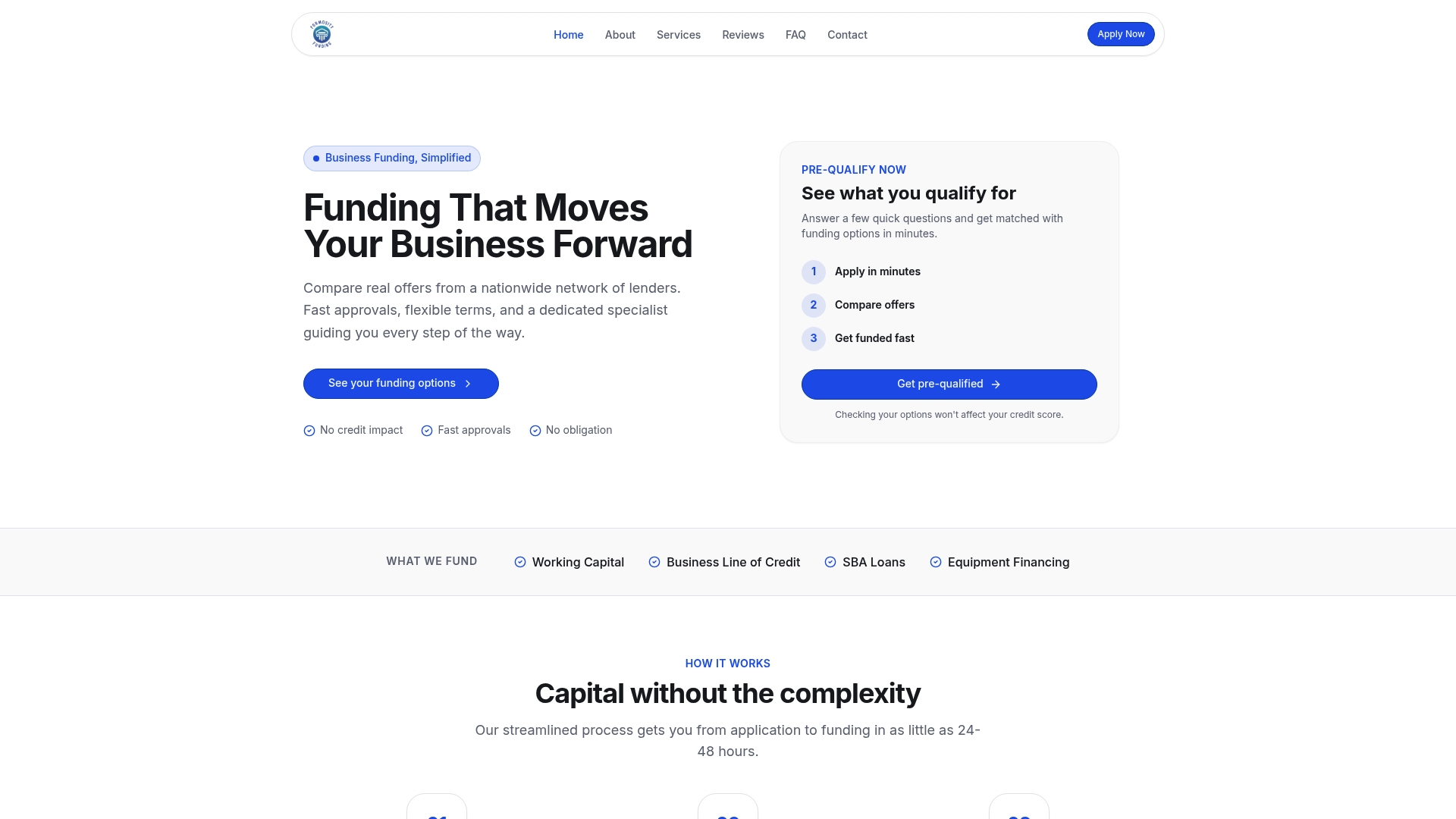
Start by pulling your SAM.gov registration, UEI, and recent financial statements together, the same documents contracting officers and lenders both check. Then head to the Formosityfunding services page to begin pre-qualification. Dedicated funding specialists walk you through comparing offers and timing your funds so they land ahead of your contract's next milestone, not after it.
This article is general information, not a substitute for advice from a qualified financial advisor. Consult a qualified financial professional about your own circumstances before acting on anything here.
Sources
FAQ
Does the government ever loan money directly to contractors?
No. Contract financing under FAR Part 32 accelerates payment on work already tied to a contract, but it isn't a direct loan and it requires the contracting officer's discretion under FAR 32.104.
Can I get an SBA loan before I win a contract?
Yes. SBA-backed loans, including 7(a) and microloans, can fund pre-award costs like bonding and staffing, and Lender Match helps connect you to approved lenders while your proposal is still under review.
What's the fastest way to cover a cash gap on a government contract?
A private line of credit or invoice factoring typically closes faster than an SBA loan, often within days, making them common choices when a delayed federal payment threatens payroll or materials costs.
Does Formosityfunding work specifically with government contractors?
Formosityfunding matches small businesses, including government contractors, with lenders offering working capital, SBA loans, equipment financing, and lines of credit through a single pre-qualification with no credit impact.
How much does it typically cost to win a first federal contract?
The SBA estimates some businesses spend between $80,000 and $130,000 pursuing their first federal award, with returns sometimes taking up to two years to materialize.