

If you need cash to pay a supplier so you can fulfill a confirmed order, purchase order financing is usually the right tool. If you need cash after you've already delivered and invoiced customers, factoring tends to fit better. Both cost more than a bank line of credit, and the right pick depends on where in your sales cycle the cash gap actually sits. This guide walks through the mechanics, the costs, and the red flags for each.
TL;DR:
- Purchase order financing covers most or all supplier costs before production begins, while factoring provides cash after invoice delivery and payment.
- PO financing relies heavily on the buyer’s creditworthiness, with advance rates typically covering full supplier costs, and factoring advances a percentage of invoice face value.
- Fees for both options include discount rates, setup charges, reserve holds, and inspection fees, which should be converted into annualized rates for fair comparison.
- It's essential to get written, itemized fee schedules, clear reserve release terms, and recourse or nonrecourse language before signing any agreement to avoid hidden costs.
- Alternatives like business lines of credit or vendor payment terms can often offer cheaper, more flexible funding depending on your sales cycle and credit profile.
Table of Contents
- PO Financing vs Factoring at a Glance
- How Purchase Order Financing Actually Works
- How Invoice Factoring Actually Works
- Turning Fee Schedules Into a Real Comparable Cost
- A Working Checklist Before You Sign an Offer
- Spotting Predatory Terms Before They Cost You
- When a Line of Credit or Vendor Terms Beat Both
- Why This Comparison Matters to Me
- Compare Your Options Before You Commit
- Sources
- FAQ
PO Financing vs Factoring at a Glance
The two products solve different timing problems. Purchase order financing puts money into your business before you produce or ship anything, funding the purchase order itself. Factoring puts money into your business after you've delivered goods or services and issued an invoice, funding the receivable.
A furniture manufacturer that lands a large purchase order but lacks the cash to buy raw materials is a textbook PO financing case: the funder pays the supplier or the factory directly, the goods get made and shipped, and the funder collects once the buyer pays. A wholesale distributor sitting on $150,000 in unpaid invoices from retail customers who pay on 60-day terms is a textbook factoring case: the invoices already exist, and the distributor just needs the cash sooner.
- Timing: PO financing funds before production or shipment; factoring funds after delivery and invoicing.
- Who gets paid first: PO financing pays your supplier or manufacturer directly; factoring advances cash to you against invoices you already hold.
- Advance rates: PO financing often covers most or all of the supplier cost, while factoring advances a percentage of invoice face value, with the remainder released as a reserve once the customer pays.
- Control of collections: PO financing rarely touches your customer relationship, while factoring, especially the sale-of-receivables kind described in the Comptroller's Handbook on accounts receivable and inventory financing, can shift collections to the factor.
- Speed: Both can fund faster than a traditional term loan, but PO financing underwriting takes longer because the funder has to verify the supplier and the order.
Use this quick filter: if you have a confirmed order but no product yet, look at PO financing. If you have delivered goods and unpaid invoices, look at factoring. If your gap is neither, a line of credit may be the cheaper answer, covered later in this guide.
How Purchase Order Financing Actually Works
PO financing exists to solve one narrow problem: you have a real order, but not enough cash to produce or buy the goods to fill it. The transaction flow follows a predictable path.
- You receive a confirmed purchase order from a creditworthy buyer.
- You apply for PO financing, submitting the PO, supplier quotes or invoices, and information about your buyer.
- The funder pays your supplier or manufacturer directly, or issues a purchase order of its own to the manufacturer on your behalf.
- The goods are produced and shipped, often with the funder tracking inspection and delivery milestones.
- You invoice your buyer, the buyer pays (often into an account controlled by the funder), and the funder deducts its fees before releasing the balance to you.
Underwriting focuses less on your business credit and more on the strength of the order itself. Funders look closely at your buyer's payment history and creditworthiness, since that's ultimately what gets repaid, and at your supplier's ability to deliver on time and to spec. Expect to provide the purchase order, supplier invoices or quotes, shipping and inspection documents, and some form of credit reference or trade history for your buyer.
Advance rates vary by deal, but funders typically cover most of the supplier's cost, sometimes the full amount, since the funder is often paying that supplier directly rather than handing cash to you. Costs usually stack as a percentage fee on the funded amount, sometimes tiered by how long the transaction takes to close out.
Pro Tip: Ask any PO funder how they verify your buyer's ability to pay before they release funds to your supplier; that verification step is often what separates a legitimate funder from one that will stall your order.
PO financing doesn't fit every business. Service businesses with nothing physical to purchase generally can't use it, and funders will decline purchase orders they can't independently verify, meaning informal or verbal orders rarely qualify.
How Invoice Factoring Actually Works
Factoring starts where PO financing ends: after you've already delivered goods or services and generated an invoice. The mechanics differ enough from PO financing that it's worth walking through separately.
- You deliver goods or complete a service and issue an invoice to your customer.
- You sell or assign that invoice to a factoring company, sometimes one invoice at a time, sometimes your whole receivables ledger.
- The factor advances you a percentage of the invoice's face value, often within a day or two.
- The factor collects payment directly from your customer according to the invoice terms.
- Once your customer pays in full, the factor releases the remaining reserve to you, minus its fees.
Recourse and nonrecourse are the two structures you'll encounter, and the difference matters. In recourse factoring, you remain responsible if your customer never pays, meaning the factor can require you to buy back the unpaid invoice. In nonrecourse factoring, the factor absorbs more of that credit risk, usually in exchange for a higher fee. The Comptroller's Handbook notes that factors typically purchase receivables outright, with or without recourse, and often set exposure limits by customer, which can cap how much of a concentrated customer base you can actually fund. A deeper comparison of the two structures is worth reading before you sign anything.
Factoring firms often bundle in services beyond the cash advance: credit checks on your customers before you extend terms, bookkeeping on your receivables ledger, and collections handling. That bundle is part of the value proposition, but it also means your customer will likely know a third party is now involved in getting paid since the factor is the one calling about overdue invoices.
Cost mechanics typically run on a discount rate applied to the invoice face value, sometimes with additional fees layered in.
Turning Fee Schedules Into a Real Comparable Cost
Fee structures across PO financing and factoring rarely use the same language, which makes side-by-side shopping harder than it should be. Watch for these common line items:
- Discount or fee rate: the core percentage charged on the funded amount, often quoted per month or per 30-day period.
- Origination or setup fees: a one-time charge for opening the facility.
- Service or administration fees: ongoing charges for managing the ledger, collections, or reporting.
- Reserve or holdback: the portion of an invoice's value withheld until final payment, which affects how much cash you actually have in hand.
- Inspection fees: charges tied to verifying goods or shipments in PO financing deals.
- Early termination fees: charges for exiting a contract before its term ends, which can be substantial if buried in fine print.
To compare offers fairly, convert every fee into a monthly or annualized rate rather than comparing raw percentages. Reserve timing changes this math too: the longer a factor holds your reserve before releasing it, the more expensive the deal is in effective terms, even if the quoted discount rate looks identical to a competitor's.
Recent FTC enforcement actions since 2022 show a pattern of hidden fees, surprise exit charges, and unauthorized debits in small-business financing products. Get every fee line in writing before you sign, and treat any funder who resists a full fee schedule as a warning sign, not a formality.
A Working Checklist Before You Sign an Offer
Run through five questions before you commit to either product. Do you have a confirmed purchase order, or do you already have delivered goods and unpaid invoices? Is your gap tied to production and supplier costs, or to slow-paying customers after the sale? Can your buyer's creditworthiness be independently verified? Would losing control of collections calls to a third party create a problem with your customer relationships? Can you tolerate the cost of a rate that, once annualized, may run well above a bank loan?
Have these documents ready before your first call with a funder, since incomplete paperwork is the most common reason underwriting drags out.
- Purchase orders or invoices, along with proof of delivery where applicable.
- Supplier invoices or quotes for PO financing deals.
- Buyer or customer credit references and payment history.
- Recent business bank statements.
Before signing, insist on a written, itemized fee table, clear terms on when reserves get released, explicit recourse or nonrecourse language, and written authorization requirements for any bank debits the funder plans to make. The SBA notes that invoice financing structures can let you keep control of collections while still advancing cash against unpaid invoices, which is worth asking about directly if maintaining your customer relationships matters to you.
Pro Tip: Read the termination clause before the fee schedule. A low headline rate paired with a steep early exit fee can cost more than a higher rate with no lock-in.
Red flags worth walking away from: fee lines you can't get explained in plain language, demands for undisclosed deductions taken before funds hit your account, broad unauthorized debit rights, and recourse language that's vague about when you'd be on the hook for an unpaid invoice.
Spotting Predatory Terms Before They Cost You
Regulatory enforcement in this space follows a consistent pattern: hidden fees, surprise charges for exiting a contract early, and debits pulled from a business bank account without clear authorization. FTC actions dating back to 2022 have targeted exactly these practices in small-business financial products, which makes them worth treating as live risks rather than fine print.
Before signing any PO financing or factoring agreement, request in writing:
- A complete, itemized fee schedule with no line items marked "as applicable" or left blank.
- Clear language on reserve release timing and what triggers a delay.
- Explicit recourse terms spelling out exactly when you'd owe money back.
- Written limits on the funder's authority to debit your account, and under what conditions.
If a funder won't put these terms in writing, or the contract language contradicts what a sales rep told you verbally, that's a reason to seek a second opinion. A business insurance broker or attorney familiar with commercial contracts, including guidance on contractual risk in a business owner's policy, can review liability and indemnification clauses before you sign. If a funder has already taken money you didn't authorize, document everything and consider filing a complaint with the FTC.
When a Line of Credit or Vendor Terms Beat Both
PO financing and factoring aren't your only options, and for some businesses they're not the cheapest ones. A revolving business line of credit, where you pay interest only on what you draw, is often the least expensive flexible option when you qualify, since it isn't tied to a specific order or invoice.

The SBA's 7(a) Working Capital Pilot Program is worth a look if you need funding earlier in the sales cycle than a standard line of credit typically allows. It introduces transaction-based and asset-based features designed to compete directly with order- or invoice-based financing, often at a lower cost.
Vendor credit, negotiating longer payment terms directly with your suppliers, can also close a gap without involving a third-party funder at all, and it costs nothing beyond the relationship you maintain with that supplier.
A funding marketplace can help you weigh these options against PO financing and factoring quotes side by side, since the right fit depends on your credit profile, order size, and how quickly you need cash in hand.
Why This Comparison Matters to Me
I'm Alvin, and I write about working capital because the terminology in this space is designed to confuse, not clarify. Formosity Funding operates as a marketplace connecting small businesses to a nationwide network of lenders, matching applicants with working capital, lines of credit, SBA loans, and other funding categories based on their specific situation. What I've found reviewing offers across this industry is simple: the businesses that get the best terms are the ones that ask for every fee in writing before they sign anything.
— Alvin
Compare Your Options Before You Commit
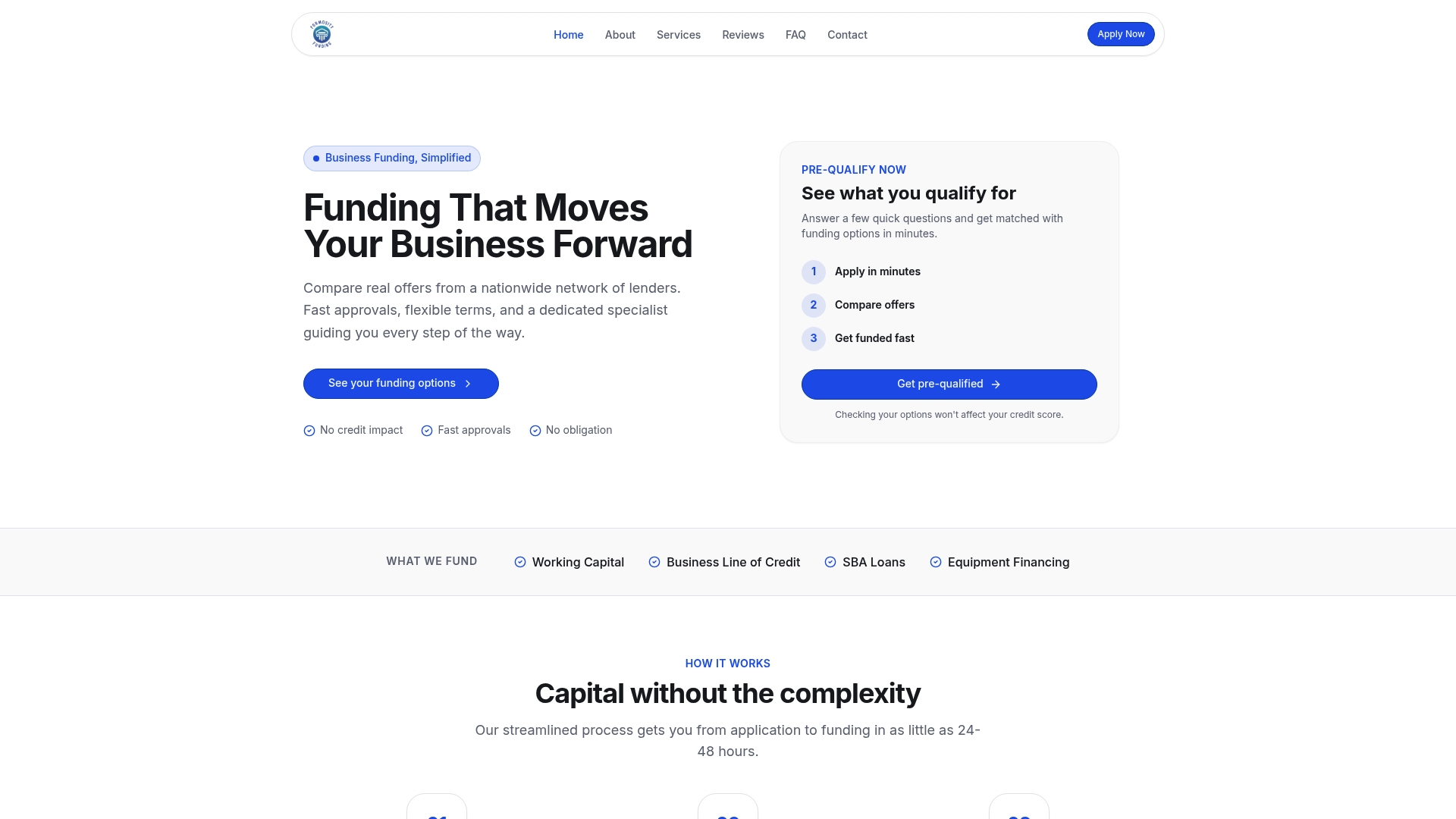
Reading about PO financing and factoring only gets you so far. A funding marketplace can help small business owners compare offers from lenders across working capital, business lines of credit, SBA loans, and other funding categories, often with pre-qualification that doesn't affect your credit. Expect to share basic business details and the documents outlined above, then get matched with real offers you can compare side by side. Explore business funding options to see what you might qualify for.
This article is general information, not a substitute for advice from a qualified financial advisor. Consult a qualified financial professional about your own circumstances before acting on anything here.
Sources
- Comptroller's Handbook: Accounts receivable and inventory financing (OCC)
- 3 ways to get working capital for your business (SBA blog)
FAQ
Is supply chain financing the same as factoring?
No. Supply chain financing typically extends payment terms on the buyer's side of a transaction, while factoring involves a seller getting an advance on receivables it already holds. They solve different sides of the same cash-timing problem.
What are the disadvantages of using a factoring company?
Factoring can mean losing control of collections, since your customer may deal directly with the factor rather than you, and factors often set exposure limits by customer that can restrict funding if your receivables are concentrated in a few buyers, according to the OCC's Comptroller's Handbook. Recourse factoring also leaves you responsible if a customer never pays.
How much does PO financing cost?
Cost varies by funder and deal structure, typically running as a percentage fee on the funded amount rather than a flat rate. Converting that fee to an annualized rate, as shown earlier in this guide, is the most reliable way to compare offers against factoring or a line of credit.
Is accounts receivable financing the same as factoring?
Not exactly. Accounts receivable financing can let you keep control of collections while borrowing against unpaid invoices, while factoring often involves selling the receivable outright to a third party who then handles collections, according to SBA guidance.