

Affiliation under SBA rules means one business has the power to control another, whether or not that power gets used, and when affiliation exists, SBA counts the receipts and employees of both businesses together. That combined total can push a company over the size limit for its industry, disqualifying it from SBA loans and small business contract set-asides. If you share ownership, management, or major contracts with another company, check your affiliation exposure before you apply.
TL;DR:
- SBA considers control or influence through ownership, management, or contracts, even without active use, and combines affiliate figures for size determination.
- Minority owners with veto rights or contractual control can be counted as affiliates despite small ownership stakes, potentially disqualifying a business.
- Joint ventures, mentor-protégé agreements, and franchises have specific rules and conditions that can either establish or avoid affiliation status.
- Maintaining clear, separate records of ownership, decision-making, and financial transactions helps rebut affiliation claims and protects SBA loan eligibility.
- Pending rule updates in 2026 may raise industry size limits, so companies should review affiliation exposure and prepare documentation beforehand.
Table of Contents
- What affiliation is under SBA law and why it matters
- What triggers affiliation: ownership, control, and shared interests
- How joint ventures, mentor-protégé deals, and franchises are treated
- How SBA counts receipts and employees across affiliated companies
- A practical checklist to avoid or rebut affiliation findings
- Enforcement trends and where size standards are heading in 2026
- Getting affiliation right before you apply for financing
- How Formosity Funding helps you prepare beyond the SBA maze
- Where to verify these rules yourself
- Sources
- FAQ
What affiliation is under SBA law and why it matters
The affiliation standard lives in 13 CFR § 121.103, and the language is broader than most business owners expect. Two concerns are affiliates when one controls or has the power to control the other, or when a third party controls or has the power to control both. Control does not have to be exercised. The mere ability to direct a company's decisions is enough to trigger affiliation, which is why the SBA calls its method a "totality of circumstances" test rather than a checklist.
Concerns are affiliates of each other when one controls or has the power to control the other, or a third party or parties controls or has the power to control both.
That standard covers a wide range of relationships:
- Ownership stakes, whether majority or a concentrated minority
- Board seats, officer roles, and shared management
- Contracts that give one party outsized influence over another's operations
- Agreements to merge or combine in the near future
The reason this matters so much is practical. SBA's size standards guidance requires that affiliates' receipts and employees be added together before comparing the total against the relevant NAICS size limit. A company that looks small on its own tax returns can be classified as a large business the moment SBA links it to an affiliate.
What triggers affiliation: ownership, control, and shared interests
SBA looks at several distinct pathways to a finding of affiliation, and a business can trip more than one at the same time.
- Ownership concentration. A single owner, or a group of owners with roughly equal minority stakes acting together, can be presumed to control a concern once their combined holdings pass 50%, according to 13 CFR § 121.103.
- Stock options and convertible securities. SBA treats these as though they were already exercised when evaluating control, unless the options are so speculative or unenforceable that they carry no real weight.
- Common management. Interlocking officers or directors who set policy for two companies can create affiliation even without shared ownership.
- Negative control. A minority owner who holds veto rights over major decisions, such as budget approval or hiring, can control a company just as effectively as a majority owner.
- Contractual control. Loan covenants, exclusive supply agreements, or management contracts that hand one party the power to direct another's business can be enough on their own.
- Identity of interest. Family members, including spouses and minor children, generally have their ownership interests combined and treated as one holder, per the same regulation.
Fifty percent ownership is the clearest trigger, but it is far from the only one. A business with no single owner above 20% can still be found affiliated if a handful of minority holders vote as a bloc, or if a management contract effectively hands day-to-day control to an outside party. SBA does not require a single dominant factor. It can add up several smaller ties, shared office space, an interlocking board seat, a joint bank account, until the combination amounts to control.
This is where many owners get caught off guard. A silent investor with a 15% stake and a contractual right to approve any expense over a set amount may not think of themselves as a controlling party. Under SBA's negative control doctrine, that veto right can be enough to count them as one.

How joint ventures, mentor-protégé deals, and franchises are treated
Certain business structures come with built-in affiliation exceptions, but each one has conditions attached.
- Joint ventures. Two firms can bid together as a joint venture without being treated as affiliates for that specific contract, but the arrangement is generally limited to two years and must be properly identified in SAM.gov.
- Mentor-protégé arrangements. SBA's joint venture guidance requires the mentor-protégé agreement to be approved by SBA before the protégé submits an offer on a contract relying on the exclusion.
- Franchises. Franchisees are generally not affiliated with the franchisor solely because of the franchise agreement, but affiliation can still arise if the franchisor controls day-to-day operations beyond standard brand and quality requirements.
- Newly organized concerns. A new company formed by the same people who ran a prior firm can be found affiliated with that prior firm if the timing and ownership overlap suggest an attempt to spin off a "small" entity from a larger one.
Subcontracting limits also matter for joint venture exclusions to hold up:
| Contract type | Subcontracting limit for the small business partner |
|---|---|
| Services or supplies | At least 50% performed by the small business |
| Specialty trade construction | The majority performed by the small business |
| General construction | The majority performed by the small business |
These thresholds come from SBA's contracting assistance programs guidance and apply on top of the joint venture's time limits, not instead of them.
How SBA counts receipts and employees across affiliated companies
Once affiliation is established, the math is straightforward: SBA adds the receipts or employees of every affiliate together, including foreign affiliates, and compares the total against the size standard for the relevant NAICS code. Whether receipts or employees are the controlling metric depends entirely on which standard applies to that industry.
- Manufacturing and several other sectors use an employee count standard.
- Most services, retail, and construction industries use an average annual receipts standard.
- Both counts include the affiliate's full figures, not a prorated share based on ownership percentage.
Example 1, receipts. Say a consulting firm reports $4.5 million in average annual receipts and its NAICS code carries a $8 million size standard. On its own, it qualifies as small. If that firm is found affiliated with a second company reporting $5 million in average annual receipts, the combined total of $9.5 million exceeds the $8 million threshold and the firm no longer qualifies.
Example 2, employees. A manufacturer with 380 employees falls under a 500-employee size standard on its own. If SBA finds the manufacturer affiliated with a supplier that has 150 employees, the combined headcount of 530 pushes the manufacturer over the limit.

Neither of these examples reflects a real dispute. They illustrate how SBA's size standards guidance applies aggregation once affiliation is found. When your affiliation status or size classification changes, update your SAM.gov profile promptly. SAM records do not update automatically when a rule or an ownership structure changes.
A practical checklist to avoid or rebut affiliation findings
Affiliation findings often come down to documentation. Businesses that keep clear records of independent operation have a much easier time rebutting a claim than those relying on verbal understandings.
- Map every equity and control right. List all owners, board members, and anyone with contractual veto power over budgets, hiring, or major contracts.
- Review contracts for hidden control provisions. Loan agreements, supply contracts, and management agreements can hand over more control than the parties intended.
- Keep accounting, payroll, and banking fully separate. Shared bookkeeping or a joint bank account is one of the fastest ways to invite an affiliation finding.
- Maintain separate facilities and leases where possible. Shared office space is not automatically disqualifying, but it strengthens a finding when paired with other ties.
- Document independent decision-making as it happens. Board minutes, signed contracts, and dated correspondence showing one company made its own calls are worth more after the fact than a memory of how things worked.
- Get SBA approval before relying on an exclusion. Mentor-protégé agreements need SBA sign-off before you bid, and joint venture exclusions need to be properly filed in SAM.gov.
- Request a formal size determination when the stakes are high. SBA's Office of Size Standards can be reached at sizestandards@sba.gov, and local Government Contracting Area Offices handle size protests.
- Bring in counsel or a contracting specialist for complex ownership structures. Multiple minority owners, cross-holdings, or recent entity formations are exactly the situations where a self-assessment misses something.
Pro Tip: Keep a standing folder of contemporaneous records, separate bank statements, dated board minutes, independent lease agreements, so you're not reconstructing your case for independence after a contracting officer or SBA examiner already asks the question.
Enforcement trends and where size standards are heading in 2026
A June 2026 settlement required government contractor executives to pay $21.3 million to resolve a fraud scheme built on a pass-through arrangement, where an ineligible party actually controlled execution, staffing, and finances behind a service-disabled veteran-owned small business. It is a reminder that labels on paper do not protect against a finding based on who actually runs the business.
Investigators focus on who performed the work and controlled the money, not the contract's stated ownership structure.
Separately, SBA's August 2026 proposed rule would raise standards across 338 industry groups, potentially reclassifying over one hundred thousand firms as small. Review your affiliation exposure before this rule finalizes, not after you have already bid or borrowed.
Getting affiliation right before you apply for financing
The businesses that stumble on affiliation almost always share one habit: they treat it as a legal afterthought instead of an operational discipline. Clean books, documented independence, and updated SAM.gov records protect both a loan application and a contract bid. Get the paperwork right before you need it, not after someone asks.
— Alvin
How Formosity Funding helps you prepare beyond the SBA maze
Affiliation rules determine whether you qualify for an SBA loan in the first place, but they don't have to be the only path forward. A financial services platform connects small and medium-sized businesses to a nationwide network of lenders offering various financing options such as working capital, business lines of credit, SBA loans, equipment financing, and commercial real estate financing, all accessible through a single application.
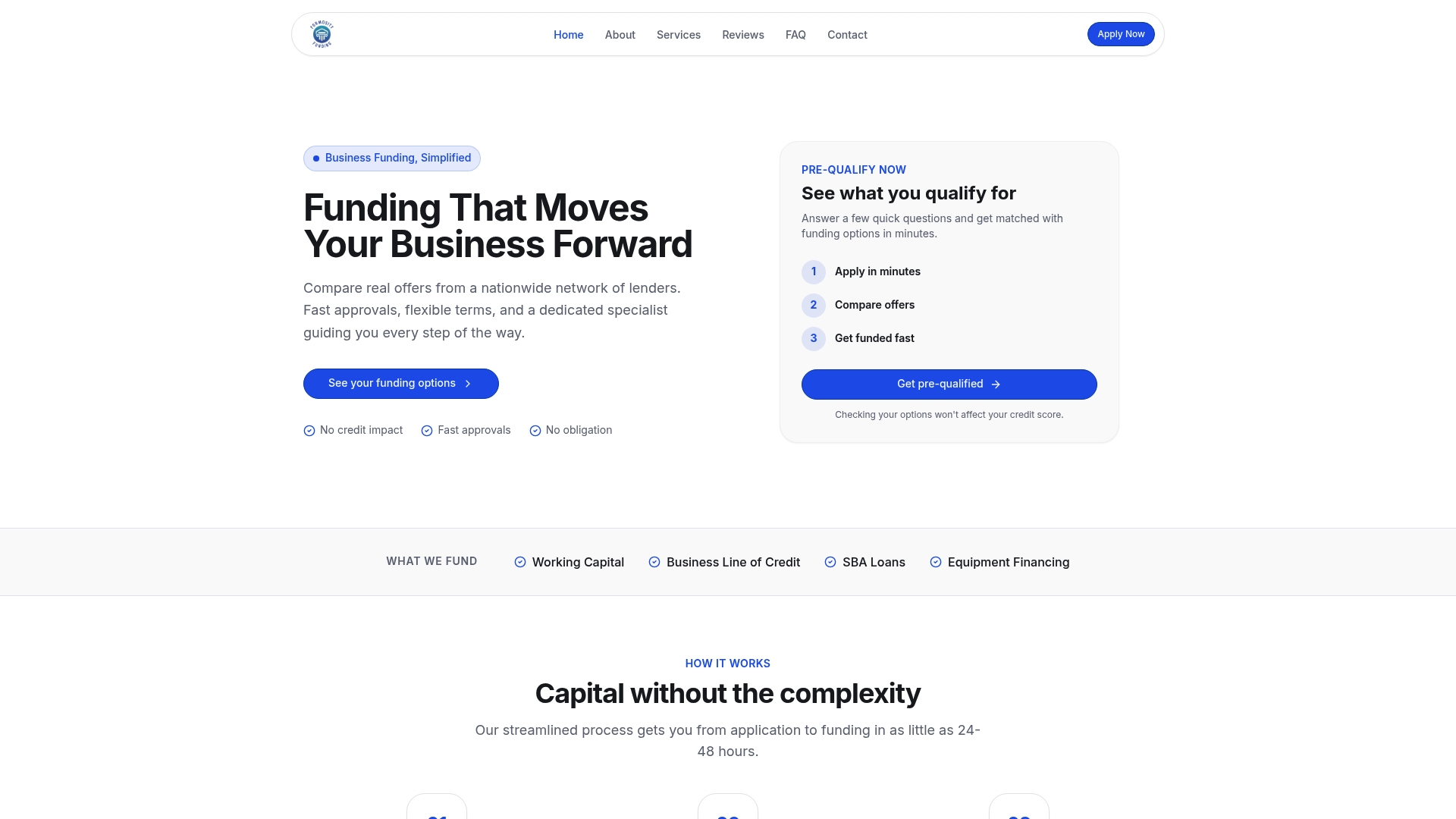
If your affiliation status is murky or still being sorted out, a dedicated funding specialist can help you weigh options while you get the documentation in order:
- Prequalify to see what you might realistically qualify for
- Review a documentation checklist before you formally apply, similar to the loan requirements guidance many applicants overlook
- Consider a Business HELOC as an alternative if SBA eligibility remains uncertain
- Schedule a funding consultation to compare loan structures once your affiliation picture is clear
Visit Formosity Funding's services page to see the full range of financing options and start a pre-qualification.
Where to verify these rules yourself
- 13 CFR § 121.103: the full affiliation regulation and its exceptions
- SBA size standards guide: aggregation rules and contact channels
- SBA joint ventures page: approval timing and exclusion limits
- For hands-on help separating entities or cleaning up documentation, TLCConsulting works on finance and compliance matters like these
This article is general information, not a substitute for advice from a qualified financial advisor. Consult a qualified financial professional about your own circumstances before acting on anything here.
Sources
- eCFR :: 13 CFR 121.103 -- How does SBA determine affiliation?
- Size standards | U.S. Small Business Administration
- Joint ventures | U.S. Small Business Administration
- SBA issues proposed rules on industry size standards and revised size standards methodology
FAQ
What are the rules for affiliation under the SBA Paycheck Protection Program?
Paycheck Protection Program affiliation followed the same general control-based standard in 13 CFR § 121.103, aggregating employees across affiliated entities to determine eligibility for that now-closed program. For current SBA loan and contracting programs, the same affiliation regulation still governs how affiliates are identified and counted.
How does SBA determine affiliation?
SBA uses a totality of circumstances test under 13 CFR § 121.103, looking at whether one concern controls or has the power to control another through ownership, management, contracts, or other ties. No single factor is required. Multiple smaller connections can combine into a finding of affiliation even without majority ownership.
What are the new SBA eligibility rules for 2026?
SBA proposed rule changes in August 2026 would update size standards across 338 industry groups, which could reclassify a large number of firms as small under revised NAICS thresholds. The affiliation standard itself is not changing under this proposal, only the size thresholds that affiliated receipts and employees get measured against.
What is the 20% rule for SBA?
There is no standalone "20% rule" in the affiliation regulation itself. Ownership concentration matters most around the 50% threshold described in 13 CFR § 121.103, though smaller minority stakes combined with control rights like veto power can still trigger an affiliation finding under the totality of circumstances test.