

Most SBA borrowers should expect a 10% equity injection when financing a start-up or a complete change of ownership, whether the loan runs through the 7(a) program or the 504 program. Lenders get real flexibility on 7(a) loans of $500,000 or less, often applying their own private-sector policies instead of a fixed percentage, as allowed by SBA policy. The exact number still depends on your deal structure, your lender, and how well your documentation holds up.
TL;DR:
- For loans under $500,000, lenders can apply their own policies, and may require less than the standard 10% equity injection depending on their discretion.
- SBA rules mandate at least a 10% equity injection for start-ups and complete ownership changes, but this can vary with lender policies on small deals.
- Borrowers should prepare source-of-funds documentation early, including bank statements and gift letters, to expedite underwriting and avoid delays.
- Seller financing and contributions from family or business assets require detailed underwriting checks, such as standby agreements and Quality of Earnings reviews.
- The latest SBA procedural updates, effective from 2024 to 2026, revise eligibility and documentation requirements, making it essential to review current notices before applying.
Table of Contents
- SBA Rules at a Glance: 7(a) vs 504 and SOP 50 10 8 Updates
- Who Typically Must Provide a 10% Injection and When Lenders Can Require More
- How Lenders Verify Equity Injection: Underwriting Checks and QoE Relevance
- Where to Record Equity Injection in SBA Paperwork
- Practical Borrower Checklist and Timeline to Document Equity Injection
- Publisher Perspective: How Formosity Funding Supports SBA Equity Documentation
- Formosity Funding: A Next Step to Prepare and Submit Your SBA Application
- Sources
- FAQ
SBA Rules at a Glance: 7(a) vs 504 and SOP 50 10 8 Updates
The SBA runs two distinct loan programs, and each treats equity injection differently. Under Business Loan Program Improvements, 7(a) lenders must confirm a 10% equity injection for start-up businesses and complete changes of ownership. For loans of $500,000 or less, though, SBA policy allows lenders to fall back on their own private-sector underwriting standards rather than the fixed 10% rule. That flexibility speeds up smaller deals but means two borrowers with similar profiles can face different requirements depending on which lender they use.
The 504 loan program works differently. It generally requires the borrower to contribute at least 10% of total project costs, and that contribution has to be cash or property tied directly to the project. Borrowed injections are allowed, but only when the debt is subordinate to the 504 loan and its repayment term doesn't outlast the 504 loan itself.
Recent procedural updates matter here too. SBA notices issued between 2024 and 2026, including the technical updates to SOP 50 10 8, revise program guidance and eligibility rules, including citizenship and residency changes that take effect March 1, 2026. Borrowers preparing an application this year should check the current notice rather than rely on an older summary.
A few points worth keeping straight:
- 7(a) loans over $500,000 require the SBA’s 10% equity injection for start-ups and ownership changes.
- 7(a) loans of $500,000 or less give lenders flexibility to apply their own private-sector policies instead of the fixed SBA minimum.
- 504 loans require a minimum 10% borrower contribution tied to project costs, with specific rules on borrowed injections.
- SOP notices from 2024 through 2026 have updated eligibility language; borrowers should refer to the latest guidance.
Who Typically Must Provide a 10% Injection and When Lenders Can Require More
Two triggers matter most under SBA policy: a "start-up" business and a "complete change of ownership." A start-up generally means the business has been operating for less than two years, or the new owner has no meaningful track record running that specific operation.
Here's how that plays out in practice:
- A first-time buyer acquiring an entire existing business triggers the complete-change-of-ownership rule and the 10% minimum.
- An existing partner buying out a co-owner to take full control also counts as a complete change of ownership.
- A brand-new business with no operating history falls under the start-up trigger, regardless of loan size.
- A minority partner buying an additional 20% stake, while the seller retains a controlling interest, may not trigger the full 10% rule since ownership hasn't completely changed hands.
Lender discretion adds another layer. For 7(a) loans of $500,000 or less, the Business Loan Program Improvements guidance lets lenders apply their private-sector credit policies instead of the SBA's standard equity rule. Borrowers shopping multiple lenders for the same loan size sometimes find meaningfully different equity expectations.
How Lenders Verify Equity Injection: Underwriting Checks and QoE Relevance

Lenders don't just take your word for where the money came from. They trace it. Source-of-funds checks typically involve reviewing several months of bank statements to confirm funds weren't recently deposited from an undisclosed loan or transfer. Gift funds get validated through signed letters and, often, a matching withdrawal from the donor's account.
For acquisitions involving seller financing, the underwriting gets more involved:
- Full or partial standby periods on seller notes, usually the first 24 months, are checked against the SOP guidance in Info Notice 5000-848663, which also requires that at least 25% of the required injection come from non-seller sources.
- Seller notes with balloon payments are generally not acceptable unless structured on standby.
- A Quality of Earnings review or a pro forma debt-to-worth model often becomes necessary when seller debt is a meaningful part of the deal, since lenders want assurance the business can service both the SBA loan and any standby debt once it converts to active repayment. One resource on QoE requirements under SOP 50 10 8.1 breaks down when that analysis becomes part of underwriting.
Borrowers who prepare a clean debt-to-worth model and organized bank records before applying tend to move through underwriting faster than those assembling documentation reactively.
Where to Record Equity Injection in SBA Paperwork
Equity injection doesn't just get mentioned in a loan narrative. It has a specific place in SBA forms and in the ETRAN Loan Authorization data entry guide. For 504 loans, Form 1244 captures borrower and ownership information, while Form 2450 records eligibility checks that can affect the loan if left incomplete. Form 1920 plays a similar role on the 7(a) side, documenting how the lender assessed the deal.
Inside ETRAN, the distinction between "Borrower Injection" and "Project equity" matters more than it might seem:
- "Project equity" refers to the mandatory contribution tied to total project cost.
- "Borrower Injection" can refer to an additional, optional injection recorded separately, often noted in Section E authorization language.
- ETRAN's own functional notes indicate that fields for certain items, including some equity injection and standby debt entries, aren't fully supported yet, which means lenders handle the documentation differently case by case.
Because of that variation, it's worth confirming directly with your lender or CDC how they intend to record standby or subordinate injections before closing, rather than assuming the paperwork will match another lender's process.
Practical Borrower Checklist and Timeline to Document Equity Injection
Getting equity injection paperwork right the first time saves weeks. Here's a sequence that works for most borrowers:
- Identify your injection source (cash, asset sale, seller standby, gift) before you start gathering documents.
- Pull several months of bank statements immediately, since these take the longest to organize.
- Order any required appraisal or valuation early, as these often take two to four weeks.
- If seller debt is involved, draft the standby agreement alongside your purchase agreement, not after.
- Request a Quality of Earnings review as soon as an acquisition is under letter of intent, since lenders may require it before final underwriting.
- Collect signed gift letters and matching bank records if any portion of your injection comes from family.
- Submit tax transcripts and confirm they align with your claimed source of funds.
The most common pitfall is treating equity documentation as a last step instead of a parallel track to loan negotiation. Reviewing what's typically required for a small business loan application before you start can help you avoid scrambling once underwriting begins.
Pro Tip: Start ordering appraisals and QoE reviews the same week you sign a letter of intent, not after your lender asks for them.
Publisher Perspective: How Formosity Funding Supports SBA Equity Documentation
Equity injection paperwork trips up more borrowers than the underlying loan terms do. It's not that the requirements are secret, it's that they're scattered across SOP notices, program-specific forms, and lender-specific policy overlays that most business owners never see until they're deep into an application.
The role of a financial services platform in this process is to connect borrowers with lenders across a network and offer guidance on preparing the documentation those lenders expect, including for SBA-backed financing. That's different from working directly with a single bank: a marketplace can match you with lenders whose equity policies fit your situation, but the lender you're ultimately matched with still sets the final terms. For more on what underwriters expect around collateral and asset contributions, see how collateral factors into SBA loan approval.
— Alvin
Formosity Funding: A Next Step to Prepare and Submit Your SBA Application
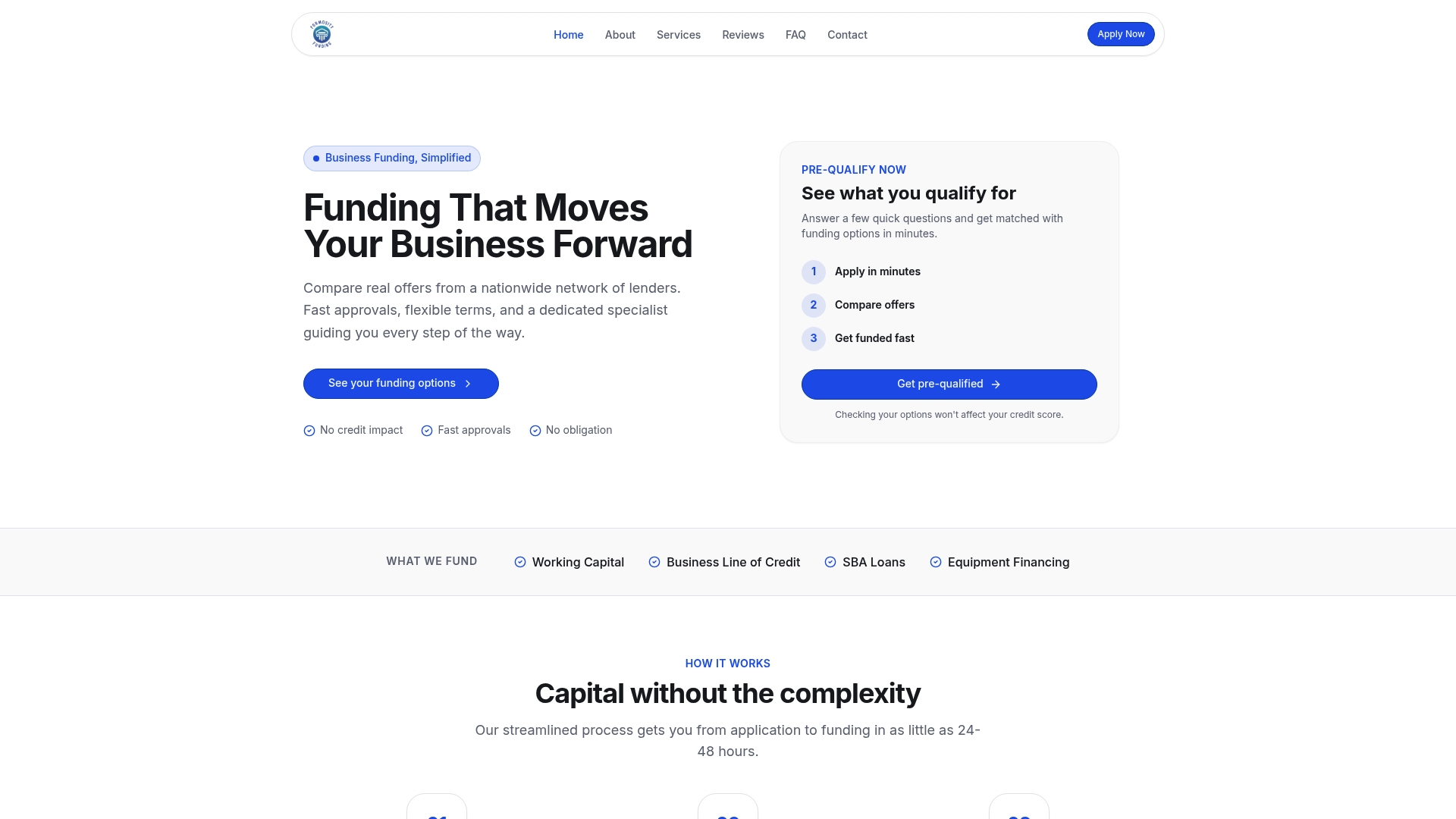
Preparing an equity injection package on your own means chasing SOP language, form instructions, and lender policy pages one at a time. A financial platform brings those pieces together in one place, matching users with lenders from its network while helping them understand what documentation their specific deal will need.
What that looks like in practice:
- Pre-qualification options that do not impact your credit, matching with lenders whose equity and underwriting policies fit your loan size and deal type, and guidance on assembling source-of-funds documents, standby agreements, and related paperwork.
If you're weighing SBA financing against other paths, Formosity Funding's services page outlines the full range of options, including SBA loans, equipment financing, and commercial real estate loans. Start there to see what you pre-qualify for before your equity documentation is even finalized.
This article is general information, not a substitute for advice from a qualified financial advisor. Consult a qualified financial professional about your own circumstances before acting on anything here.
Sources
SBA lenders accept several forms of equity injection, but each comes with its own paperwork trail. Cash from personal savings is the simplest, provided you can show where it came from and how long it's been sitting in your account. Personal asset liquidation, such as selling a vehicle, stock, or property, works too, as long as you can document the sale and trace the proceeds. Seller standby debt, business assets already owned by the buyer, and even gifts from family members can count, though gifts usually require a signed letter confirming there's no expectation of repayment.
Typical documentation lenders and CDCs will ask for:
Not every source passes muster. Recycled SBA loan proceeds, undisclosed liens against contributed assets, and funds borrowed against the business itself without full disclosure are red flags that can stall or kill an application. For asset-based contributions, understanding how collateral gets evaluated and documented helps set expectations before you submit anything.
Pro Tip: Keep every source-of-funds document in one folder from day one. Lenders ask for the same paperwork more than once, and having it ready cuts weeks off the review.
FAQ
What is the minimum equity injection required for an SBA 7(a) loan?
For start-ups and complete changes of ownership, SBA policy requires a 10% equity injection under Business Loan Program Improvements. For loans of $500,000 or less, lenders can apply their own private-sector policy instead of that fixed percentage.
Is it possible EIDL loans will be forgiven?
COVID-19 Economic Injury Disaster Loans (EIDL) are not equity injection sources and are not addressed by the SOP 50 10 8 guidance covered in this article. Borrowers with questions about EIDL forgiveness should check directly with the SBA for current policies rather than assume any forgiveness applies.
What is the 20% rule for SBA?
There isn't a defined "20% rule" in current SBA 7(a) or 504 equity injection guidance. The documented thresholds are the 10% minimum for start-ups and complete changes of ownership under Business Loan Program Improvements and the 10% minimum borrower contribution for 504 projects.
What are the new SBA loan requirements for 2026?
SBA procedural notices issued between 2024 and 2026, including technical updates to SOP 50 10 8, adjust program guidance such as citizenship and residency eligibility rules effective March 1, 2026. Borrowers should review the current notice directly, since these updates can affect eligibility beyond equity injection alone.
What documentation proves my equity injection is legitimate?
Lenders typically want bank statements tracing the source of funds, a signed gift letter for family contributions, a standby agreement for seller debt, and an appraisal for contributed assets. Info Notice 5000-848663 also requires that at least 25% of the required injection in seller-financed deals come from non-seller sources.