
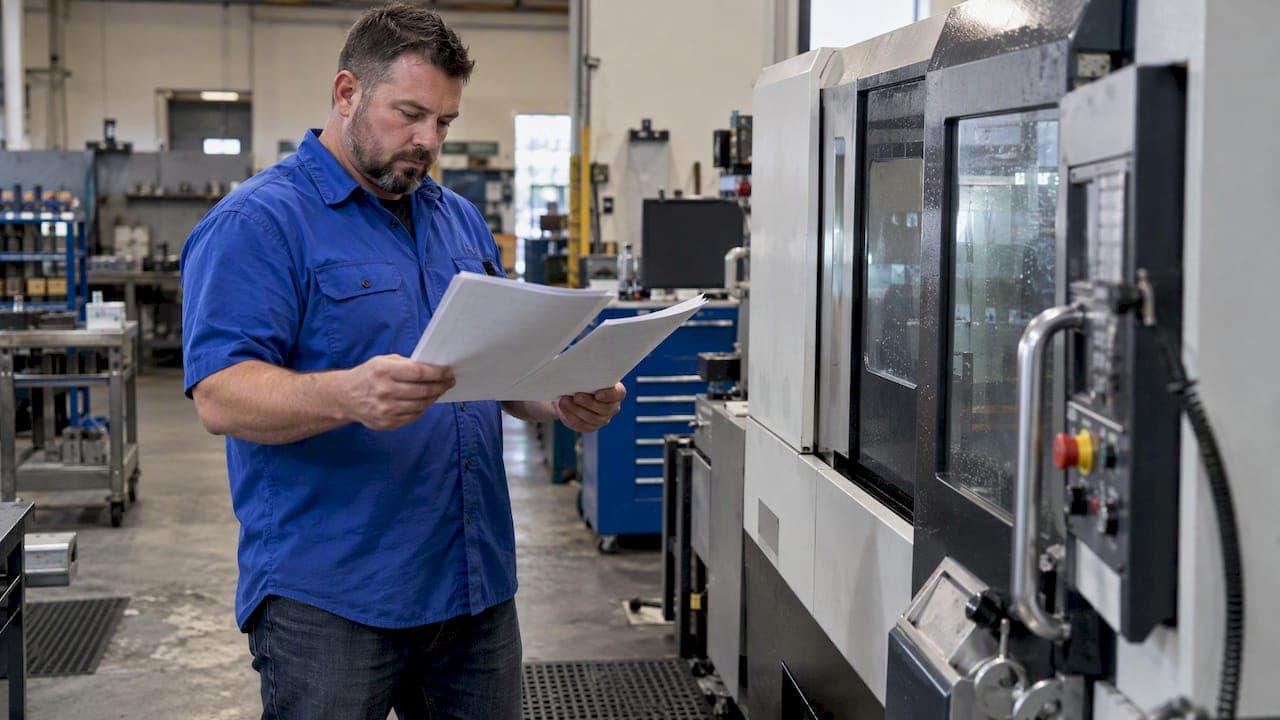
Financed equipment generally qualifies for Section 179 when the agreement is treated as a purchase, not a lease, and the equipment is placed in service in your business. For tax years beginning in 2025, the maximum deduction is $2,500,000, and you must use the property more than 50% for business. IRS Publication 946 and Form 4562 govern the election.
TL;DR:
- Have a tax advisor review the agreement before signing: equity, a nominal buyout, full price plus interest, and ownership risks can indicate a purchase.
- The election cannot exceed active business taxable income or create a net loss; disallowed amounts carry forward, so compare this year’s and next year’s income.
- Track business use from the first day: mixed use limits the eligible cost, and use falling to 50% or less can trigger recapture.
- The deduction applies when equipment is ready and available for use, not at signing; document that date and make the election on Form 4562.
Table of Contents
- How does the Section 179 election work?
- Which equipment and improvements commonly qualify?
- When does financed equipment count as a purchase for Section 179?
- How do you claim Section 179 on Form 4562?
- What are the dollar limits, bonus depreciation rules and recapture risks?
- How do you plan a financed equipment purchase step by step?
- How does Section 179 fit with different equipment financing options?
- How does Section 179 expensing change your cash flow?
- Is leasing or buying better for Section 179 benefits?
- What is the typical timeline for claiming Section 179 on financed equipment?
- What are the most common Section 179 mistakes with financed equipment?
- Our perspective: why contract terms come before the tax election
- How we help you line up equipment financing with Section 179
- FAQ
- Sources
How does the Section 179 election work?
Section 179 lets you deduct the cost of qualifying property in the year you place it in service instead of depreciating it over many years. You make the election on your tax return, and it replaces regular depreciation for the amount you elect. The year that counts is the year the equipment is ready and available for use, not the year you sign the loan or make the first payment.
The basics every owner should know:
- Qualifying property: tangible personal property, off-the-shelf software, and certain qualified real property improvements.
- Business use: the property must be acquired for an active trade or business and used more than 50% for business in the year it is placed in service.
- Income cap: the deduction is limited to taxable income from the active conduct of your trade or business, and it cannot create or increase a net loss.
- Election, not default: you choose how much to expense, which gives you room to balance this year's deduction against future years.
Think of it as a timing tool. You are not getting extra deductions, you are pulling them forward, and the pull-forward only works if you have the income to absorb it.
Which equipment and improvements commonly qualify?
Most owners can answer this quickly with a short mental checklist before talking to a CPA. Items that commonly qualify include:
- Production machinery and shop equipment
- Office furniture and fixtures
- Commercial HVAC and security systems
- Certain vehicles, though passenger autos face lower dollar caps
- Off-the-shelf software
Mixed-use items need extra care. If a truck, laptop, or tool is used partly for business and partly personally, you apply the business-use percentage and only the business portion of the cost is eligible. If business use later drops to 50% or below, you may have to recapture previously claimed deductions.
Some edge cases deserve documentation before you file. Trade-ins change your cost basis. Used equipment can qualify if it is new to you. Property bought as an investment, rather than for active business use, generally does not qualify.
Pro Tip: Keep a simple usage log from day one for any mixed-use asset. A dated record of business miles or hours is the cheapest audit protection you can buy.
When does financed equipment count as a purchase for Section 179?
This is the question that trips up most buyers. Section 179 follows tax ownership, not who holds the title on paper. The IRS says not every financing agreement qualifies: if an agreement is characterized as a lease rather than a conditional sales contract, you generally cannot claim the deduction. The IRS test is whether the agreement is a lease or a conditional sales contract for federal income tax purposes. A lessee can deduct payments as rent, while a conditional sales contract is treated like an outright purchase.
Features that suggest an agreement works like a purchase:
- You build equity in the equipment through your payments.
- You take ownership, or a nominal-cost buyout, at the end of the term.
- The payments are set to cover essentially the full price plus interest.
- You carry the risks of ownership, such as insurance, repairs and loss.
Characterization depends on the facts, so have your tax advisor review the contract before you sign. Our guide on equipment lease versus loan walks through how the two structures differ in practice.
Interest is a separate matter. Loan interest is deductible as a business expense over time, and upfront loan fees or points are treated as prepaid interest that must be amortized over the life of the loan. Neither is part of the Section 179 deduction.
Pro Tip: Ask the lender to state in writing whether the agreement is a loan or conditional sale, then have your CPA confirm it. Do this before you place the equipment in service.
How do you claim Section 179 on Form 4562?
The election lives in Part I of Form 4562, which has lines and columns for the property description, cost, elected cost and the resulting Section 179 expense deduction. The form instructions are worth a read before your preparer starts.
What to have ready:
- The total cost of all Section 179 property placed in service during the year
- The amount you elect to expense for each item
- The business-use percentage for each asset
- Your taxable income from active business activity, which sets the ceiling
If your income limit is lower than the amount you elected, the disallowed portion is not lost. It carries forward to future tax years, though many owners are surprised that the limit applies at all.
Timing and paperwork matter. The placed-in-service date is what counts, so document it with an invoice, delivery receipt or first-use record. If you later want to change your election, you can generally revoke it by filing an amended return. Keep the finance agreement and invoices with your tax file.
What are the dollar limits, bonus depreciation rules and recapture risks?
The numbers set the guardrails for how much you can write off.
- Deduction limit: for tax years beginning in 2025, the maximum is $2,500,000.
- Phase-out: the limit shrinks dollar for dollar once the cost of Section 179 property placed in service exceeds $4,000,000.
- Passenger vehicles: special lower dollar limits apply to passenger SUVs and autos.
- Bonus depreciation: IRS Notice 2026-11 gives interim guidance on the permanent 100% additional first-year depreciation deduction and describes elective options to take a reduced percentage instead for certain property.
- Recapture: if business use falls to 50% or less, or you dispose of the property, previously claimed deductions can come back as income.
For tax years beginning in 2025, the maximum Section 179 expense deduction is $2,500,000, reduced when qualifying purchases exceed $4,000,000. Most small and midsize buyers sit well under that threshold, so the income limit and business-use rule usually bite first.
Recapture is where the SBA warns owners: disposing of equipment after claiming Section 179 can mean reporting earlier deductions as ordinary income. Pass-through owners face special Form 4797 rules for partners and S corporation shareholders. Good records of use and disposal are your defense.
How do you plan a financed equipment purchase step by step?
Here is a simple calculation framework. The inputs are yours, and the steps are what matter. Say you finance a machine and use it partly for personal reasons, with all figures illustrative:
- Multiply the cost by the business-use percentage to find the eligible amount.
- Choose how much to elect, up to the dollar limit and your taxable-income limit.
- Depreciate any remaining basis under normal rules, or carry forward any disallowed amount.
Run two scenarios side by side. In one, you elect the full eligible amount. In the other, you elect less and spread the deduction. Compare each against your expected taxable income for this year and next.
A pre-decision checklist:
- Confirm the contract is treated as a purchase for tax purposes
- Document the placed-in-service date
- Gather the invoice and finance agreement
- Estimate taxable income for the year
- Talk to your CPA before making the election
Pro Tip: Run the numbers for two different tax years before you elect. Pulling a deduction into a low-income year can waste value you would have used next year.
Financing choices also affect cash flow, which our primer on cash flow financing covers in more depth.
How does Section 179 fit with different equipment financing options?
Different structures land differently on Section 179, so match the product to your goal.
A standard equipment loan is the cleanest fit. You borrow to buy, you own the asset, and the deduction generally follows. A conditional sales contract works similarly as long as it reads as a purchase. Equipment financing from a lender in a nationwide network can offer either structure, which is why comparing terms side by side helps.
A true lease is different. If the agreement is characterized as a lease, the lessor is generally the tax owner, and you deduct payments as rent rather than electing Section 179. Some leases include a bargain buyout or end-of-term ownership transfer, and those can be recharacterized as purchases, so read the buyout language closely.
Sale-leaseback arrangements add another layer. Selling equipment you own and leasing it back changes who holds tax ownership going forward, so it needs careful review. Our checklist on equipment sale-leasebacks covers the checks CFOs run first.
Refinancing later is usually fine for Section 179 purposes because the deduction was claimed in the year you placed the equipment in service, but the new terms can affect your cash position. Our guide to refinancing equipment loans explains when it pays off.
The practical rule: before you sign, ask which party is the tax owner, who gets the asset at the end, and how the payments are structured. Those three answers usually settle the question.

How does Section 179 expensing change your cash flow?
A Section 179 deduction lowers your taxable income, which lowers your tax bill. It does not put cash in your account the day you buy. The value arrives when you file or adjust your estimated payments, so the deduction and the cash outlay can sit months apart.
With financing, that gap is easier to manage. You spread the purchase price over the loan term, while the deduction can arrive in a single tax year. That mismatch is the appeal: your monthly payment is manageable while your tax liability drops sooner.
Still, a tax saving is only a fraction of the cost. The SBA cautions that choosing between leasing and buying goes beyond tax savings. You should weigh total cost of ownership, cash flow needs and maintenance, not just the immediate deduction.
Financing decisions should consider:
- Whether your monthly payment fits your operating cash flow
- How interest and fees change the real cost of the equipment
- Whether your income is high enough to use the deduction fully
- What reserves you keep for repairs and downtime
If your income is thin this year, a large election may carry forward unused. In that case, a smaller election or standard depreciation could suit you better.
Is leasing or buying better for Section 179 benefits?
Buying, including buying with a loan, is what unlocks Section 179. Leasing gives you a different tax result: payments you may deduct as rent, with no election to make.
Buying tends to fit when you plan to keep the equipment for years, want to build equity, and have enough taxable income to use the deduction. You carry maintenance and obsolescence risk, but you also keep the asset's value at the end.
Leasing tends to fit when equipment changes quickly, when you want lower upfront cost, or when you expect to upgrade often. You give up Section 179 on that equipment, but you also avoid recapture exposure on disposal.
A hybrid is common too. Some businesses buy core production machinery and lease technology that ages fast.
The deciding factors usually include:
- How long you will use the equipment
- Your expected taxable income this year and next
- How much cash you want to commit now
- Whether you expect to sell or trade the asset early; for a practical negotiation checklist, see industrial lease negotiation guidance
As the SBA notes, Section 179 can make buying more attractive tax-wise, but it should not be the only reason to buy. Run the full comparison, tax effects and all, and have your advisor check the contract's characterization before you commit.
What is the typical timeline for claiming Section 179 on financed equipment?
The process follows a predictable sequence, and the placed-in-service date is the anchor.
- Plan and shop. Identify the equipment and estimate your taxable income for the year.
- Compare financing. Gather offers and confirm the agreement reads as a purchase.
- Sign and take delivery. Keep the contract, invoice and delivery record.
- Place in service. The equipment must be ready and available for use in the tax year you want the deduction.
- Record business use. Start your usage log immediately for mixed-use assets.
- File. Complete Form 4562 with your return and elect the amount.
Timing within the year matters less than many owners think. The deduction depends on whether the equipment was placed in service during the tax year, not on how long you held it. That is why year-end purchases are common, but a year-end rush also invites paperwork mistakes.
Allow time at the front end. Financing approvals, vendor delivery and installation can each take longer than expected, and an item that slips into January moves your deduction to the next tax year. If you are working toward a deadline, start the financing conversation well before it.
What are the most common Section 179 mistakes with financed equipment?
Most problems come from skipping a step, not from the law being obscure.
- Assuming every financing deal qualifies. If an agreement is characterized as a lease, the deduction generally is not available.
- Missing the income limit. The deduction cannot exceed taxable income from active business, so a large election can go partly unused.
- Ignoring business use. Drop to 50% or below and you lose eligibility, and later drops trigger recapture.
- Weak documentation. Without a placed-in-service date, invoices and a usage log, a deduction is hard to defend.
- Confusing fees with the deduction. Upfront loan fees are amortized over the loan life, not expensed with the equipment.
- Forgetting disposal. Selling or scrapping equipment later can produce income you did not plan for.
- Electing blindly. Taking the maximum without comparing bonus depreciation or next year's income can waste value.
A lot of this connects. A mixed-use truck with a thin usage log and an unclear contract hits three of these at once. The fix is dull but effective: confirm the contract, document everything on day one, and have a CPA review the election before you file.
Our perspective: why contract terms come before the tax election
We think owners spend too much time chasing the deduction and too little time reading the agreement. The tax benefit is real, but it only exists if the contract is a purchase, and that gets decided before the equipment ever arrives. As a nationwide marketplace, we match businesses with equipment financing and funding specialists. Quick pre-qualification and several lender terms let you see structures side by side before you place equipment in service. Collect those terms, then bring them to your tax advisor before you elect anything.
— Alvin
How we help you line up equipment financing with Section 179
We match you with a nationwide lender network, offer pre-qualification with no impact on your credit, and give you a dedicated funding specialist. That lets you collect lender terms and check how each agreement is structured before equipment goes into service. See our equipment financing and other funding options, or start pre-qualification today.
This article is general information, not a substitute for advice from a qualified financial advisor. Consult a qualified financial professional about your own circumstances before acting on anything here.
FAQ
Can financed equipment qualify for Section 179?
Yes, when the agreement is treated as a purchase and the equipment is used more than 50% for business. The IRS says not every financing agreement qualifies, and a lease generally does not. Confirm the contract's tax treatment with your advisor.
When should you skip the Section 179 deduction?
Consider skipping or reducing it when your taxable income is too low to use the deduction, since the deduction cannot create or increase a net loss. It may also make sense to elect less if you expect to dispose of the equipment soon, because earlier deductions can be recaptured as income.
What is the Section 179 limit for 2026?
For tax years beginning in 2025, the maximum deduction is $2,500,000, reduced when qualifying property exceeds $4,000,000, according to IRS Publication 946. Passenger SUVs and autos have lower special limits.
How does 100% bonus depreciation differ from Section 179?
Bonus depreciation is an additional first-year deduction, and IRS Notice 2026-11 provides interim guidance on the permanent 100% allowance. Section 179 is an election with income limits, while bonus depreciation is generally not limited by taxable income.