

Most lenders want at least several months to a couple of years in business, a personal credit score around the mid-600s or higher, and a signed vendor quote for the equipment you're buying. If you meet those basics, the fastest path forward is simple: pull together your bank statements, business documents, and equipment invoice into one file, then run a soft-pull prequalification before you formally apply anywhere.
TL;DR:
- Most lenders require at least one year in business, a personal credit score above 600, and a signed vendor quote, but online lenders may accept shorter operating histories.
- Providing a complete application with business documents, bank statements, and equipment invoices speeds up approval and reduces delays caused by missing information.
- Loan approval depends more on deposit patterns and cash flow capacity than on credit scores alone, with asset collateral offering more flexibility for financing approval.
- The choice between leasing and buying hinges on how long you plan to use the equipment, with loans suited for ownership and leases for short-term or rapidly obsolete gear.
- Applying through a marketplace with a soft credit pull allows you to compare offers efficiently without damaging your credit score and improves your chances of securing favorable financing terms.
Table of Contents
- Equipment Financing Requirements: The Thresholds That Actually Matter
- What Documents Do You Need for Equipment Financing?
- How Do Lenders Decide Whether to Approve You?
- Should You Finance With a Loan or a Lease?
- How Do You Apply Without Getting Bounced Back for More Paperwork?
- How Long Does Approval Take, and What Will It Cost?
- What I'd Prioritize If I Were Applying Tomorrow
- How Formosityfunding Helps You Get Equipment Financing Faster
- Sources
- FAQ
Equipment Financing Requirements: The Thresholds That Actually Matter
Lenders don't all draw the line in the same place, and knowing which bucket you fall into saves you from applying to the wrong door first.
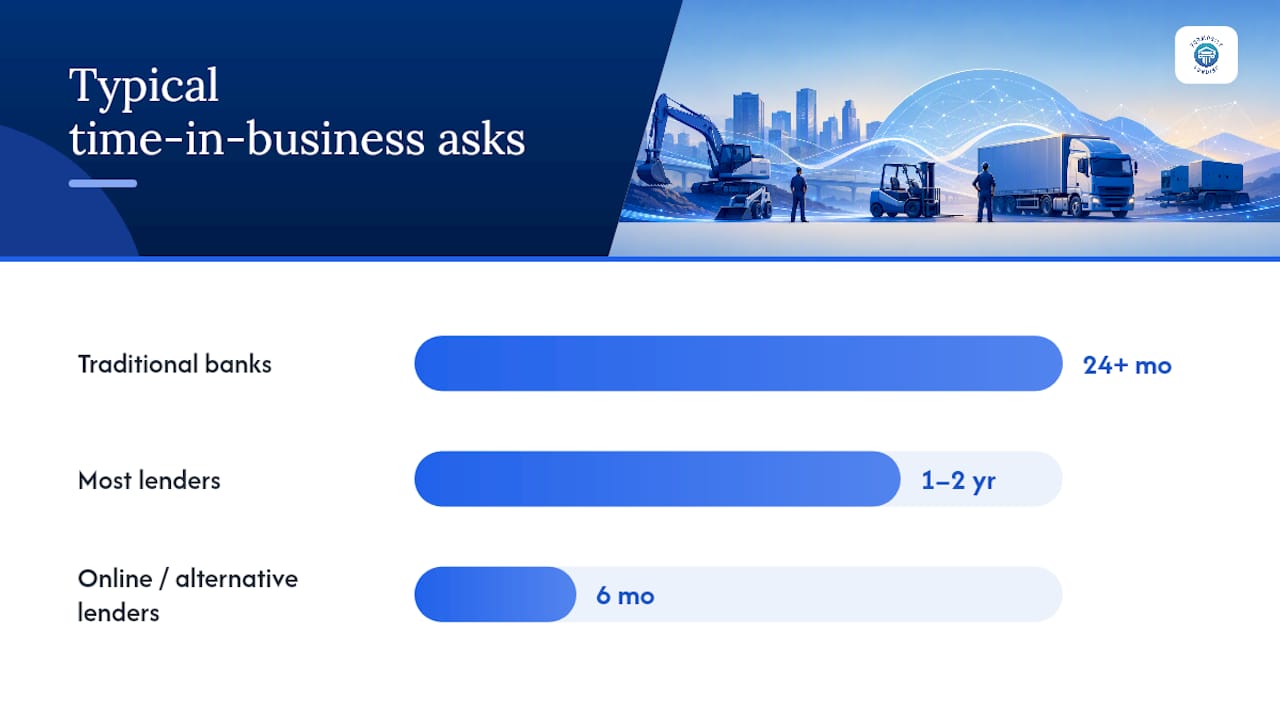
Traditional banks tend to want the most: often two or more years in business, strong annual revenue, and a personal credit score comfortably above 680. Online and alternative lenders move the goalposts. Some will finance a business with as little as six months of history, especially when the equipment itself carries strong resale value. Bankrate reports that time in business, credit scores, and revenue are the three factors nearly every lender checks, but banks routinely set higher bars on all three than online lenders do.
Here's what shows up across most lender types:
- Time in business: 1 to 2 years is the common ask; some online lenders accept 6 months.
- Personal credit score: Mid 600s is a realistic floor for competitive rates; scores in the 700s open up the best pricing.
- Business credit: A thin or nonexistent business credit file is common for younger companies and rarely disqualifies you on its own.
- Annual revenue: Many lenders want to see revenue that comfortably covers the new payment, though small-ticket deals under $50,000 sometimes waive strict revenue minimums.
If your credit or time in business is limited, a larger down payment, personal guarantee, or additional collateral may help qualify. Equipment loans are also self-secured by the asset itself, which is part of why equipment-backed financing tends to carry more forgiving standards than unsecured credit products.
What Documents Do You Need for Equipment Financing?
Underwriters move fastest when a file arrives complete. A study of equipment finance documentation found that applications break down into four core parts: business identity, financial standing, equipment details, and signed consents that authorize credit and identity checks. Miss a piece and you're back in the queue waiting for a follow-up request.
Build your file in this order:
- Completed application with basic business and owner details.
- Government-issued ID for every signer or guarantor on the loan.
- EIN confirmation and formation documents (articles of incorporation, operating agreement, or DBA filing).
- 3 to 6 months of business bank statements, which research on equipment finance documentation identifies as often the single most influential document in small-ticket approvals.
- An itemized vendor quote or invoice listing make, model, and, for used equipment, the serial number.
Larger financing deals typically require additional documentation such as tax returns, accountant-prepared financial statements, and current balance sheets and profit-and-loss reports. Used heavy equipment often triggers an independent appraisal or condition report, since funding can hinge on whether the machine's value actually supports the loan amount. You'll also need a certificate of insurance naming the lender as loss payee, plus basic UCC-1 lien paperwork the lender files against the equipment.
Pro Tip: Upload the original vendor invoice file instead of retyping the numbers into the application. Underwriters trust source documents, and typed figures often trigger a verification request that adds days to your decision.
How Do Lenders Decide Whether to Approve You?
Underwriting splits into two broad styles. Bank-statement underwriting looks at your actual cash movement, deposit consistency, and overdraft frequency. Full-document underwriting leans on tax returns and financial statements to build a fuller financial picture. Small-ticket deals lean heavily on the first approach.
A few things carry more weight than most applicants expect:
- Deposit patterns matter more than a single credit score. Documentation research on equipment financing notes that underwriters often run trend analysis on bank statements, weighing concentration risk and overdraft history above a raw score.
- Debt service coverage gets tested directly. Lenders check whether your existing cash flow can absorb the new payment on top of current obligations.
- Data consistency is a fraud checkpoint, not a formality. A mismatch between your listed phone number, address, or email and public business records can trigger a manual review even when your financials look strong, according to fraud-prevention guidance from Equipment Finance News.
- Personal guarantees show up when the entity is young or thinly capitalized, and ownership structure (sole proprietor versus multi-member LLC) changes who has to sign.
One number worth remembering: lenders that finance the equipment itself as collateral can afford to be more flexible on credit thresholds than unsecured lenders, precisely because they can repossess the asset if payments stop.
Should You Finance With a Loan or a Lease?
The right product depends on how long you'll actually use the equipment, not just what's cheapest this month. According to lease-or-loan guidance from Equipment Finance Advantage, loans build equity and suit equipment you plan to own for its full useful life, while leases fit gear that becomes obsolete quickly, like computer hardware or certain medical devices.
The paperwork differs in small but important ways:
- Loans usually require a larger down payment (often 10 to 20%) but you own the asset outright at the end.
- Leases can require little or no down payment, but end-of-term options (buy it, return it, or upgrade) need to be spelled out in the contract.
- New equipment underwriting is more straightforward; used equipment often adds appraisal and serial-number verification steps.
If you're still weighing the two, our breakdown of equipment lease versus loan walks through the tradeoffs in more depth.
How Do You Apply Without Getting Bounced Back for More Paperwork?
Order matters here almost as much as the documents themselves.
- Start with a soft-pull prequalification. This lets you see realistic terms without a hard inquiry hitting your credit.
- Collect signed consents early. Credit authorization and identity-verification consents are part of what makes an application complete on the first pass, per Clustdoc's research on equipment finance applications.
- Organize files in one upload, named clearly (bank statements, vendor invoice, tax returns), rather than emailing pieces separately.
- Use the vendor invoice as your source document for equipment details instead of a summary you typed yourself.
- Loop in a funding specialist or marketplace if you're unsure which lender type fits your profile.
Pro Tip: Confirm your business's public listings (Google Business Profile, state filings, website contact page) match the details on your application exactly. A mismatched phone number is a small thing that causes disproportionately large delays. For more on tightening up your file, see how to increase business loan approval odds.
How Long Does Approval Take, and What Will It Cost?
Timing swings hard depending on lender type. Online lenders often deliver decisions in one to three business days. Banks routinely take two to four weeks, sometimes longer for larger deals requiring full financial statement review.
- Down payments typically range from 0% to 20%, with 0% down usually reserved for stronger credit files or smaller equipment costs.
- Term lengths commonly run from 6 months up to 7 years, tied loosely to the equipment's useful life.
- Rates span a wide band depending on credit, revenue, and equipment type, so comparing multiple offers matters more than trusting any single quoted rate.
- Fees to expect include origination charges and sometimes administrative or documentation fees, disclosed before you sign.
- Insurance naming the lender as loss payee is a common condition before funds release, especially for higher-value or titled equipment.
What I'd Prioritize If I Were Applying Tomorrow
If I had to boil this down to three things worth getting right before you touch an application, it's bank statements, the vendor invoice, and signed consents. Everything else in the file supports those three, but underwriters open those first.
The bigger mistake I see is business owners applying to one lender at a time, sequentially, hoping one says yes. A marketplace approach lets you shop multiple lender types with a single soft pull, which matters because prequalification without a hard credit check is one of the few genuinely free ways to compare real terms before committing. Go direct to a single bank only if you already have an existing relationship there and know your file is strong on paper. Otherwise, cast a wider net first and narrow down once you see actual offers side by side.
— Alvin
How Formosityfunding Helps You Get Equipment Financing Faster
Using a funding marketplace lets you prequalify once, with no impact to your credit, and get matched against multiple equipment financing lenders.
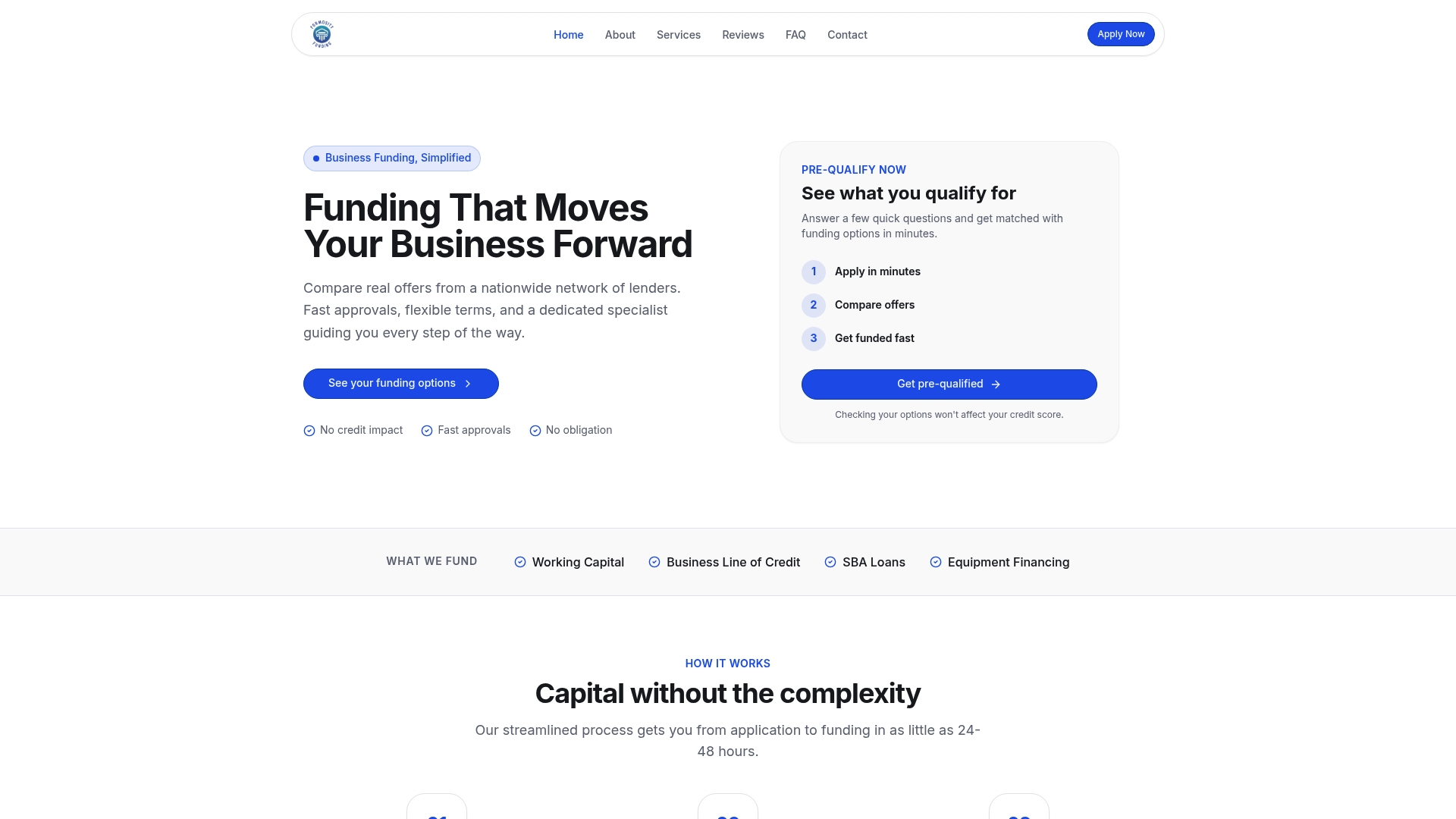
You share your bank statements, vendor quote, and basic business details, and a funding specialist helps route your file to lenders whose thresholds fit your time in business and revenue. The platform operates as a marketplace, connecting you to lending partners rather than funding loans directly, so the offers you see represent terms from real lenders. If your equipment need sits closer to construction, vehicles, or specialized machinery, the same intake process applies. Start by reviewing Formosityfunding's funding options and submitting your prequalification to see what you actually qualify for.
This article is general information, not a substitute for advice from a qualified financial advisor. Consult a qualified financial professional about your own circumstances before acting on anything here.
Sources
- Equipment Finance Applications: What Lenders Need and How to Collect It | Clustdoc
- How To Get An Equipment Loan For Your Small Business | Bankrate
- Required Documents Checklist for Equipment Financing (2026 Best Guide)
- Lease or Loan guidance | Equipment Finance Advantage
FAQ
What Are the 5 C's of Credit in Equipment Financing?
Lenders generally evaluate character, capacity, capital, collateral, and conditions when reviewing a financing request. In equipment financing specifically, capacity (your cash flow) and collateral (the equipment itself) tend to carry the most weight since the asset secures the loan.
How Hard Is It to Get a $1,000,000 Business Loan?
Financing at that size almost always requires strong revenue, two or more years in business, and full-document underwriting with tax returns and audited or accountant-prepared financials. Approval is possible but far more document-intensive than a small-ticket deal, and lenders will scrutinize debt service coverage closely before committing that much capital.
What Are Typical Terms for Equipment Financing?
Some marketplaces match you with lenders offering a range of terms so you can compare real offers rather than a single quote.
How Long Can Equipment Be Financed?
Terms commonly run from 6 months to 7 years, with longer terms typically tied to equipment that has a longer useful life, like heavy machinery versus computer hardware. The useful life of the asset is usually the deciding factor lenders use when setting the maximum term they'll offer.
Does Formosityfunding Charge for Prequalification?
Prequalifying through Formosityfunding does not affect your credit score, since it relies on a soft pull rather than a hard inquiry. Current pricing and fee details for any resulting loan offer are listed directly with each matched lender on Formosityfunding's services page.