
A commercial appraisal is a written opinion of a property's market value, prepared by a state-licensed or certified appraiser, that a lender uses to decide how much it will lend against that property. Whether you need one depends on the loan size, what the loan is secured by and where repayment comes from. The borrowers who get through it fastest know the thresholds before they apply, line up the property documents early and compare lenders who size loans differently. At Formosity Funding we match business owners with lenders across a nationwide network, and pre-qualification does not affect your credit, so you can see real offers before you commit to an appraisal.
TL;DR
- Under the federal banking rules, real estate-related loans above $500,000 (commercial real estate) or $1 million (qualifying business loans) generally need a full appraisal by a certified appraiser. Smaller deals often need only a lower-level "evaluation."
- The appraiser must follow USPAP, the profession's standards, and may not have any interest in the property. An automated value estimate alone does not count as an appraisal.
- The appraised value, not the purchase price, usually sets the ceiling on your loan through the loan-to-value ratio.
- Equipment and other non-real-estate collateral are usually valued through appraisals, published value guides, auction results or dealer invoices.
- Gather leases, operating statements and site access before the appraiser arrives. Complete files move faster.
Table of Contents
- What a commercial appraisal is, and why lenders order one
- When a full appraisal is required
- Who can perform the appraisal
- How the value is calculated
- How the appraised value changes your loan
- Equipment and other non-real-estate collateral
- What to prepare before the appraiser arrives
- Cost and timing
- Matching your deal to the right lender
- Our perspective
- FAQ
- Sources
What a commercial appraisal is, and why lenders order one
A lender wants to know what it could recover if the loan went bad. The appraisal answers that by estimating the market value of the collateral, the asset you pledge to secure the loan. The Farm Credit Administration explains that an evaluation (an appraisal or other valuation) is expected whenever real, personal or intangible property is collateral for a loan, and that an appraisal is a written opinion of market value.
Two points surprise first-time borrowers:
- The lender orders it, and usually you pay for it. You do not hire the appraiser and hand the report over. The lender selects the appraiser so the opinion is independent.
- The report belongs to the credit decision. It is not a certificate you can shop around. A different lender may order its own.
If you are still deciding what to pledge, our guide to business loan collateral walks through the options.
When a full appraisal is required
For banks regulated by the OCC, the rule is 12 CFR 34.43. It requires a state certified or licensed appraiser for real estate-related financial transactions, with listed exemptions. The two that matter most to small businesses:
- Commercial real estate transactions of $500,000 or less need an appropriate evaluation instead of an appraisal. That threshold was raised from $250,000 to $500,000 by an interagency final rule effective April 9, 2018.
- Business loans of $1 million or less are exempt when repayment does not depend primarily on the sale of, or rental income from, the real estate.
| Situation | Typical requirement |
|---|---|
| Commercial real estate purchase or refinance over $500,000 | Appraisal by a state certified appraiser |
| Commercial real estate transaction of $500,000 or less | Evaluation consistent with safe and sound practice |
| Business loan of $1 million or less, repaid from business cash flow | May qualify for an exemption |
| Business loan of $1 million or less, repaid from real estate sale or rent | Appraisal expected |
The repayment source is the detail that trips people up. The OCC's 2018 rule gives an example: a loan secured by a farm can count as a qualifying business loan when repayment comes mainly from the farm's own business proceeds, even if affiliated LLCs own the land. An investor buying a rental building, by contrast, is relying on the real estate itself, so the appraisal question is clearer.
These are federal minimums. A lender can ask for an appraisal below them, and credit policies, SBA programs and secondary-market buyers can add their own rules. Treat the table as the floor, not a promise.
Appraisal or evaluation?
An evaluation is the lighter option for exempt deals. It still has to give a reliable estimate of market value as of a stated date before the credit decision. The interagency guidelines say that broker price opinions and competitive market analyses do not qualify as evaluations because they lack market value and enough property-specific analysis. An evaluation can cost less and move faster, which is one reason loans just under the thresholds are common.
When the real estate is not the main support
The Federal Reserve's SR 18-9 FAQ notes that an abundance-of-caution exemption may apply where the equipment, rather than the real estate, supports the credit. If the lender decides it will rely on the real estate as a repayment source, it should obtain an appraisal unless another exemption applies. In plain terms: how the lender frames your loan changes the paperwork.
Who can perform the appraisal
Under the same regulation, federally related transactions of $1,000,000 or more, and commercial real estate transactions over $500,000, require a state certified appraiser. Other federally related appraisals may be prepared by a state certified or state licensed appraiser. Appraisals must conform to USPAP, the Uniform Standards of Professional Appraisal Practice published by the Appraisal Standards Board of the Appraisal Foundation, and must contain enough analysis to support the credit decision.
A few practical consequences:
- A residential appraiser is generally not the right professional for an office, retail or industrial building. Ask the lender who has been engaged and confirm the credential type.
- The appraiser may not appraise property in which they have a direct or indirect interest, and an automated valuation model result is not an appraisal, even if someone signs it.
- The appraiser must analyze items such as proposed construction, partially leased buildings and non-market lease terms.
For a closer look at how appraisal scope and credibility are judged, this commercial property appraisal guide is a helpful companion, especially for investors weighing a multifamily or mixed-use purchase.
How the value is calculated
Appraisers typically weigh three approaches: what comparable properties sold for, what the property earns, and what it would cost to rebuild less depreciation. Income-producing buildings lean heavily on the income approach, which capitalizes net operating income. That is why the numbers you hand over matter.

Lenders and their examiners check this work. The FDIC's examination policy for commercial real estate lending directs examiners to confirm that the comparable properties are truly comparable, since heavy adjustments can signal they are not, and that the operating statement in the appraisal matches actual results or is supported by evidence. If your rent roll shows $18 per square foot and the appraiser assumes $24 with nothing to back it up, expect questions.
The guidelines also say institutions should choose the most credible appraisal, not the one with the highest value. Pushing for an inflated number is not the strategy. Supporting a fair number with clean documents is.
How the appraised value changes your loan
Lenders size the loan as a percentage of value, the loan-to-value ratio (LTV). If a building appraises at $2,000,000 and the lender caps LTV at 65%, the maximum loan is $1,300,000, even if you agreed to pay more for the property. A low appraisal can mean more cash down, a smaller loan or a renegotiated price. Our article on why 65% often caps commercial loan LTV explains how borrowers bring that number down, and LTC versus LTV covers deals where lenders size on cost instead of value.
The NCUA's examiner guide says LTV limits should be lower for depreciating, single-purpose or limited-use collateral. It tells lenders to weigh the collateral's age against its useful life, its condition, technology obsolescence, how essential it is to the business and whether an active market exists for it. A generic warehouse and a specialized processing plant can both appraise at $3 million yet support very different loan amounts. Understanding how collateral characteristics affect valuation and risk helps you predict where a lender will land.
If the property already carries a senior loan, the room shrinks further; see how senior liens cut your borrowing room. And if you pledge several assets, read about cross-collateralization so you know how one default can reach every asset.

Equipment and other non-real-estate collateral
Not every appraisal involves a building. For equipment, vehicles and similar assets, the NCUA guide says an appraisal by a qualified appraiser is the most accurate way to value term-loan collateral. Acceptable alternatives include published value guides, public auction sales and dealer invoices, best validated by more than one source. If you are financing a new machine, the invoice is often the main evidence of value. For used equipment, expect the lender to look at age, condition and resale market.
SBA-backed loans have their own collateral expectations; our guide on whether SBA loans require collateral covers what lenders look for.
What to prepare before the appraiser arrives
The federal rules set no fixed time frames for new or updated collateral evaluations. Institutions decide based on market conditions, loan risk and collateral condition, and an evaluation is generally due when a credit decision is made, new funds are approved or terms change significantly. So the lender's timeline, not a rule, drives your schedule. You control how complete the file is.
- Operating statements and rent roll. Two to three years of income and expenses for an income property, plus current leases. The appraiser tests these against comparables.
- Lease details. Flag below-market rents, concessions and upcoming expirations. Non-market lease terms must be analyzed anyway, so disclose them rather than let them surface.
- Property documents. Survey, site plan, recent tax bills, a list of capital improvements and any environmental reports you hold.
- Access. Arrange for a person who knows the building to walk the appraiser through every unit and system.
- Purchase contract. For an acquisition, the contract is a data point the appraiser will review.
- Equipment records. Serial numbers, maintenance logs, invoices and photos.
Once the report is in, ask the lender for a copy and read the assumptions. If you spot a factual error, such as the wrong square footage, raise it through the lender with documentation.
Cost and timing
Fees scale with property type, size and complexity, and turnaround depends on the appraiser's workload and how fast you deliver documents. Rather than quote a number that varies by market, we recommend you read our commercial appraisal cost benchmarks and borrower checklist, then confirm the fee and the expected delivery date with your lender when the order is placed. The appraisal is one step in a longer sequence, and our commercial loan closing timeline shows where it fits. Construction projects add their own paperwork; see the commercial construction loan requirements.
Matching your deal to the right lender
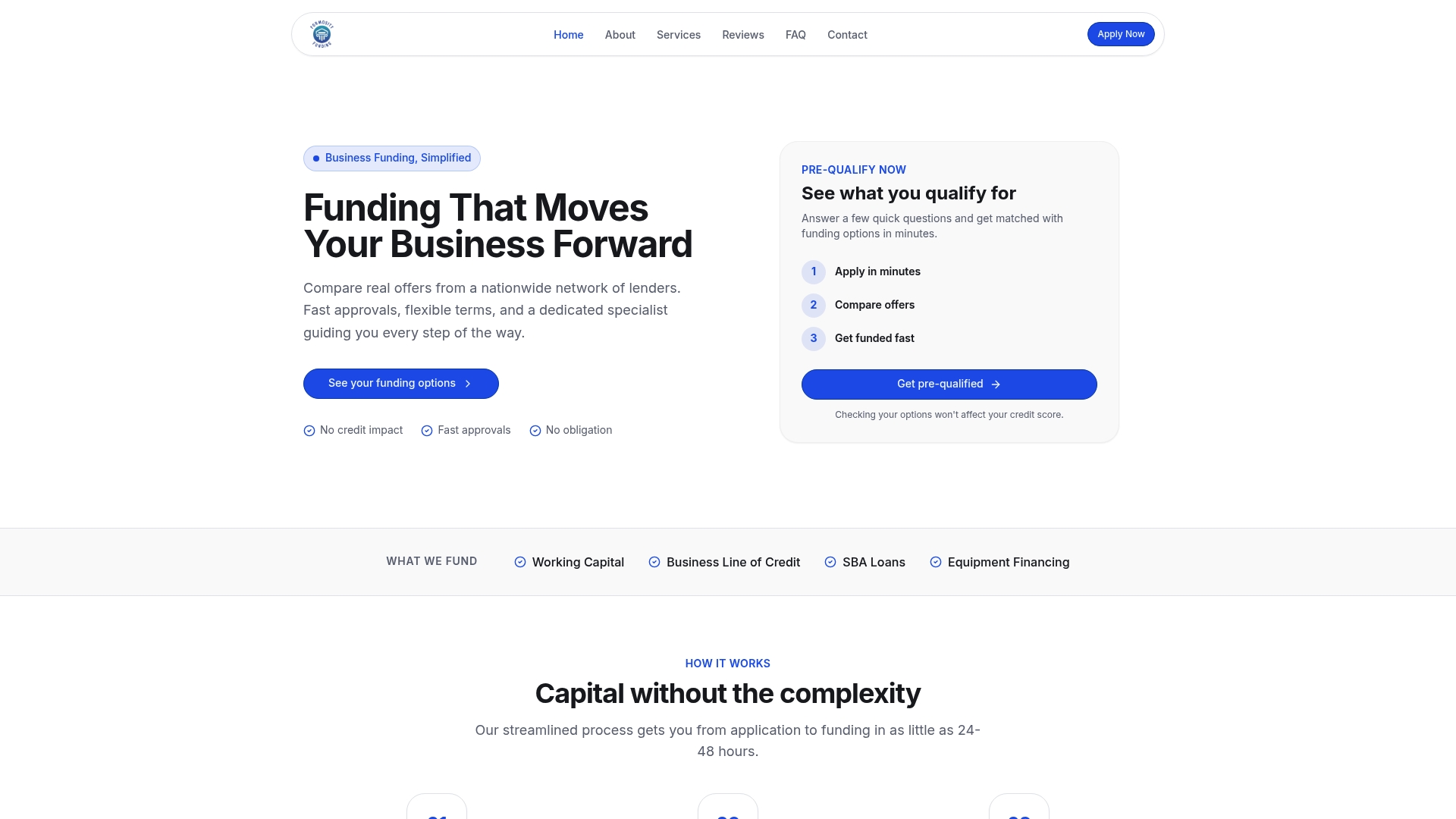
Because lenders use different thresholds, LTV caps and valuation methods, the same property can produce different loan amounts depending on who is underwriting it. Formosity Funding is a marketplace that connects small and medium-sized businesses with a nationwide network of lenders, offering real loan and credit offers for working capital, lines of credit, SBA loans, equipment financing and commercial real estate financing. Pre-qualification is quick and has no credit impact, and dedicated funding specialists guide you from application to funding.
If you are planning a property purchase or refinance, start with our funding options and see which products fit before the appraisal clock starts.
Owners who already hold equity in a property may also want to look at a Business HELOC, a way to draw on that value for business needs.
Our perspective
Most borrowers treat the appraisal as a hurdle that happens to them. We see it as a number you can plan around. If you know the thresholds, the LTV a lender is likely to apply and the documents the appraiser needs, you can predict your loan size before anyone orders a report.
That is why we built Formosity Funding as a marketplace instead of a single-lender shop. Different lenders weigh collateral differently, and seeing several real offers side by side lets a business owner choose the structure that fits the property and the plan. With no-credit-impact pre-qualification, you can take that first step without risk to your score, and a dedicated funding specialist stays with you through the process.
Whether you need working capital to bridge a closing, equipment financing or a commercial real estate loan, start with the full picture of your options, then let the appraisal confirm it.
Alvin
FAQ
Does every commercial loan need an appraisal?
No. Under the OCC's rule, commercial real estate transactions of $500,000 or less need an evaluation instead, and qualifying business loans of $1 million or less that are not repaid mainly from real estate sale or rent can be exempt. Lenders can still require an appraisal under their own policies.
Can I use my own appraiser?
Generally the lender engages the appraiser to keep the opinion independent, and appraisers may not have any direct or indirect interest in the property. You can suggest nothing that compromises that independence. Ask your lender how the engagement works.
Is an automated valuation or broker opinion enough?
Not for an appraisal. The interagency guidelines say an automated valuation model result is not an appraisal, and broker price opinions and competitive market analyses do not qualify as evaluations.
What happens if the appraisal comes in low?
The lender will usually size the loan from the appraised value, so a lower value can reduce the loan amount through the LTV ratio. Options include a larger down payment, a renegotiated price or a lender with a different structure. Supply documentation if you believe a fact in the report is wrong.
Sources
- Collateral evaluations, Farm Credit Administration
- 12 CFR 34.43, eCFR
- 12 CFR Part 34, Real Estate Lending and Appraisals, eCFR
- Federal Register, Volume 83, Issue 68 (April 9, 2018)
- Interagency Appraisal and Evaluation Guidelines, Federal Reserve
- SR 18-9 attachment: Frequently Asked Questions, Federal Reserve
- Commercial Real Estate Lending, FDIC
- Collateral, NCUA Examiner's Guide
- Commercial property appraisal guide for NJ investors
- Financing Real Estate: Understanding Your Options