

Lenders typically want borrower equity in a moderate to mid-range percentage, a debt service coverage ratio that meets their minimum requirements, an acceptable loan-to-cost or loan-to-value ratio, and a full stack of third-party reports before they release a single dollar. If your project can show clean documentation, real equity, and a credible contractor, you can move fast. The best first step is organizing your financials and getting matched with lenders who fit your project through a marketplace like Formosityfunding, rather than cold-calling banks one by one.
TL;DR:
- Lenders require full documentation, clear equity, and credible contractors, with loan terms influenced by loan-to-value, debt service coverage ratios, and reserves.
- A strong personal and project track record, along with substantial equity and clean due diligence documents, significantly improve approval chances.
- Interest reserves, proper draw requests, and construction controls are critical, with delays often caused by insufficient reserves or poor project documentation.
- Federal and SBA rules set appraisal thresholds at $500,000, meaning larger loans usually need full appraisals and environmental assessments to avoid delays.
- Using a marketplace platform helps match projects with suitable lenders quickly, bypassing lengthy bank-by-bank applications and enabling faster closings.
Table of Contents
- Borrower and Guarantor Qualifications for Commercial Construction Loans
- How Lenders Size the Loan: LTC, LTV, DSCR, and Reserves
- Documents and Due Diligence Every Lender Will Request
- How the Draw Process and Construction Controls Work
- SBA Rules and Federal Regulatory Thresholds That Shape Requirements
- How to Improve Your Approval Odds
- Where the Market Stands Heading Into 2026
- Get Matched With the Right Construction Lender Faster
- Sources
- FAQ
Borrower and Guarantor Qualifications for Commercial Construction Loans
Lenders evaluate the people behind the project almost as closely as the project itself. This is where the classic "Five Cs of credit" framework still holds: character, capacity, capital, conditions, and collateral. For construction loans specifically, a banker's perspective on bonding and banking capacity notes that capacity and capital get judged against projected post-construction cash flow and how much real equity the borrower is putting in, not just their credit score.
Here is what actually shows up in underwriting files:
- Equity injection: typically a moderate portion of total project cost, contributed in cash, free-and-clear land value, or escrowed funds.
- Credit score: most banks want principals above 680, though SBA-backed programs have more flexibility.
- Personal guarantees: near-universal for owners holding 20% or more of the borrowing entity.
- Net worth and liquidity: lenders want post-closing liquidity, meaning cash left over after your equity contribution, not just a big number on paper.
- Track record: a developer with three completed projects of similar size gets easier terms than a first-timer, even with identical financials.
Weak sponsor experience is one of the fastest ways to get pushed into a smaller loan or asked for a stronger guarantor. If your own project history is thin, a completed collateral pledge or a co-guarantor with a track record can offset that gap.
How Lenders Size the Loan: LTC, LTV, DSCR, and Reserves
Underwriting a construction loan comes down to three numbers working together, not one.
Loan-to-value (LTV), calculated against the appraised stabilized value, usually runs slightly lower than LTC because appraisers are conservative about future income. Federal underwriting guidance on qualifying CRE loans sets DSCR thresholds that vary by property type, with different minimums depending on the property classification.
By the numbers: federal underwriting rules require DSCR minimums that vary according to the asset type, with lower thresholds for multifamily properties and higher thresholds for other commercial real estate, per Section 244.17 underwriting standards.
A few things worth knowing before your first lender call:
- Interest reserves get built into the loan itself, sized with a buffer for rate increases and schedule slippage, according to ULI's project fundamentals guidance.
- Construction loans usually run 12 to 24 months, then convert to permanent financing with amortization schedules of 20 to 30 years.
- Undersized interest reserves are one of the most common causes of mid-project funding trouble, since delays eat the reserve faster than borrowers expect.
Documents and Due Diligence Every Lender Will Request
Before a construction loan closes, lenders assemble a due diligence file that reads almost like a small legal case. Here is what typically has to be in place:
- Appraisal, dated within six months of closing. Federal and SBA guidance requires a full appraisal for loans above $500,000, with lighter evaluations sometimes acceptable below that line.
- Construction documents: architectural plans, specs, the signed contractor agreement, and a detailed cost breakdown by trade.
- Title and UCC searches confirming clear ownership and no competing liens against the property or equipment.
- Phase I Environmental Site Assessment, especially for former industrial or commercial parcels where contamination risk exists.
- Insurance and bonding: builder's risk coverage, general liability, and often a performance bond from the contractor.
- Borrower financials: three years of tax returns, current balance sheets, income statements, and a personal financial statement from each guarantor.
Missing even one of these can stall closing by weeks. Ordering the appraisal and environmental report early, before the lender formally asks, is one of the simplest ways to compress your timeline.
How the Draw Process and Construction Controls Work
Construction loans don't fund in one lump sum. Money moves in draws, tied to completed work, and every draw comes with its own paperwork trail.

A typical draw request includes contractor invoices, signed lien waivers from subcontractors, and a report from a third-party inspector confirming the work matches what's being billed. FDIC guidance on construction lending outlines these disbursement controls explicitly, including retainage practices where lenders hold back a percentage of each draw until the project reaches substantial completion.
Expect these controls on almost every deal:
- Monthly or milestone-based draw schedules, with site inspections before funds release.
- Retainage, often 5% to 10% per draw, held until final completion and lien releases.
- Lender site visits or third-party inspection reports required before each disbursement.
- Covenants tied to budget variance. Blow past your budget by a set percentage, and disbursements can pause until you cover the gap with additional equity.
Pro Tip: Keep a monthly cash-flow report that lines up draws against your original budget line by line. Lenders comparing your actual spend to a clean, updated pro forma release funds faster than borrowers who only submit invoices.
SBA Rules and Federal Regulatory Thresholds That Shape Requirements
Federal and SBA rules set the floor that every lender builds on top of. SBA notice 5000-19007 raised the appraisal trigger to $500,000, meaning loans above that amount need a full appraisal compliant with USPAP standards, while smaller loans can sometimes get by with a lighter evaluation.
"Federal underwriting standards for qualifying commercial real estate loans require enforceable first liens, appraisals dated within six months of origination, and environmental review before origination." This framework, drawn from 12 CFR 373.17, is what most community banks model their own internal policies on, even for loans that never touch an SBA program.
Smaller and community lenders tend to follow these thresholds closely because their own regulators examine against them, which means even a modest $750,000 construction loan at a local bank will likely trigger the full appraisal and environmental review path.
How to Improve Your Approval Odds
Getting a construction loan approved quickly comes down to removing friction before a lender ever sees your file.
- Build a complete project package first: pro forma, construction schedule, signed contractor agreement, permits, and title work, all before your first lender conversation.
- Document your equity clearly. A committed capital letter or escrowed funds statement carries more weight than a verbal promise of available cash.
- Order the appraisal and Phase I environmental report early if your loan size crosses the $500,000 threshold. Waiting until underwriting asks costs weeks.
- Review our small business loan requirements checklist to confirm you have every document a lender is likely to request.
- Consider a marketplace approach. A marketplace platform can match applicants to lenders across a national network without a credit-impact pre-qualification step, which can save the weeks you'd otherwise spend applying bank by bank.
Where the Market Stands Heading Into 2026
Credit has tightened. Builder surveys from NAHB's AD&C report show lenders asking for more cash upfront and lower leverage than a few years back. Clean documentation and real equity now matter more than a good pitch.
— Alvin
Get Matched With the Right Construction Lender Faster
Using a lending marketplace is an alternative to cold-calling banks one at a time for commercial construction financing. Instead of submitting the same package to multiple institutions and waiting weeks for separate answers, applicants can get pre-qualified once, with no credit impact, and matched against a nationwide network of lenders who fund construction and commercial real estate deals.
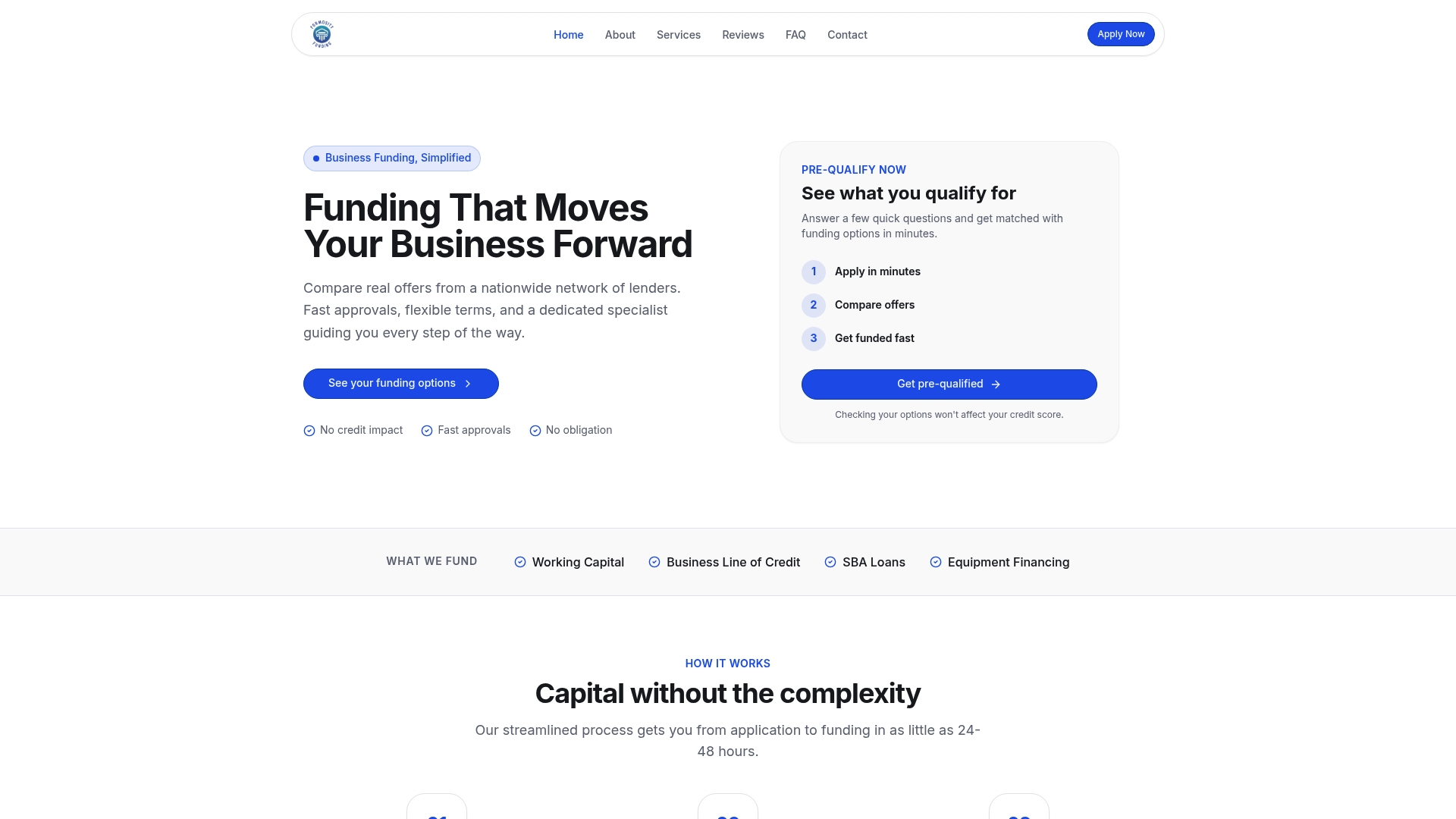
A dedicated funding specialist walks your project package (equity documentation, appraisal status, contractor agreement) against real lender criteria and surfaces the options that fit, whether that ends up being an SBA loan, a construction draw facility, or a Business HELOC used to bridge equity requirements. If your project also needs stabilized tenant or customer payment infrastructure before permanent financing kicks in, our payment acceptance consultation can help close that gap too. Start by getting pre-qualified on our services page to see which lenders are ready to look at your project this week.
This article is general information, not a substitute for advice from a qualified financial advisor. Consult a qualified financial professional about your own circumstances before acting on anything here.
Sources
- SECTION 244.17—Underwriting Standards for Qualifying CRE Loans
- FDIC: Construction and land development lending guidance
FAQ
What are the requirements to qualify for a commercial construction loan?
Lenders generally want borrower equity in a moderate to mid-range percentage, a DSCR that meets their minimum requirements per federal underwriting rules, a recent appraisal, permits, and a signed contractor agreement. Personal guarantees from principal owners are standard on almost every deal.
Do I need 20% down for a construction loan?
The exact figure depends on your project type, your track record, and the lender's own risk appetite.
What is the monthly payment on a $300,000 construction loan?
During the construction phase, most borrowers only pay interest on the amount drawn, not the full loan amount, so payments start low and climb as draws increase. Once the loan converts to permanent financing, payments depend on the final interest rate and amortization term, which typically runs 20 to 30 years.
What is the payment on a $1,000,000 business loan?
Payment size depends entirely on the interest rate, term, and whether it's interest-only during construction or fully amortizing. A marketplace like Formosityfunding can pull real quotes from multiple lenders so you're comparing actual payment figures instead of rough estimates.
How long does the commercial construction loan process take?
From a complete application to closing, the timeline varies depending on how quickly your appraisal, environmental report, and title work come back. Applicants who order third-party reports early, before a lender formally requests them, tend to close more quickly.