

Most fixed-rate commercial loans and commercial mortgages carry some form of prepayment penalty, but the rules are far from universal. SBA loans follow a specific statutory schedule, several common loan types have none at all, and the size of the penalty depends entirely on which structure your lender used. Paying early is often still worth it once you run the math, but you need to know which type of penalty you're dealing with first.
TL;DR:
- Step-down penalties typically range from 1% to 5%, while yield maintenance and defeasance can cost tens of thousands of dollars, especially on real estate loans.
- SBA 7(a) loans with maturities of 15 or more years have a 5%/3%/1% prepayment fee only if prepayments exceed 25% in a year, and it drops after three years.
- Defeasance involves buying Treasury securities to replace loan cash flows and is often the most expensive option, usually adding $25,000 to $50,000 in legal costs.
- Lenders' structures vary: portfolio lenders tend to use step-down, while securitized loans often require defeasance, and yield maintenance is common with long-term institutional lenders.
- To minimize penalties, borrowers should negotiate prepayment terms upfront, time large payoffs after step-down periods, and compare offers using pre-qualification platforms before signing.
Table of Contents
- Key Takeaways: What to Check Before You Pay Early
- What a Prepayment Penalty Actually Is
- Step-Down vs. Yield Maintenance vs. Defeasance vs. Lockouts
- SBA Prepayment Rules: The 5/3/1 Schedule Explained
- How Much Will This Actually Cost You?
- How to Avoid or Reduce a Prepayment Penalty
- Comparing Loan Terms Without Getting Burned by the Fine Print
- What Actually Matters When You're Deciding
- Ready to Compare Loan Terms Before You Sign?
- Sources
Key Takeaways: What to Check Before You Pay Early
- Typical penalty ranges: step-down penalties usually run 1% to 5% of the prepaid balance; yield maintenance and defeasance on commercial real estate loans can run far higher, sometimes tens of thousands of dollars.
- SBA 7(a) rule: loans with maturities of 15 years or more carry a 5%/3%/1% fee in years one through three, triggered only when voluntary prepayments exceed 25% of the outstanding balance in a given year.
- SBA 504 rule: the penalty applies only to the CDC debenture portion, not the bank's first-lien piece, and it declines annually over an extended period.
- Immediate checks: confirm your loan's maturity date, any lockout window, and whether partial prepayments below a certain threshold are exempt.
Three things to do this week: pull your loan documents and find the prepayment clause, call your lender for a written payoff estimate, and if you're planning a large payoff, ask whether timing it into next year changes the fee.
What a Prepayment Penalty Actually Is
A prepayment penalty is a fee a lender charges when you pay off a loan, or a large chunk of it, faster than the original amortization schedule required. Lenders write these clauses because they've already priced the loan around a certain stream of interest income. When you pay early, that income disappears, and the penalty is the lender's way of recouping some of what it expected to earn.
There's a meaningful difference between voluntary and involuntary prepayment. Voluntary prepayment is a decision you make: refinancing, selling the property, or just writing a bigger check than required. Involuntary prepayment usually comes from an event outside your control, like an insurance payout after a casualty loss forcing an early payoff. Most penalty clauses target voluntary prepayment specifically, and many exempt involuntary events entirely.
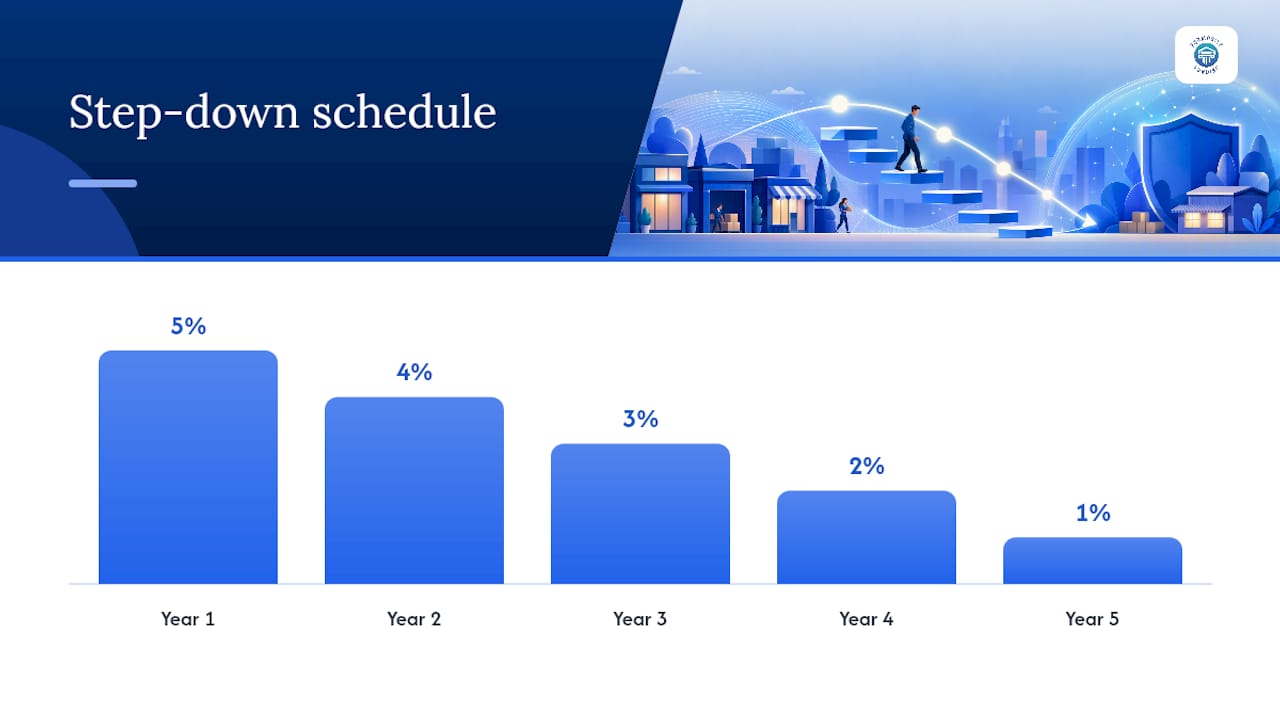
When you're reading your loan agreement, look for four phrases. A lockout period means no prepayment is allowed at all for a set window, sometimes the first several years of the loan. A step-down schedule lists declining percentages by year, like 5-4-3-2-1. Yield maintenance language talks about compensating the lender for lost interest based on current market rates. And a partial prepayment cap limits how much you can pay down in a single year before the penalty kicks in, which is exactly the mechanism behind the SBA's 25% rule.
Step-Down vs. Yield Maintenance vs. Defeasance vs. Lockouts
Four structures cover almost every commercial prepayment penalty you'll encounter, and knowing which one applies to your loan changes your entire payoff strategy.
Step-down is the most borrower-friendly of the four. The penalty is a fixed, declining percentage of the prepaid amount, commonly structured as 5-4-3-2-1 over five years. You know the exact cost the day you sign, and it drops every year regardless of what happens to interest rates.
Yield maintenance is calculation-based rather than fixed. The lender computes the present value of the interest income it's losing, using current market rates as the benchmark. Here's the part that surprises a lot of borrowers: yield maintenance costs spike when rates fall, not when they rise. If your loan rate is 7% and market rates have dropped to 4%, the lender has to reinvest your payoff at a lower yield, and the penalty grows to cover that gap.
Defeasance is the most complex and often the most expensive. Instead of paying a fee, you buy a portfolio of Treasury securities that replicates the lender's remaining cash flows, then substitute those securities as collateral. It's common on securitized (CMBS) loans and typically adds $25,000 to $50,000 or more in legal and transaction costs on top of the securities themselves.
Lockouts and open windows aren't a cost structure so much as a timing rule. A lockout blocks any prepayment, sometimes even partial paydowns, for a defined period. An open window near maturity, often the final 60 to 120 days, lets you exit without any penalty at all.
- Portfolio lenders (community banks, credit unions) lean toward step-down structures and are usually more willing to negotiate terms.
- Securitized CMBS loans commonly require defeasance, and that structure typically allows limited negotiation.
- Yield maintenance is often found on loans held long-term by life insurance companies and conduit lenders.
Pro Tip: Before you sign anything, ask the lender directly whether partial prepayments are allowed during a lockout period. Some agreements forbid any principal reduction until the lockout ends completely, which catches more borrowers off guard than the penalty percentage itself.
SBA Prepayment Rules: The 5/3/1 Schedule Explained
SBA loans don't follow lender-set penalty terms. They follow a federal schedule written directly into 13 CFR §120.223, and it only applies under specific conditions.
- The trigger: for 7(a) loans with an original maturity of 15 years or more, the fee applies only when you make a voluntary prepayment in a calendar year that exceeds 25% of the highest outstanding principal balance during that year.
- The schedule: if you cross that 25% threshold, you owe 5% of the prepaid amount in year one, 3% in year two, and 1% in year three. After month 36, the mandatory fee disappears entirely.
- The calculation basis: the fee applies only to the portion of the prepayment above the 25% threshold, not to your entire remaining balance. If you owe $400,000 and pay down $150,000 in year one (well above the 25% mark on a balance that size), the 5% fee applies to the amount exceeding that threshold, not the full $150,000.
- The 504 difference: on SBA 504 loans, the penalty applies only to the CDC debenture portion, not the bank's separate first-lien loan. It's based on the debenture's interest rate and declines annually over a longer stretch, often close to ten years on a 20 or 25-year debenture.
- Exceptions worth knowing: Refinancing with the same lender may avoid triggering the fee, and involuntary prepayments—such as those due to casualty events—are generally exempt from the penalty.
If your loan's collateral structure includes a shared lien, understanding how business loan collateral is divided between the bank and the CDC helps clarify exactly which portion of your balance the 504 penalty touches.
How Much Will This Actually Cost You?
Run the numbers before you assume a penalty is a dealbreaker. Drop that same payoff into year four of a 5-4-3-2-1 schedule, and the fee falls to $2,000.
Yield maintenance and defeasance live in a different universe. On a $2 million CRE loan with several years remaining and rates well below the note rate, yield maintenance alone can reach 8% to 12% of the payoff amount, easily $160,000 to $240,000, before adding any defeasance transaction costs.
For SBA 7(a) loans, the 25% trigger matters more than the percentage itself. Prepay under that threshold, and you owe nothing regardless of your loan's maturity.
The rule of thumb: compare the penalty plus any remaining interest you're avoiding against the actual refinance savings. If a lower rate saves you more over the loan's life than the penalty plus closing costs, refinancing usually wins.
How to Avoid or Reduce a Prepayment Penalty
The best time to deal with a prepayment penalty is before you sign the loan, not after.
- Negotiate before signing: ask specifically whether the loan uses step-down or yield maintenance, whether there's a dollar cap on the penalty, and whether partial prepayments below a certain percentage are exempt.
- Time your payoff: aim large lump-sum payments for right after a step-down date resets, or wait for an open window near maturity when no penalty applies at all.
- Split large payoffs across years: if you're staring at the SBA's 25% trigger, paying down 20% this year and the rest after January 1 can keep you under the threshold twice instead of once.
- Push for a rate trade: some lenders will accept a slightly higher rate in exchange for a lower penalty cap or a shorter lockout, which is worth floating during negotiation.
Pro Tip: Ask your lender for a written amortization schedule showing exactly when each step-down tier resets. Loan officers rarely volunteer this, but it takes them five minutes to pull, and it turns your timing decision from a guess into a calendar.
Refinancing still makes sense even with a penalty attached when the new rate saves you more over the remaining term than the penalty and closing costs combined. Before you start that comparison, check what documentation you'll need. A quick look at small business loan requirements will save you a round trip to the lender's desk. And if you're weighing a 504 refinance, it helps to first understand whether your SBA loan requires collateral the way your current one does, since that affects what a new lender will ask for.
Comparing Loan Terms Without Getting Burned by the Fine Print
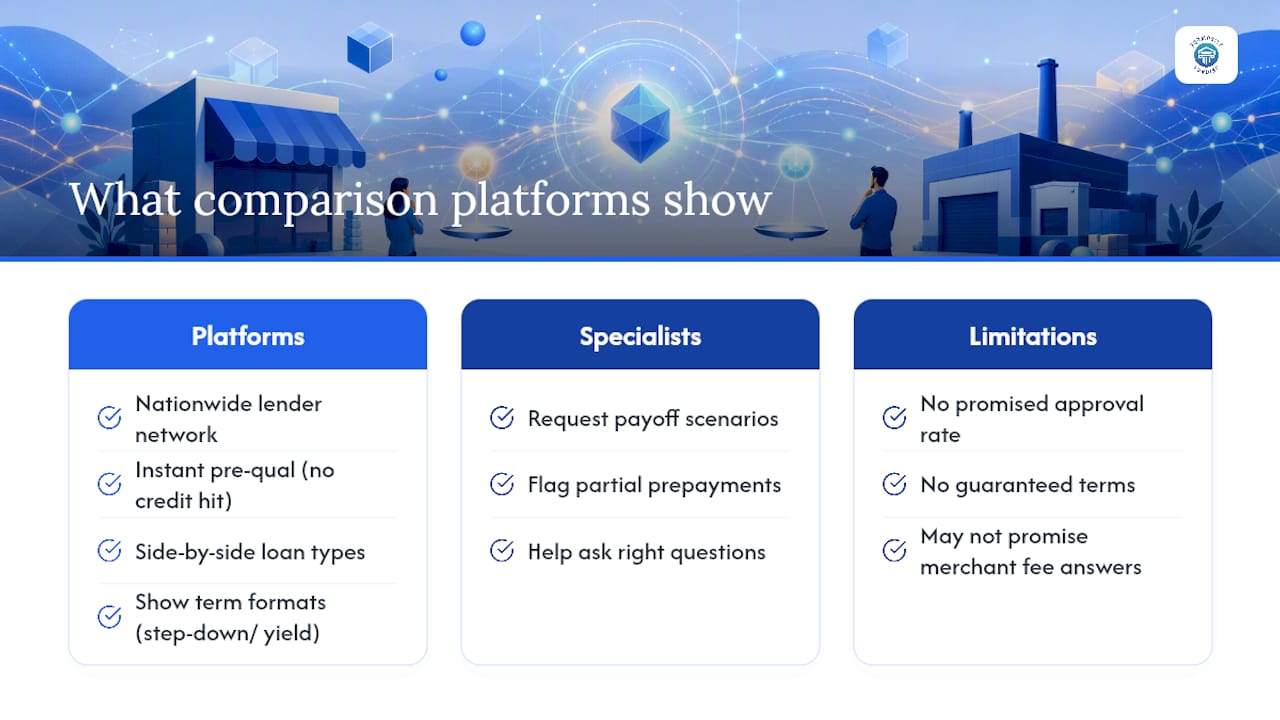
Prepayment penalty clauses hide in dense loan documents, and few borrowers have the time to cross-reference every lender's fine print against SBA regulations. There are services that connect small businesses to a nationwide network of lenders and offer instant pre-qualification that doesn't affect your credit, which means you can compare structures across multiple offers before committing to one.
Some platforms match borrowers to SBA 7(a), SBA 504, working capital, and commercial real estate products side by side, so you can see which lenders offer step-down terms versus yield maintenance before you sign anything. Funding specialists may help you request payoff scenarios and flag which lenders allow partial prepayments without penalty.
Such platforms typically do not promise a specific approval rate or guaranteed terms. They offer a faster way to see your real options and ask the right questions before you're locked into a penalty you didn't expect. If a merchant-side fee question comes up during your comparison, resources like this credit card surcharge guide cover related cost disclosures worth understanding too.
What Actually Matters When You're Deciding
Most borrowers overweight the penalty percentage and underweight the timing. Read your loan documents first, run the actual payoff math with your real numbers, ask your lender for the specific date each step-down tier changes, and find out whether there's a cap on yield maintenance before you assume the worst.
Paying a penalty is the right call when the interest you'd save over the remaining term, or the strategic value of an exit (a sale, a better rate elsewhere), clearly outweighs the fee itself. It's rarely close once you actually run the numbers.
For anything involving SBA-specific triggers or a defeasance transaction on a commercial mortgage, confirm the exact figures with your lender or the SBA directly, and bring in legal counsel before a large CRE refinance. The dollars involved are too large to guess on.
— Alvin
Ready to Compare Loan Terms Before You Sign?
Start by pre-qualifying through an online marketplace that won’t affect your credit and takes a few minutes to complete. From there, you can compare real offers from multiple lenders side by side, including which ones offer step-down penalties instead of yield maintenance, and which allow partial prepayments without triggering a fee.
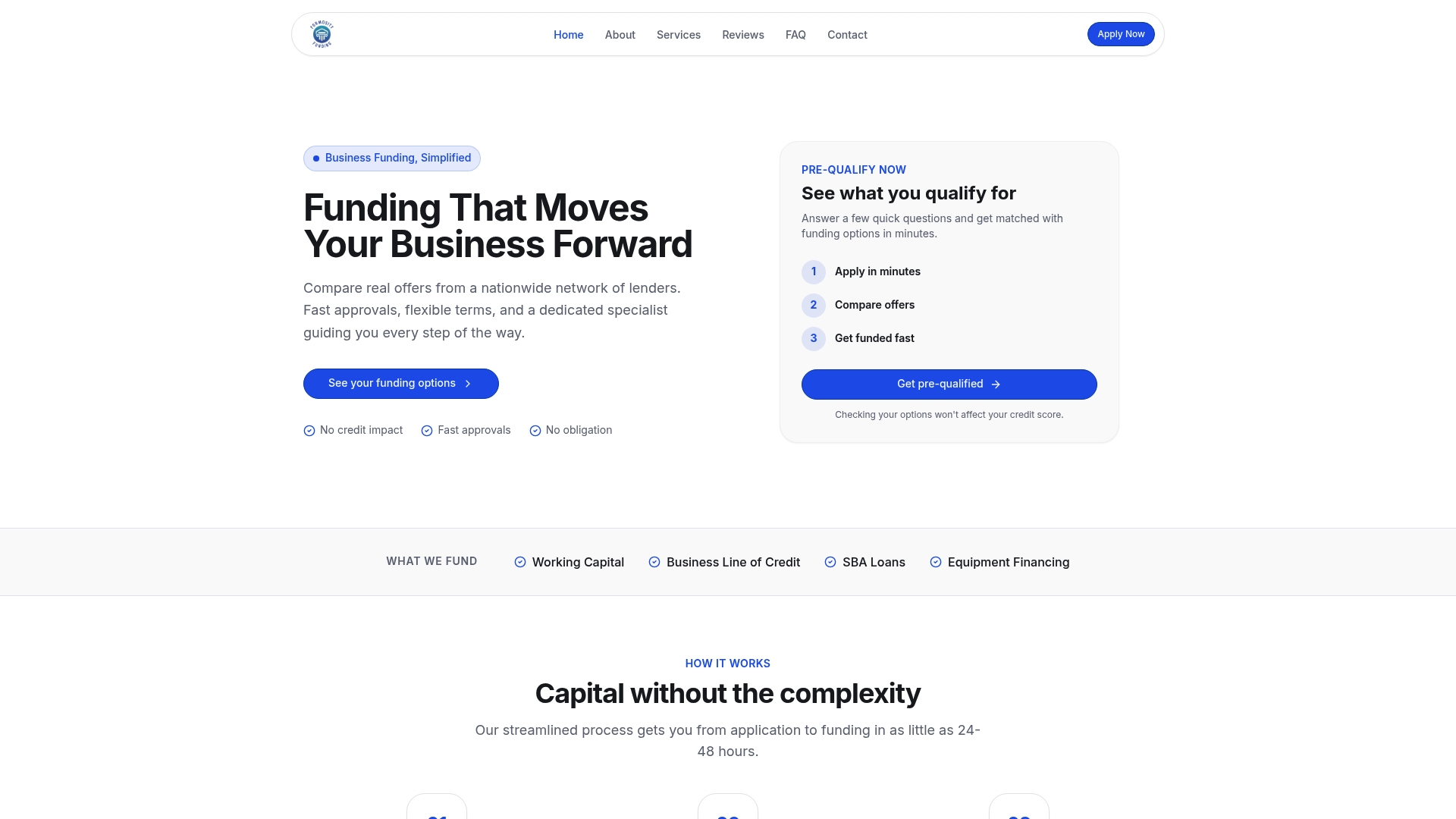
Once you have offers in hand, ask each lender for a written payoff scenario at year one, year three, and year five so you can see exactly how the penalty shrinks over time. Explore your options on the Formosity Funding services page and get matched with lenders whose prepayment terms actually fit your payoff plans.
This article is general information, not a substitute for advice from a qualified financial advisor. Consult a qualified financial professional about your own circumstances before acting on anything here.