

Nine document groups cover most U.S. business loan applications: identification and ownership records, the loan application itself, tax returns or IRS transcripts, bank statements, financial statements and projections, a business plan or executive summary, legal formation paperwork, collateral documentation, and for SBA loans, forms like SBA Form 1919. Exact requirements shift by lender and loan type, but this is the baseline nearly every underwriter in the country works from.
TL;DR:
- Most lenders require nine core document categories, including personal identification, business formation papers, tax returns, bank statements, and collateral documentation, with specific depth depending on loan size.
- Building a comprehensive, consistent financial package with three years of historical data and accurate projections speeds up approval and helps prevent delays caused by discrepancies.
- Verification of formation documents, ownership details, and licenses ensures the business’s legitimacy and authority to sign, while collateral documents must be current and lien-free.
- SBA loans demand additional forms like SBA Form 1919 and strict consistency across all submitted documents to protect the SBA guarantee.
- Organizing files with labeled PDFs, a master index, and thorough reconciliation reduces processing time and minimizes common causes of application failure like mismatched figures or unsigned documents.
Table of Contents
- What Documents Do You Need for a Business Loan?
- What Should Be in Your Financial Package?
- Which Legal and Ownership Documents Do Lenders Verify?
- How Are Tax Returns and IRS Transcripts Used in Underwriting?
- What Paperwork Do Secured Loans Require?
- What Extra Forms Does an SBA Loan Require?
- How Do Lenders Actually Evaluate Your Documents?
- How Should You Organize and Submit Loan Documents?
- How Formosityfunding Helps You Prepare and Apply
- An Editorial Take on Where Applications Actually Fall Apart
- Get Matched With the Right Lender for Your Documents
- Sources
- FAQ
What Documents Do You Need for a Business Loan?
Every lender builds its checklist around one question: can this business repay the loan, and who is actually asking for the money? That question breaks into nine document categories, and skipping any one of them is the single most common reason applications stall in underwriting rather than get denied outright.
The Minority Business Development Agency outlines a consistent baseline across federal and private lending programs: identification, tax returns, bank statements, financial statements, formation records, a business plan, and collateral documentation where the loan is secured. What varies is depth. A $25,000 working capital line might need one year of bank statements. A $2 million commercial real estate loan wants three years of tax returns, audited financials, and a full appraisal package.
Here's the full breakdown, organized the way most lender portals present it.
Personal identification and owner financial statements Every owner with 20% or more equity typically needs to submit a personal financial statement alongside government-issued ID. This applies whether you're a sole proprietor or one of four partners in an LLC. Lenders want a net worth snapshot, not just a credit pull, because personal guarantees are standard on nearly every small business loan under $1 million.
- Driver's license or passport for each owner above the ownership threshold
- Social Security number and date of birth for identity verification
- Personal financial statement listing assets, liabilities, and net worth
- Resume or bio for owners with operational control, especially for startups
Business identification and formation papers Your EIN confirmation letter from the IRS, articles of incorporation or organization, and a current list of owners with percentages round out this category. Lenders cross-reference this against your tax filings, so a mismatch (an owner listed on your application who isn't on your operating agreement) triggers a manual review almost every time.
Loan application and use-of-proceeds summary The application itself asks for the amount, the purpose, and the repayment source. Vague answers here ("general business expenses") slow things down. Lenders want specifics: "$85,000 to purchase a CNC machine, repaid from a signed three-year service contract with projected monthly revenue of $12,000."
Historical financial statements Income statements, balance sheets, and cash-flow statements for the past two to three years form the core of the financial package. Lenders also frequently ask for accounts receivable and accounts payable aging schedules, particularly for asset-based or working capital loans where those balances directly affect how much you can borrow.
Projected financials for startups and young businesses If you're under two years old, historical financials won't carry the weight lenders need. You'll submit pro forma projections instead, typically 12 to 24 months forward, tied to specific assumptions rather than optimistic guesses.
Tax returns or IRS transcripts Most lenders request the last three years of business tax returns, plus personal returns for owners with significant equity stakes. Many now accept IRS transcripts instead of the actual filed returns, which speeds up verification.
Bank statements Expect to provide six to twelve months of both business and personal bank statements. Lenders scan these for average daily balance, deposit consistency, and any red flags like frequent overdrafts or unexplained large transfers.
Legal documents: leases, contracts, licenses, permits Commercial leases, key customer contracts, and any state or local operating licenses go in this pile. If your business requires a specific permit to legally operate (a liquor license, a contractor's license, a health department permit) the lender will ask for it before closing.
Collateral documentation For secured loans, you'll need titles, appraisals, UCC search results, and proof of insurance on anything pledged. This category gets its own deeper treatment later in this guide.
Pro Tip: Build one folder per category before you start filling out applications. Lenders across various networks and traditional banks alike ask for the same nine buckets. Having them ready cuts your time-to-offer from weeks to days.
What Should Be in Your Financial Package?
Lenders want to see three years of history and a realistic forward view. That combination tells an underwriter whether your business has been stable and whether it can absorb new debt without straining cash flow.
The Minnesota Department of Employment and Economic Development recommends three years of income statements and balance sheets where available, plus a current 12-month cash-flow projection for every applicant, not just startups. That projection matters more than most owners expect. A profitable business on paper can still fail a loan review if its cash conversion cycle shows it running out of working capital in month seven.
Building a credible package usually follows this sequence:
- Pull three years of tax returns and reconcile them against your bookkeeping. If your CPA filed one number and your QuickBooks shows another, resolve it before submission, not after a lender flags it.
- Assemble income statements and balance sheets for the same three-year window. Match the periods exactly. A lender comparing a calendar-year tax return against a fiscal-year P&L will ask questions.
- Build a 12-month cash-flow projection with line-item assumptions. Don't just project revenue growth. Show the math: new contract value, expected close date, payment terms.
- For startups, attach supporting evidence such as contractor software pricing for every assumption. Signed contracts, vendor quotes, or market comparables carry far more weight than a spreadsheet built on hope.
- Prepare a short reconciliation memo for anything unusual. A one-time legal settlement that dented net income, an owner distribution that looks like a loss. Explain it in two sentences before the underwriter has to ask.
Banks weigh this evidence heavily. The FDIC's 2024 Small Business Lending Survey found that for medium-sized loans, banks typically evaluate an average of eight of twelve possible information types, and personal credit history and collateral are each factored in by more than 80% of banks surveyed.
That reconciliation step is where most delays actually happen, not in the paperwork itself, but in the gap between what your tax return says and what your bank deposits show. Prepare accounts receivable and payable schedules with the invoices or contracts backing them, and keep those schedules dated within 30 days of submission so nothing looks stale when a loan officer opens the file.
Which Legal and Ownership Documents Do Lenders Verify?
Lenders check formation documents to confirm your business legally exists and that the people signing the loan actually have the authority to bind the company. This sounds obvious until you've seen a deal stall because the person who signed the application wasn't listed as a managing member on the operating agreement.
The core formation documents include articles of incorporation or organization, your certificate of good standing from the state, and for partnerships or multi-member LLCs, the operating or partnership agreement itself. These prove the business is real, registered, and structured the way the application claims.
Ownership disclosure comes next. Any individual owning 20% or more of the business typically needs to be listed by name, with a government ID and their exact ownership percentage. This threshold matters because it determines who needs to submit a personal financial statement and sign a personal guarantee, a detail that surprises first-time borrowers who assumed only the primary owner would be on the hook.
- Articles of incorporation or organization, filed and stamped by the state
- Operating agreement or partnership agreement showing management structure
- Ownership schedule listing every owner above 20%, with IDs and percentages
- State and local business licenses or permits required to legally operate
- Commercial leases, major contracts, or franchise agreements affecting repayment
Licenses and permits round out the picture. If your industry requires a specific credential (contracting, food service, healthcare, transportation) lenders confirm it's current before funding, because an expired license can void your ability to operate, and therefore repay.
How Are Tax Returns and IRS Transcripts Used in Underwriting?
Lenders increasingly prefer IRS transcripts over paper tax returns because transcripts come straight from the IRS and can't be altered. That single detail has changed how underwriting teams verify income across the industry.
The IRS explains that businesses can obtain transcripts through a Business Tax Account, by filing Form 4506-T, or through the Income Verification Express Service (IVES), which lenders use with taxpayer authorization via Form 4506-C. Under the IVES fax process, turnaround is typically two to three business days once the request is submitted correctly, and the IRS charges a per-transcript fee for the service.
- Review any Form 4506-C carefully before signing. It authorizes the lender to pull transcripts directly from the IRS, so read the tax years and form types listed.
- Confirm the business name and EIN on the request match your filed returns exactly. Even a punctuation mismatch can delay processing.
- Ask your lender which transcript type they need. Most want the tax return transcript, but some request the account transcript for payment history.
- Keep a copy of every transcript request and confirmation for your own records in case of a later dispute.
The value here is speed and accuracy, not convenience. Lenders comparing your transcript against your bank deposits are looking for consistency; a business reporting $400,000 in gross receipts on its return but depositing $650,000 across its accounts invites a follow-up question about unreported revenue or commingled personal funds. Reconcile that gap yourself before a loan officer finds it.
What Paperwork Do Secured Loans Require?
Secured loans add an entire second layer of documentation on top of the standard financial package, and it's the layer most borrowers underestimate. Real estate collateral needs a deed, a current appraisal, and title insurance. Equipment collateral needs the title or purchase invoice, plus proof it's free of existing liens.
For loans secured by accounts receivable or inventory, lenders often set up a borrowing base, meaning your available credit fluctuates with an aging report you submit on a schedule (often monthly). Advance rates typically run 70% to 85% of eligible receivables and lower for inventory, so the paperwork discipline here directly affects how much cash you can actually draw.
- Deed or title for real estate, plus a current appraisal
- Equipment titles or purchase invoices showing clear ownership
- UCC lien search results confirming no competing claims on the asset
- Insurance certificates naming the lender as loss payee or additional insured
- Aging reports for receivables or inventory, submitted on the lender's schedule
Pro Tip: Order your UCC lien search before the lender does. If an old filing from a previous equipment loan is still sitting on record, you want time to clear it, not a closing delay two days before funding.
Collateral documentation works as a chain: ownership, valuation, lien status, and insurance all need to line up, because a gap in any one link forces the lender to pause the file until it's resolved. A detailed guide to collateral options covers how different asset types get valued and what small businesses can realistically pledge.

What Extra Forms Does an SBA Loan Require?
SBA-backed loans layer additional federal paperwork on top of everything a conventional lender already asks for, and the most important form in that stack is SBA Form 1919, the Borrower Information Form. It collects applicant and owner details the SBA uses for eligibility screening and background checks, and it's been in its current version since March 2025.
Beyond Form 1919, SBA 7(a) closings typically include a loan authorization and guaranty agreement, a use-of-proceeds certification, and a settlement sheet the lender retains for its files. These forms exist because the SBA is guaranteeing a portion of the loan, not funding it directly, so the paperwork trail has to withstand a federal audit, not just satisfy a loan officer.
- SBA Form 1919 (Borrower Information Form) for the applicant and each owner
- Personal financial statements for owners meeting the ownership threshold
- Business and personal tax returns or IRS-verified transcripts
- Loan authorization, guaranty agreement, and settlement sheet at closing
- Certification of use-of-proceeds matching the stated purpose on the application
Accuracy matters more here than on a conventional loan. Inconsistent answers across Form 1919, your personal financial statement, and your tax transcripts can jeopardize the lender's ability to claim the SBA guaranty if the loan later defaults, which is exactly why SBA lenders tend to be stricter about document consistency than conventional banks.
How Do Lenders Actually Evaluate Your Documents?
Underwriters weigh two categories of evidence: hard information (verifiable numbers like credit scores and tax returns) and soft information (judgment calls like management experience and industry outlook). Most small business loans lean on both, and the mix shifts with loan size.
According to the FDIC's 2024 survey, banks evaluate an average of eight of twelve possible information types for medium-sized loans, with personal credit scores and collateral each factored in by more than 80% of banks. That means most of your file gets scored on objective data, but the remaining judgment calls (does management have relevant experience, is the industry outlook stable) can tip a marginal application either way.
- Expect proportional scrutiny. A $50,000 line of credit might get evaluated on four or five factors. A $1.5 million term loan can pull in all twelve.
- Write a one-page narrative for anything unusual. A dip in revenue during a specific quarter, an owner draw that looks like a loss, a one-time legal expense. Underwriters read these explanations before they read your spreadsheets.
- Attach management bios for key decision-makers. Loan officers weigh experience heavily when hard numbers alone don't tell the full story.
- Tie every projection to a signed contract, purchase order, or documented pipeline. A forecast backed by evidence moves faster through review than a forecast backed by optimism.
That written explanation matters more than most borrowers assume. A short note addressing an anomaly before an underwriter asks about it often prevents a simple document gap from turning into an outright denial.
How Should You Organize and Submit Loan Documents?
Lenders process files faster when the documents arrive clean, labeled, and internally consistent, which sounds trivial until you've seen how many applications get delayed by a blurry scan or a mismatched filename.
Start with format. Submit searchable PDFs rather than photos of paper documents, and avoid password-protecting files unless the lender specifically asks for it, since encrypted files often bounce out of automated intake systems.
- Adopt one filename convention and stick to it. Something like "CompanyName_TaxReturn_2025.pdf" beats "scan001.pdf" every time, and it tells the underwriter what they're opening before they open it.
- Build a master index listing every file in the package. A simple one-page table mapping each document to the credit factor it supports (tax returns support income verification, bank statements support cash-flow) helps the underwriter navigate the file instead of hunting for it.
- Run a final reconciliation pass before uploading. Confirm your tax return figures, bank deposit totals, and P&L numbers all agree, or attach a short memo explaining any variance.
- Set a follow-up routine for interim statements. If underwriting stretches past a month, be ready to submit an updated bank statement or interim P&L on request rather than scrambling when the lender asks.
Pro Tip: Keep a locked folder of your final submitted package, separate from your working files. If a lender asks "what exactly did we send you," you want the answer in thirty seconds, not thirty minutes.
The Minority Business Development Agency's guidance is blunt about accuracy here: false or misleading information in a loan file results in denial, full stop. Keep originals accessible, verify every figure before it leaves your hands, and treat the reconciliation step as mandatory, not optional. Readers building a working-capital request specifically should also review what document most affects working capital approval, since lenders weight that category differently than term loans.
How Formosityfunding Helps You Prepare and Apply
There are online marketplaces that connect small and medium-sized businesses with a nationwide network of lenders, allowing one application to be matched against multiple loan products at once. That matters when you're not sure yet whether you need a line of credit, an SBA loan, or equipment financing.
Pre-qualification may run with no credit impact, allowing applicants to see what offers might be available before committing documents to a formal underwriting file. From there, funding specialists may help walk through the checklist and flag gaps before a lender sees them.
For more on strengthening your position before you apply, the Formosityfunding blog covers working capital loan requirements in depth and offers tactics for improving approval odds across multiple loan types.
An Editorial Take on Where Applications Actually Fall Apart
Most denials I've seen traced back to aren't about weak financials. They're about numbers that don't match across documents, forms missing a signature, or collateral evidence that's incomplete when the underwriter finally asks for it. Reconcile your tax returns, bank deposits, and P&L before you submit anything, and write a one-page narrative explaining your business in plain terms: what it does, why the loan amount makes sense, and how it gets repaid.
The three mistakes I'd flag hardest: inconsistent figures across forms, unsigned documents that sit in a pile until someone notices, and collateral claims with no appraisal or title backing them up. Fix those three and you've already outpaced most applicants.
— Alvin
Get Matched With the Right Lender for Your Documents
You've done the hard part if you've pulled together tax transcripts, bank statements, and a reconciled financial package. The harder question is which lender actually fits that file. Certain platforms serve as an alternative to walking into multiple banks with the same paperwork: submit documents once, get matched against a network of lenders, and compare loan offers side by side.
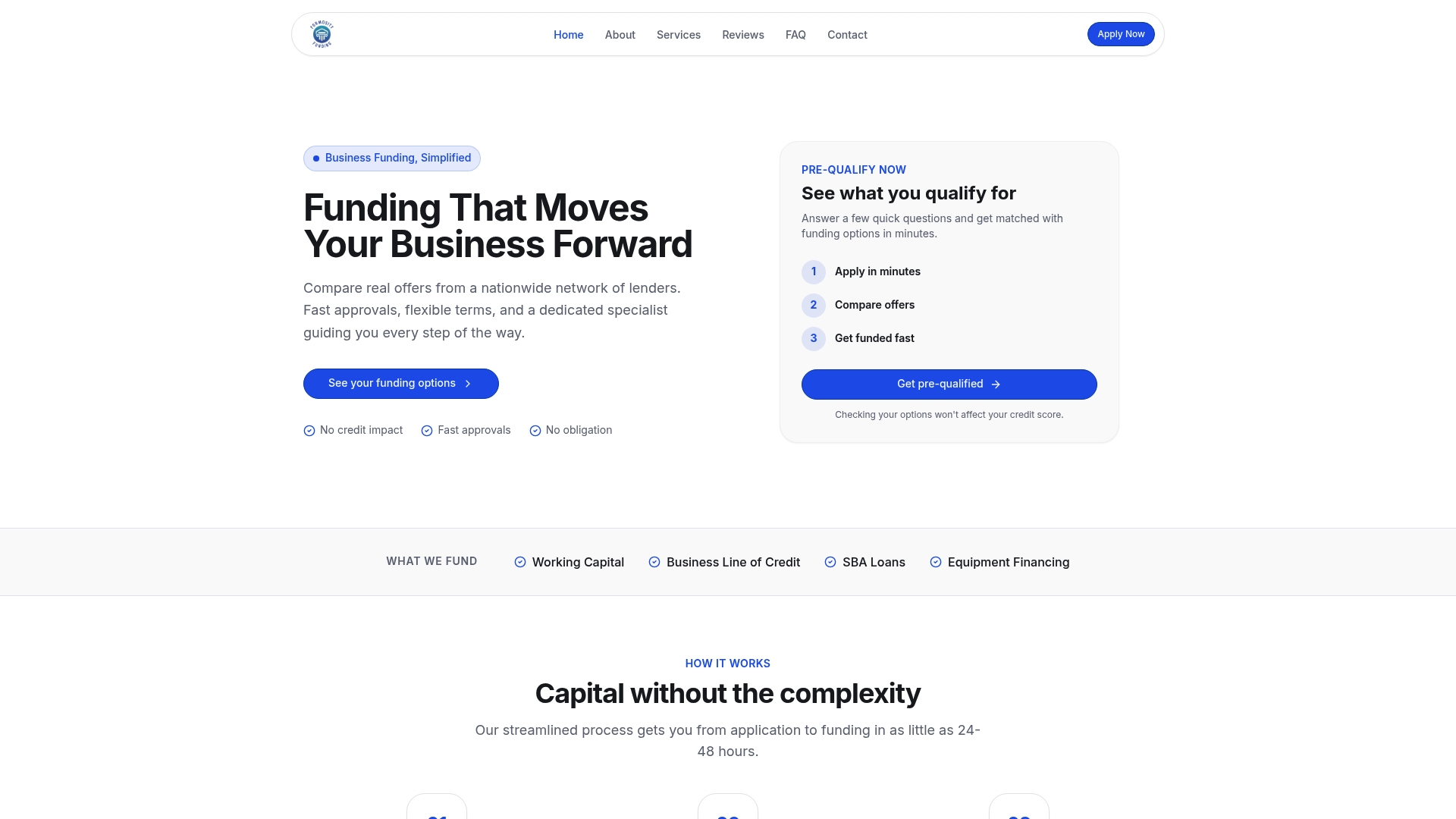
Pre-qualification carries no credit impact, and a dedicated funding specialist reviews your file to flag gaps before a lender does, the same reconciliation issues covered throughout this guide. If cash flow evidence is thin, the payment acceptance consultation can help strengthen your merchant statements before you apply. Start by reviewing Formosityfunding's full range of funding services and see which product actually matches the documents you've already gathered.
This article is general information, not a substitute for advice from a qualified financial advisor. Consult a qualified financial professional about your own circumstances before acting on anything here.
Sources
- Loan Documentation | Minority Business Development Agency
- Borrower Information Form | U.S. Small Business Administration
- Get a business tax transcript | Internal Revenue Service
FAQ
What Documents Do I Need for a Business Loan?
You'll generally need personal ID, business formation records, tax returns or IRS transcripts, bank statements, financial statements, a business plan, and collateral documentation if the loan is secured. The MBDA's checklist confirms this baseline applies across most federal and private lending programs, though specific requirements vary by lender and loan product.
What Are the Five Documents Most Often Required for a Loan?
The five most commonly requested items are a completed loan application, business and personal tax returns, bank statements, financial statements (income statement and balance sheet), and formation documents proving business ownership. Secured loans add collateral paperwork as a sixth core requirement.
What Are Business Loan Documents, Exactly?
Business loan documents are the identification, financial, legal, and tax records lenders use to verify who you are, what your business earns, and how you'll repay the loan. They range from an EIN confirmation letter to three years of tax returns to a signed personal guarantee, and lenders on platforms like Formosityfunding use this same set of records to match applicants with appropriate lender partners.
How Do I Find My SBA Loan Documents?
Start with SBA Form 1919, available directly from the SBA's site, and gather it alongside your tax transcripts, personal financial statement, and business formation records. Your SBA lender will provide the closing forms, including the guaranty agreement and settlement sheet, once your application moves into underwriting.
How Long Does It Take to Gather Business Loan Documents?
Most owners with organized bookkeeping can assemble a full package in one to two weeks, though startups building pro forma projections from scratch often need three to four weeks. Requesting IRS transcripts through the IVES process typically adds two to three business days once the authorization form is submitted correctly.