
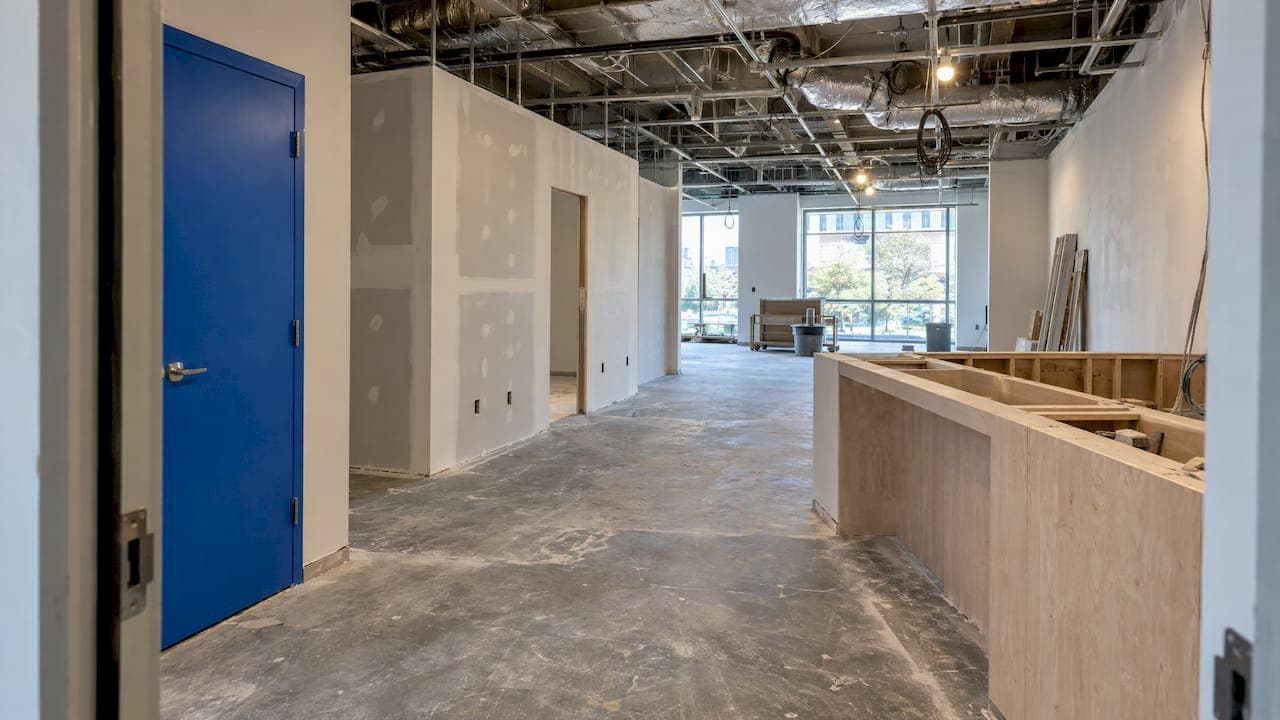
Leasehold improvement financing is money a tenant borrows to alter leased space: walls, flooring, lighting, plumbing, a new restaurant kitchen, a clinic build-out. The main routes are an SBA 7(a) loan, a business line of credit, working capital funding, and a landlord's tenant improvement (TI) allowance. Which one fits depends on project size, how long your lease runs, and how fast you need the money. This guide walks through each route, what lenders look at, and the tax and timing traps that catch tenants out.
TL;DR
- SBA 7(a) loans can fund leasehold improvements, with loan amounts up to $5 million and terms generally up to 10 years, per the SBA.
- Smaller or faster projects often suit a line of credit or working capital instead, at the cost of shorter terms.
- Lenders treat renovations like construction: expect budgets, contractor bids and draws paid out as work reaches milestones.
- Leasehold improvements are usually capitalized and depreciated, not deducted at once, so talk to your CPA before you sign the lease.
- Your remaining lease term matters as much as your credit. A short lease can limit what you can borrow against it.
Table of Contents
- What counts as a leasehold improvement
- Who pays: landlord, tenant or both
- Your financing options compared
- How lenders underwrite a renovation
- Draws, inspections and the cash flow gap
- Tax treatment: capitalize first, then depreciate
- Our perspective
- Choosing a structure: three examples
- Where Formosity Funding fits
- Frequently asked questions
- Sources
What counts as a leasehold improvement
A leasehold improvement is an alteration a tenant makes inside leased space to suit the business. Typical examples: partition walls, ceilings, flooring, built-in counters, lighting, electrical and plumbing work, and specialized finishes such as a salon's wash stations or a dental office's plumbing.
Work outside your leased space is not a leasehold improvement. Replacing a roof or building exterior is a landlord matter, and the IRS treats items like a rooftop HVAC unit differently from interior work. A 2013 IRS memorandum examines exactly that question for HVAC units on a roof or on a concrete pad beside the building.
The distinction matters twice: lenders want a clear scope of work, and your accountant needs the right category for depreciation.
Who pays: landlord, tenant or both
Before you borrow anything, find out how much the landlord will contribute. Leases commonly split the cost in one of three ways:
- Landlord builds out the space and recovers the cost through higher rent.
- TI allowance: the landlord contributes a fixed amount per square foot and you pay the rest.
- As-is lease: the tenant pays for everything, sometimes in exchange for free rent early in the term.
The allowance is usually paid after work is finished or against invoices, so you still need cash or credit to cover the gap. That gap is where financing comes in. If the landlord's contribution arrives late, a short-term line of credit can bridge it.
Negotiate these terms before signing. Lease structure can decide who may claim depreciation on the improvements, and tax professionals consistently say owners should involve a CPA before the lease is final.
Your financing options compared
| Option | Best for | Typical shape | Main trade-off |
|---|---|---|---|
| SBA 7(a) loan | Larger build-outs, long payback | Up to $5 million, terms generally up to 10 years | Longer process, more paperwork |
| Business line of credit | Phased or smaller projects, bridging a TI allowance | Draw as needed, repay and reuse | Limits are usually lower than term loans |
| Working capital funding | Fast, smaller projects | Quick funding, shorter repayment | Higher cost for speed |
| Equipment financing | Fixtures and machines that can be removed | Equipment secures the loan | Covers equipment, not built-in construction |
| Landlord TI allowance | Any tenant who can negotiate it | Paid into the build-out or credited against rent | Usually reimbursed late and priced into rent |
Most tenants combine two of these: a landlord allowance plus a loan or line for the rest.
SBA 7(a) loans
The SBA states that small businesses can use 7(a) proceeds for leasehold improvements, expansion or renovation. Loan amounts run up to $5 million, and terms are generally up to 10 years, with longer terms possible when the improvement is tied to real estate with a longer useful life. Interest rates are negotiated between borrower and lender, subject to SBA maximums.
The long term is the appeal. Spreading a $300,000 build-out over ten years produces a far lighter monthly payment than a two-year loan, which protects cash flow in the months when a new location has not yet found its footing.
The costs are time and documentation. Plan for a lease or letter of intent, contractor bids, financial statements and an equity contribution. Our guide to the SBA equity injection covers how that requirement is documented, and our walkthrough of the SBA loan timeline shows how long each stage realistically takes. If your credit is borderline, read what SBA lenders want in a credit score.
SBA 504 loans: usually an owner's tool
The SBA says 504 loans also finance improving or modernizing existing facilities, with maximums up to $5.5 million and 25-year terms for real estate projects. The program is designed around long-term fixed assets. The SBA's guidance suggests choosing between 7(a) and 504 on project size, desired term and whether you have the equity the 504 program requires, not on rate alone.
For a tenant who does not own the building, 7(a) is generally the more natural fit, because it can combine renovation costs with working capital. Ask any lender directly whether your lease structure fits the program you are considering.
One rule worth knowing if you also own property: SBA lenders verify that the borrower will occupy a minimum share of the building, 51% for an existing building and 60% for new construction according to SBA lender guidance. Remodeling space that is rented to other tenants can make a loan ineligible.
Lines of credit and working capital
A line of credit suits projects that unfold in stages: a restaurant that opens the dining room first and the patio later, or a retailer refreshing one floor at a time. You draw what you need, pay interest on what you use, and the availability renews as you repay.
Working capital funding is the quickest route and works for modest projects: repainting, new flooring, lighting upgrades, a reception area. It tends to carry shorter repayment terms, so match it to a project that pays for itself quickly, not a $400,000 build-out.
Equipment financing for the movable pieces
Many build-outs are half construction and half equipment: a commercial oven, salon chairs, dental units, exam tables. Equipment can usually be financed on its own, secured by the equipment itself, which keeps your construction loan smaller. If you are weighing options, see equipment lease vs. loan and, for tax planning, how a lease can cost you the Section 179 deduction.
How lenders underwrite a renovation
Expect a lender to look at a leasehold project the way it looks at construction. The OCC's handbook on commercial real estate lending describes project feasibility review: construction budgets, plans, and the borrower's ability to absorb cost overruns. It also describes debt-service coverage and global cash flow, which means income from all your sources, not just the one location.
For complex projects or older buildings, the lender may require an independent review of the budget by a qualified professional such as an engineer or architect.
In practice, prepare:
- A signed lease or a letter of intent, with the term and renewal options visible
- Two or three contractor bids and a line-item budget
- A contingency line, since overruns are something lenders look for you to plan for
- Business tax returns and current financial statements
- Your personal financial information, if the lender wants a guarantee
Our article on commercial construction loan requirements lists the documents lenders ask for in more detail.
The lease term problem
You are improving property you do not own. If your lease has three years left and the loan runs ten, the lender has collateral worth little to it and a borrower whose right to occupy may expire first. Lenders therefore look at remaining lease term and renewal options. A practical target is a lease, including options, that at least matches the loan term. If it does not, negotiate an extension before closing, or choose a shorter product.
Draws, inspections and the cash flow gap
Many renovation loans are not paid out in one lump. They are structured as draws released as work reaches milestones, such as framing complete or electrical signed off. Lenders often verify progress on-site before releasing a draw, and regulators describe on-site inspections as a monitoring tool for construction-type lending. Borrowers commonly pay for those inspections.
The frustration owners report is timing. Your contractor wants a deposit and progress payments on their schedule, while the bank pays on its inspection schedule. In between, you can run short of cash.
How to avoid it:
- Give your contractor the lender's draw schedule before signing the construction contract.
- Ask the lender how many business days an inspection and draw take.
- Budget inspection fees as a project cost.
- Keep a line of credit or cash reserve to cover the weeks between payment and reimbursement.
- Prefer a fixed-price construction contract to open-ended time-and-materials billing, which makes draw requests easier to document.
Tax treatment: capitalize first, then depreciate
This is general information, not tax advice. Your CPA decides how your project is treated.
The IRS generally does not allow leasehold improvements that are capital expenditures to be deducted in one year. Under IRS Publication 946, they are capitalized and depreciated. Qualified Improvement Property, which covers certain interior improvements to nonresidential buildings, is generally depreciated on a straight-line basis over 15 years. Some costs may qualify for a Section 179 deduction, subject to annual dollar limits and taxable income limits.
Three things to raise with your accountant before construction starts:
- Interior versus exterior. IRS guidance indicates the faster recovery period generally applies to interior work. Roof units and exterior changes are typically structural components. Split these lines in your budget.
- Who owns the improvement. The publication says you can depreciate leased property only if you retain the incidents of ownership, meaning you bear the burden of exhaustion of the capital investment. Lease wording can shift that.
- Cost classification. Calling something a repair versus an improvement is a frequent audit question. An IRS memorandum concludes that costs a lessee incurs building on a lessor's property must be capitalized by the lessee as leasehold improvements in the situation it analyzes.
Our perspective
We see the same pattern in tenant projects. Owners shop for the lowest rate first, then discover the real problems: a lease too short for the loan, a draw schedule that does not match the contractor's invoices, or a budget that mixes interior and exterior work.

So we suggest working in a different order. Start with the lease, because it sets what any lender will fund. Then size the project honestly, including a contingency and inspection costs. Only then compare products. Because Formosity Funding is a marketplace connecting businesses with a nationwide network of lenders, you can see working capital, lines of credit, SBA loans, equipment financing and more side by side, instead of knocking on one bank's door and taking its single answer. Pre-qualification does not impact your credit, so comparing costs you nothing in score terms.
If your project is big and your lease is long, a longer-term SBA structure usually deserves a hard look. If it is small or urgent, speed may justify a shorter product. Either way, ask your CPA about depreciation before you sign.
— Alvin
Choosing a structure: three examples
These are illustrative scenarios, not client case studies.
A restaurant tenant, large build-out. A new kitchen, ventilation, plumbing and dining room, with a ten-year lease and two renewal options. A 7(a) loan is the natural candidate, because the long term lowers payments and the lease is long enough to support it. Equipment such as ovens can be financed separately.
A salon moving into a second-generation space. Cosmetic work plus new chairs and wash stations. A line of credit for the interior finish and equipment financing for the chairs keeps both costs flexible, and the landlord's allowance reimburses part of the work later.
A professional office refreshing its suite. New flooring, paint and lighting, done in one month. Working capital funding can cover this quickly, provided the monthly repayment fits cash flow and the improvement will pay back within the repayment period.

Where Formosity Funding fits
We match small and medium-sized businesses with lenders across the country, with dedicated funding specialists guiding you from application to funding. For leasehold work, that typically means comparing working capital, lines of credit, SBA loans and equipment financing in one place. If you own real estate and want to borrow against it to fund improvements, see our Business HELOC page. You can start with pre-qualification that does not affect your credit.
Frequently asked questions
Can an SBA loan pay for improvements to a space I rent?
Yes. The SBA lists leasehold improvements among the permitted uses of 7(a) proceeds. Lenders will still want a lease or letter of intent, a project budget and enough remaining lease term to support repayment.
How are leasehold improvements depreciated?
They are generally capitalized and depreciated over time rather than deducted at once. Qualified Improvement Property is generally depreciated straight-line over 15 years, and some costs may qualify for Section 179. Your CPA should confirm what applies to your project.
What is the difference between leasehold improvements and building improvements?
Leasehold improvements are alterations a tenant makes inside leased space. Building improvements are changes to the property itself, such as the structure, roof or exterior, which usually fall to the owner. The split also affects tax recovery periods.
Will the landlord pay for any of the work?
Often, partly. Many commercial leases include a TI allowance, but terms vary and the money commonly arrives after the work is done. Negotiate the amount and payment timing before you sign, and plan financing for the gap.
Sources
- SBA: 7(a) and 504 terms, conditions and eligibility
- SBA: Lender's Application for Loan Guaranty (Form 1920)
- IRS Publication 946: How to Depreciate Property
- IRS memorandum on HVAC and qualified leasehold improvement property
- IRS memorandum on lessee construction costs
- OCC Comptroller's Handbook: Commercial Real Estate Lending
- FDIC working paper: Bank Monitoring with On-Site Inspections