
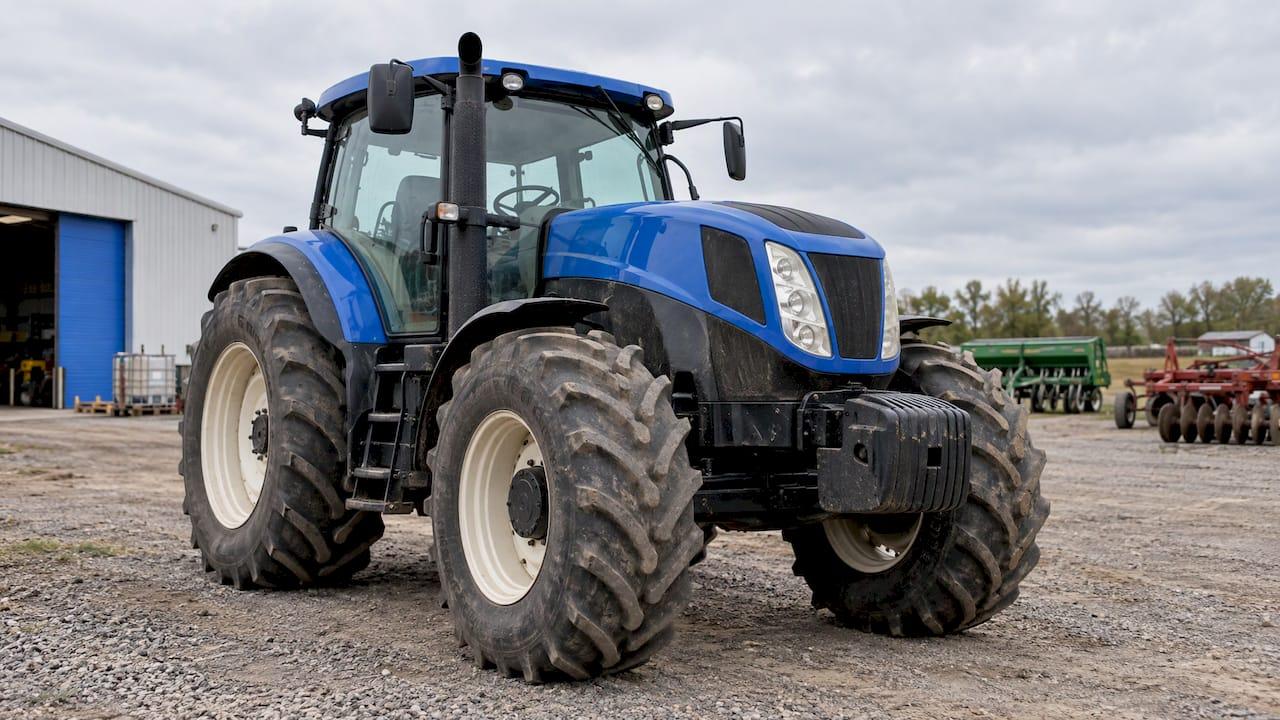
Farm equipment financing is a loan or lease that lets you put a tractor, combine, planter, sprayer or livestock handling system to work now and pay for it from the income it helps you earn. The best result usually comes from comparing several real offers side by side rather than taking the first one at the dealership. Formosity Funding is a marketplace that connects businesses with a nationwide network of lenders, offers instant pre-qualification with no credit impact, and puts a dedicated funding specialist alongside you from application to funding.
This guide covers what the financing can pay for, how loans, leases and dealer programs differ, what the USDA's Farm Service Agency (FSA) offers, how Section 179 changes the math, and how to fit payments to a farm's seasonal cash flow.
TL;DR
- Equipment financing can cover new and used machinery, and farm operating loans from the USDA can also cover equipment alongside livestock, feed, seed and fuel.
- A loan builds ownership; a lease lowers upfront cost. The tax treatment differs depending on the lease type, so decide with your numbers in hand.
- For November 2026, FSA direct farm operating loans carry a 5.625% rate. The rate is reset monthly, so check the live table.
- Section 179 lets many farms deduct equipment cost in the year it goes into service: up to $2,560,000 for 2026.
- With Formosity Funding you can pre-qualify without a credit impact and compare multiple real offers before you commit.
Table of Contents
- What farm equipment financing actually covers
- Loan, lease or dealer financing
- What rates and terms to expect
- Qualifying: what lenders want to see
- Government programs by type
- Section 179 and bonus depreciation
- Fitting payments to the farm calendar
- How to get your farm equipment financed
- Why compare through a marketplace
- Start with your offers
- FAQ
- Sources
What farm equipment financing actually covers
The phrase is broad on purpose. Lenders generally fund the machines that produce or move your crop and stock: tractors, combines, planters and drills, sprayers, balers, hay equipment, irrigation systems, grain handling, trailers and farm trucks, and livestock equipment such as chutes and feeders. Used machinery is often eligible too, though lenders look harder at age and condition. Our guide to what lenders check on used equipment walks through that.
The machine itself usually serves as collateral. That keeps the process faster and simpler than a loan secured by land, and it means you can often finance equipment without pledging the farm. If a lender wants more security, see what small businesses can pledge as collateral.
Government operating loans widen the definition. The USDA says FSA farm operating loans can fund livestock, poultry, farm equipment, feed, seed, fuel, farm chemicals and insurance. Direct loans go up to $400,000 and guaranteed loans, which are made by commercial lenders with an FSA guarantee, go up to $2,558,000.
Loan, lease or dealer financing
Three structures cover most purchases. They differ in who owns the machine, what you pay upfront and what the payments do to your taxes.
| Equipment loan | Lease | Dealer financing | |
|---|---|---|---|
| Ownership | You own it from day one, with the lender holding a lien | Depends on the lease type | You own it, financed through the manufacturer or dealer |
| Upfront cost | Often a down payment | Often lower | Varies by program |
| Best for | Machines you will run for a decade | Machines that age fast or need upgrades | Promotional rates on specific models |
| Watch for | Term longer than the machine's useful life | Buyout price and end-of-lease terms | Fees that raise the true cost |
Loans: you build equity
With a loan you own the equipment and deduct depreciation and interest. It suits tractors and combines that will earn for many seasons. Our comparison of equipment leases and loans lays out the trade-offs in more detail.
Leases: two very different animals
University extension specialists at Ag Lease 101 explain that a true operating lease's payments are deductible as ordinary expenses. A finance lease is different: the IRS treats it as a conditional sale, so you are considered the owner, you take depreciation, and only the interest part of each payment is deductible. Many finance leases look like three-to-five-year balloon loans. Know which one you are signing before you compare payments.

Dealer programs
Manufacturer financing can offer below-market rates and deferred interest. The same source notes that origination fees or other charges can raise the real cost, and that terms change year to year with manufacturers' push to move inventory. Treat each offer as new, and compare it to other quotes by total cost, not by headline rate.
What rates and terms to expect
Private-lender equipment rates depend on your credit, time in business, equipment type and term. Our overview of equipment financing rates in 2026 explains what moves them.
The government benchmark is easier to pin down. The USDA announced that, effective November 1, 2026, FSA farm operating loans (direct) are priced at 5.625%. Farm ownership loans (direct) are 6.250%, and the down payment rate is 2.250%. FSA resets these monthly, so the current rate table is where you check a rate before you apply. Guaranteed-loan maximum rates are tied to SOFR or the 5-year Treasury rate.
On term length, FSA rules say operating loan terms may not exceed seven years. The standard term for equipment equals the useful life of the security or seven years, whichever is less, and the first three years of installments must at least cover accrued interest, according to 7 CFR Part 764. The practical rule from that: never let the repayment term outlive the machine.

Qualifying: what lenders want to see
For private equipment financing, lenders typically review credit, time in operation, revenue and the equipment being bought. Credit is only one input; see what credit score equipment financing needs. Having the paperwork ready speeds things up, and three documents do most of the work.
For FSA direct loans, the rules in 7 CFR Part 764 require that you:
- Are a U.S. citizen, non-citizen national or qualified alien.
- Have acceptable credit.
- Cannot get enough credit elsewhere at reasonable rates and terms.
- Can show managerial ability.
Applications include financial and production records and a farm operating plan.
Government programs by type
FSA operating loans come in four types: guaranteed, EZ guarantee, direct and microloans. Operating microloans provide up to $50,000 per loan and are aimed at beginning farmers, small family operations and niche producers. Applicants submit a loan application and farm business plan to their local FSA office.
Farmers who want a faster route to several lenders can start with Formosity Funding's business funding options, which include equipment financing, SBA loans, working capital and lines of credit. SBA loans suit larger projects that need long terms, and a line of credit handles the gaps between purchases.
Section 179 and bonus depreciation
Tax rules can change what a machine really costs. According to IRS Publication 946, the Section 179 limit is $2,560,000 for 2026, with a $4,090,000 phaseout threshold. The same publication says P.L. 119-21 reinstated 100% bonus depreciation for qualified property acquired and placed in service after January 19, 2025.
The National Agricultural Law Center describes Section 179 as "the precision tool for tax planning" because you can allocate it flexibly among purchases. It also notes the 40% bonus election, or electing out, can help in low-income years by avoiding a loss.
A worked example: a farm buys a $180,000 planter and places it in service this year. If the farm elects Section 179 for the full cost and has enough taxable income, the deduction can reduce that year's taxable income by $180,000. Whether the deduction fits depends on lease type and ownership, so read our guide on how a lease can cost you the Section 179 deduction and confirm the plan with your tax preparer.
Fitting payments to the farm calendar
A farm's income arrives in bursts. A payment schedule that ignores that is the most common reason good equipment loans become stressful.
- Map your cash. List when revenue arrives (harvest, calving, sale dates) and when big costs hit (seed, fertilizer, labor).
- Ask for a matching structure. Some lenders can set up payments around harvest instead of monthly, such as annual, semi-annual or deferred first payments. Availability varies by lender and product, so raise it at the start.
- Match term to machine life. A seven-year term on a machine you will use for ten is comfortable. A seven-year term on a planter you will trade in at four creates negative equity.
- Separate the machine from the season. Equipment loans fund the asset. Seed, fuel and labor are better served by working capital or a line of credit. Our comparison of working capital and equipment loans shows which fits which need.
- Plan for refinancing. If rates drop or your cash flow improves, a refinance can pay off within about a year.
How to get your farm equipment financed
- Price the machine and decide on new or used, and loan or lease.
- Gather records: tax returns, financial statements, bank statements and, for newer operations, a farm operating plan.
- Pre-qualify to see what you can access before a hard credit pull.
- Compare offers on total cost, term, payment schedule, down payment and fees.
- Close and deploy, then book the deduction with your tax preparer.
At Formosity Funding, steps three and four are the heart of the service. Pre-qualification carries no credit impact, and you can review multiple real loan and credit offers from our lender network instead of negotiating with one source.
Why compare through a marketplace
Most farmers we talk to about equipment are weighing the same things: price of the machine, a payment they can live with in a short year, and the tax picture. A single lender can only answer from its own menu. That is why we built Formosity Funding around a nationwide network of lenders and a dedicated funding specialist who walks you through the process.
Equipment financing, working capital, lines of credit, SBA loans and commercial real estate financing sit on one platform, so the harvest-season operating gap and the new combine do not need separate searches. Our view: see several real offers first, then decide.
Alvin
Start with your offers
If you are planning a purchase, Formosity Funding matches your business with working capital, business lines of credit, SBA loans and equipment financing from its lender network. Pre-qualification takes no credit impact, and a funding specialist guides you from application to funding. See the full range on our funding options page.
FAQ
Can I finance used farm equipment?
Yes, many lenders fund used machinery. They typically look at age, hours and condition, and the term is usually shorter on older equipment. Our guide to used equipment requirements lists what gets checked.
Do I need good credit to finance a tractor or combine?
Credit matters, but it is not the only factor. Lenders also weigh time in business, revenue and the equipment itself. Pre-qualifying through Formosity Funding does not affect your credit, so you can see where you stand first.
Should I lease or buy farm equipment?
Buy when you will use the machine for many years and want the ownership and depreciation. Lease when upfront cost or fast-changing technology is the bigger concern. Check whether the lease is a true lease or a finance lease, because the tax treatment differs.
Can a farm use an SBA loan for equipment?
Yes. SBA loans are one of the funding types available through Formosity Funding, and they suit larger purchases that benefit from long terms. A funding specialist can help you match the loan to the project.
Sources
- Farm Operating Loans, Farm Service Agency
- USDA Announces November 2026 Lending Rates for Agricultural Producers
- Current FSA Loan Interest Rates
- 7 CFR Part 764, Direct Loan Making (eCFR)
- Operating Microloan, Farm Service Agency
- Purchasing and Leasing Farm Equipment, Ag Lease 101
- 2025 Publication 946, IRS
- Reviewing OBBBA Tax Provisions Impacting Agriculture, National Agricultural Law Center