
A working capital loan pays for the day-to-day running of your business: payroll, inventory, rent, and gaps between invoices and payments. An equipment loan pays for a specific physical asset, such as a truck, an oven, or a CNC machine, and that asset secures the loan. If your need is a recurring cost, think working capital. If your need is one machine you can point at, think equipment financing.
The two are often confused because both are "business loans" and both can be funded quickly. They behave very differently once the money arrives. This guide shows where each one fits, how they compare on cost, collateral, and tax treatment, and how to decide when your situation sits between the two.
TL;DR
- Working capital covers short-term operating needs (payroll, inventory, receivables, seasonal gaps). Equipment financing covers a specific physical asset that also serves as the collateral.
- Working capital is generally repaid over a shorter period because the need it solves is short-term. Equipment financing is usually matched to how long the asset stays useful.
- Financing equipment can keep your cash free for operations, so the two products often work together rather than compete.
- Tax treatment differs: equipment purchases may qualify for the Section 179 deduction, while operating costs are generally deducted as ordinary business expenses.
- Not sure which you need? We can match you with lenders and show real offers with a pre-qualification that does not affect your credit.
Table of Contents
- The core difference: what the money is for
- Working capital vs. equipment loan at a glance
- When working capital financing fits
- When equipment financing fits
- Where the two overlap: SBA loans
- Cost, terms, and collateral compared
- The tax angle most owners miss
- Working capital vs. fixed capital
- Using both together
- How to decide: five questions
- Our perspective
- See your options side by side
- FAQ
- Sources
The core difference: what the money is for
The cleanest way to separate these two products is to ask what the money turns into.
Working capital turns into operating activity. The Office of the Comptroller of the Currency (OCC) describes working-capital loans as funding for short-term operating needs, including inventory, receivables, and recurring operating costs. Once spent, the money is gone into payroll, stock, or supplier invoices, and ideally it comes back as sales revenue.
Equipment financing turns into a durable asset. The same OCC guide explains that equipment financing lets small businesses purchase or lease physical equipment, and that the equipment itself serves as collateral and secures the loan. The loan is tied to the thing you bought, and the thing you bought keeps producing value for years.
That single difference drives almost everything else: how long you repay, how a lender underwrites the deal, what happens if payments stop, and how the cost shows up on your tax return.
Working capital vs. equipment loan at a glance
| Factor | Working capital financing | Equipment financing |
|---|---|---|
| Main purpose | Operating expenses, inventory, receivables, seasonal gaps | Buying or leasing a specific machine, vehicle, or tool |
| What it turns into | Payroll, stock, supplier payments | A physical asset you own or use |
| Collateral | Often the business's cash flow and receivables, depending on the product | The equipment itself |
| Repayment horizon | Shorter, because the need is short-term | Typically matched to the equipment's useful life |
| Flexibility of use | Broad: the money can go to many operating costs | Narrow: tied to the specific equipment |
| Tax treatment | Operating costs are generally deductible as ordinary expenses | Purchases are generally capitalized, with possible Section 179 treatment |
| Best signal you need it | Cash is tight even though the business is working | A machine would raise capacity, speed, or reliability |
The table is a starting point, not a verdict. Terms for any specific deal come from the lender, and a marketplace like ours exists to show you several real offers side by side.
When working capital financing fits
Working capital is the right tool when the business is healthy but the timing of cash is not. Typical situations:
- Seasonal swings. A landscaper buys fuel, seed, and seasonal labor in spring but collects most revenue in summer. A retailer stocks up in the fall for holiday sales.
- Slow-paying customers. You delivered the work and sent the invoice, but payment is 45 days away and payroll is due Friday.
- Inventory purchases. A supplier offers a volume discount, or a big order requires more stock than you hold.
- Short-term opportunities. A large contract needs materials up front.
Xero's U.S. guide to working-capital loans notes that this kind of borrowing can help with seasonal gaps, payroll, operating costs, inventory, and supplier orders. It also makes a point worth taking seriously: if you find yourself borrowing to cover ongoing operating costs month after month, that is a signal to review your budget and revenue rather than keep borrowing. Working capital works best when it bridges a gap that you can see closing.
If you are comparing the different ways short-term operating money is structured, our guide to what a working capital loan can cover walks through eligible uses in detail, and our piece on cash flow financing explains how lenders look at the revenue side of the business. Owners who sell products also benefit from looking at how advisors approach inventory and working-capital financing and the cash-flow planning around it.
What lenders look at
Because working capital is not secured by a single asset, underwriting leans on the health of the business: revenue, time in business, and cash flow patterns, plus your credit profile. Documentation matters more than most owners expect, and we cover which paperwork carries the most weight in which document decides your working capital loan approval.
When equipment financing fits
Equipment financing is the right tool when there is a specific asset in front of you and that asset will earn its keep for years.
- Replacing something that is failing. A commercial oven, a delivery van, or a dental chair that is costing more in repairs than it is worth.
- Adding capacity. A second press, a bigger excavator, an additional workstation that lets you take on more jobs.
- Upgrading to something more efficient. Newer equipment can cut fuel, labor, or waste.
The advantage is structural. The equipment secures the loan, so you are not asked to put up unrelated assets in most cases, and repayment can be lined up with the period in which the equipment produces revenue. We explain the collateral side in what small businesses can pledge as business loan collateral.
Financing versus leasing
Within equipment financing there is a second decision: buy through a loan, or lease. A loan generally ends with you owning the equipment. A lease can lower the upfront burden but changes who owns the asset and, as we explain below, can affect your tax options. Our comparison of equipment lease vs. loan lays out how to choose, and the credit side is covered in what credit score equipment financing really requires.
What the loan can cover
Costs around the machine can sometimes be financed too, depending on the lender. For example, Canada's BDC says it can finance up to 125% of the upfront equipment cost to cover items such as shipping, installation, and training. That is a Canadian program, not a U.S. rule, but it illustrates a useful question to ask any U.S. lender: are delivery, installation, and training costs eligible?
Where the two overlap: SBA loans
Sometimes one product covers both needs. The Small Business Administration describes its 7(a) program as one that can fund short- and long-term working capital as well as machinery and equipment, while the 504 program provides long-term, fixed-rate financing for major fixed assets, including machinery and equipment with a useful remaining life of at least 10 years.
A few SBA facts that help with the comparison:
- The maximum 7(a) loan amount is $5 million.
- The OCC's fact sheet says 7(a) proceeds may be used to purchase machinery, fixtures, and supplies, finance receivables, and augment working capital.
- SBA microloans of up to $50,000 can be used for working capital, inventory, supplies, furniture, fixtures, machinery, and equipment, with a maximum repayment term of seven years. Interest rates generally range from 8% to 13%, and the intermediary lender sets terms.
- The 7(a) Working Capital Pilot is a monitored line of credit with a maximum maturity of 60 months, with interest rate caps that vary by loan size.
SBA loans usually take longer to close than other products, but for a business that needs both an equipment purchase and operating cushion, a single SBA structure can be worth pricing. Our marketplace includes SBA options among the lenders we work with, so you can see them next to non-SBA offers.
Cost, terms, and collateral compared
Exact rates depend on the lender, your credit, your time in business, and the deal. Rather than quote numbers that vary by borrower, here is how the structure of each product tends to affect cost.
Repayment length. Working-capital funding is designed for short-term needs, so repayment tends to be shorter. A short term means larger periodic payments relative to the amount borrowed, so you want revenue to arrive on a similar timeline. Equipment financing can stretch over the useful life of the asset, which spreads the cost and keeps payments more manageable relative to what the equipment earns.
Security. Equipment loans carry a built-in security: the equipment. For a lender, that reduces risk, and for you it can mean easier qualification than an unsecured product. Working capital products can be secured by receivables, inventory, or a general claim on business assets, or they can rely on cash flow, depending on the structure.
Down payment. Equipment financing often lets you finance a large share of the purchase price. One of the benefits owners cite is keeping cash on hand for operations instead of tying it up in a machine.
Flexibility. Working capital wins on flexibility. You decide where it goes. Equipment financing wins on focus: the money has one job.
Fees. Always ask for the total cost, including origination and other fees, not just the stated rate. For revolving products, our walkthrough on modeling fees first with revolving business credit shows how.

The tax angle most owners miss
The two products are treated differently at tax time, and that can change which one is cheaper after taxes. This is general information, not tax advice; your CPA should confirm how it applies to your return.
The IRS explains that costs of acquiring, producing, or improving tangible property generally must be capitalized under section 263(a), while ordinary and necessary business expenses, and certain materials, supplies, repairs, and maintenance, may be deductible under section 162, depending on the facts and circumstances.
In plain terms: the things working capital pays for (wages, supplies, routine costs) tend to be deducted as expenses, while a machine is typically capitalized. Section 179 offers a way to deduct much of that capital cost in the year the equipment is placed in service. For tax years beginning in 2025, the IRS instructions show a maximum Section 179 deduction of $2,500,000, and that deduction is reduced by the amount that the cost of Section 179 property placed in service exceeds $4,000,000. Limits are updated periodically, so confirm the figure for the tax year you are in.
The structure of the deal matters here too. A lease can change whether you qualify for the deduction, which is why we wrote about how a lease can cost you the Section 179 deduction. Talk to your tax professional before you sign anything.

Working capital vs. fixed capital
People also ask how working capital differs from fixed capital, and the answer maps neatly onto this decision.
Working capital is the money circulating through daily operations: cash, receivables, and inventory, minus what you owe in the short term. It is what keeps the lights on. Fixed capital is money invested in long-lived assets such as equipment, vehicles, and buildings, which you use over many years rather than sell.
A working capital loan strengthens the first. An equipment loan builds the second. A business can be rich in fixed capital and still run out of cash, which is exactly the situation where a company owns good machinery but cannot make payroll in a slow month.
Using both together
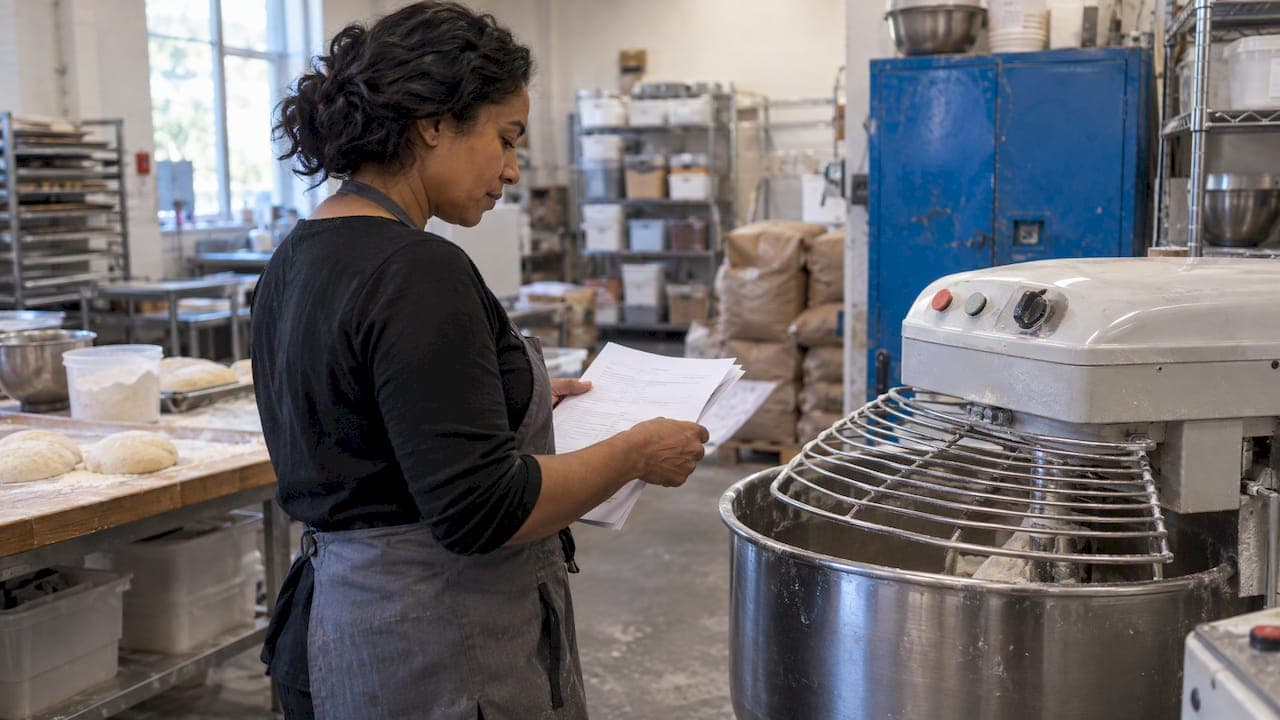
The most useful framing is rarely either/or. Consider a small commercial bakery planning to add a second oven line.
- The oven is a specific asset that will serve for many years: equipment financing.
- The extra flour, packaging, and two new hires needed before the new revenue arrives: working capital.
If the owner pays for the oven out of cash, the bakery may be short on money to buy ingredients and cover payroll in the first months. Financing the oven protects the cash that the operation needs. This is also the logic behind advice you will see on many equipment financing pages: financing the purchase helps you keep working capital and credit lines available for whatever comes next.
The reverse mistake is just as common. Using short-term working capital to buy long-lived equipment can strain cash flow, because you are repaying a long-term asset on a short-term schedule.
How to decide: five questions
- What exactly am I paying for? A named machine points to equipment financing. A mix of recurring costs points to working capital.
- How long will it benefit the business? If the benefit lasts years, match the financing to that. If it lasts a season, keep the term short.
- Where will repayment come from? Equipment can pay for itself through added output. Working capital repayments should come from receivables or seasonal sales you can forecast.
- What cash do I want to keep? If paying for the asset outright would leave you thin, financing it preserves your operating cushion.
- Is there a tax angle? Ask your CPA whether the equipment qualifies for Section 179 and how the structure of the deal affects it.
If you are buying a business or a large asset package, the math changes again, and our guide to SBA business acquisition financing covers that scenario.
Our perspective
We see owners lose time because they start with a product name instead of a need. They search for "business loan," apply to one lender, and take whatever that lender happens to offer.
Our approach is the opposite. We start with what the money has to do, then match you with the funding type that fits, from working capital and lines of credit to equipment financing and SBA loans. Because we work with a nationwide network of lenders, you can compare real offers instead of guessing.
We also think the best answer is often a combination. A line of credit or working capital for operating flexibility, paired with equipment financing for the asset, can protect your cash in a way that a single product cannot. Our funding specialists walk through that with you from pre-qualification through funding, and pre-qualifying does not affect your credit.
Alvin
See your options side by side
If you already know whether you need operating cash, equipment funding, or both, you can pre-qualify with us in minutes with no impact on your credit. We match you with lenders from our nationwide network and show you real loan and credit offers, with a dedicated funding specialist to help you compare them. Explore our business funding options, including working capital, business lines of credit, SBA loans, and equipment financing.
If you also want to look at how your business accepts payments, our payment acceptance consultation covers that side of cash flow.
FAQ
Are working capital loans a good idea?
They can be when the need is temporary and the repayment source is clear, such as a seasonal inventory build or a gap while customers pay invoices. If you find yourself relying on them to cover ongoing costs, the better move is to review your budget and revenue alongside borrowing. Compare real offers and total cost before you commit.
What is equipment financing used for?
It is used to buy or lease physical business equipment such as vehicles, machinery, kitchen gear, or technology. The equipment itself generally serves as collateral for the loan, which is what separates it from broader operating loans. Depending on the lender, some related costs like installation or delivery may also be eligible.
Can I use a working capital loan to buy equipment?
Some products allow it, and SBA 7(a) loans, for example, can fund both working capital and machinery and equipment. But a short-term working capital product repaid on a short schedule can be a poor match for an asset you will use for ten years. Ask a funding specialist which structure fits your purchase.
What is the difference between working capital and fixed capital?
Working capital is the cash, receivables, and inventory that move through daily operations, net of short-term obligations. Fixed capital is money tied up in long-lived assets like equipment and buildings. Working capital loans support the first, while equipment loans support the second.
Does equipment financing affect my taxes differently?
Yes. Equipment is generally capitalized, with the possibility of a Section 179 deduction, while many operating costs are deducted as ordinary expenses. Your CPA should confirm how the rules apply to your purchase and to how the deal is structured.
Sources
- Small Business Road Map to Financial Resources (OCC)
- Working Capital Loan guide (Xero)
- Equipment financing: A step-by-step guide (BDC)
- Increasing access to capital (SBA)
- 7(a) loans (SBA)
- SBA 7(a) Loan Guaranty Program fact sheet (OCC)
- Microloans (SBA)
- Tangible property final regulations (IRS)
- Instructions for Schedule F, 2025 (IRS)