
To finance used equipment in the United States, lenders usually look at four things: your personal credit score, how long your business has operated, your annual revenue, and the equipment itself (its age, condition, price and seller). There is no single national standard. Thresholds change from lender to lender, and the equipment you are buying serves as the main collateral. This guide walks through each requirement, the documents to gather, and how to avoid the mistakes that slow approvals.
TL;DR
- Lenders typically weigh credit score, time in business and annual revenue. Forbes Advisor reports that many want at least 2 years in business, though some accept as little as 6 months.
- The used machine usually secures the loan, so its age, condition, hours or mileage, and proof of value matter as much as your financials.
- Expect a down payment, higher rates and shorter terms than for new equipment. A down payment is not always required, but offering one can improve your odds.
- Get your equipment quote, serial number, maintenance records and financial statements ready before you apply. Missing paperwork is the most common cause of delays.
- Pre-qualifying with a soft credit check lets you compare offers before any hard inquiry.
Table of Contents
- The core requirements lenders look at
- How the equipment itself affects approval
- Down payment, collateral and guarantees
- Rates and terms to expect
- Documents to gather before you apply
- A step-by-step path to approval
- Compare funding options for your purchase
- Ready to see real offers?
- FAQ
- Sources
The core requirements lenders look at
Used equipment financing is a loan or lease where the machine, vehicle or tool you are buying secures the debt. NerdWallet notes that lenders commonly consider annual revenue, personal credit score and time in business, and that because the equipment is collateral, some lenders may be more flexible than they would be on an unsecured loan. Requirements still vary, so treat every number below as a typical range and not a promise.
Here is the picture at a glance:
| Requirement | What lenders commonly look for | Where flexibility shows up |
|---|---|---|
| Personal credit score | Fair to good, often in the 600s; higher scores get the best pricing | Online lenders may accept lower scores than traditional banks |
| Time in business | Often 2 years | Some equipment lenders accept 6 months |
| Annual revenue | Often $100,000 or more | Thresholds range widely by lender |
| Equipment | Age, condition, value, clear seller documentation | Strong collateral can offset weaker financials |
| Down payment | Sometimes 10% to 20% on older assets | Not always required |
Credit score
Forbes Advisor says traditional lenders often look for a FICO score of 680 or higher, while online lenders may accept lower scores. NerdWallet's business loan guide says the most competitive borrowers typically have a score of 670 or higher. If your score sits below those marks, equipment financing is often still available, because the asset reduces the lender's risk, but the rate and down payment will usually reflect it. We cover this in more depth in our guide to what credit score you really need for equipment financing.
Time in business
Forbes Advisor reports that many lenders want at least 2 years in business, while some financing providers accept 6 months, and that equipment financing may have shorter time-in-business requirements than a traditional term loan. The same source, and NerdWallet's guide above, point to the same pattern: a younger company can still qualify when the collateral is strong. If you are earlier in your journey, this overview of how a limited operating history shapes loan and credit line options helps you think through which product fits.
Annual revenue
NerdWallet reports that some lenders accept annual revenue as low as $50,000, while others require $250,000. A common benchmark for the strongest applications is $100,000 or more. Revenue matters because it shows the business can carry the payment. A lender will usually compare what the equipment should add to your revenue against the proposed monthly payment, so a clear explanation of how the machine pays for itself helps.

How the equipment itself affects approval
With new equipment, the value is easy to prove: there is an invoice and a list price. Used equipment needs more evidence, and this is where used financing differs most from other business loans.
Age and category
NerdWallet reports that some lenders limit the age of equipment they finance, and some will not finance anything older than 10 years. Certain categories, such as computers, may be excluded because they lose value quickly. Some lenders also combine age and term, so a machine that is already 8 years old might qualify only for a short repayment period. That cap is lender-specific, not a universal rule.
So before you fall in love with a bargain, ask the lender two questions: what is the oldest model year you will finance, and how does the machine's age change the maximum term?
Condition, hours and mileage
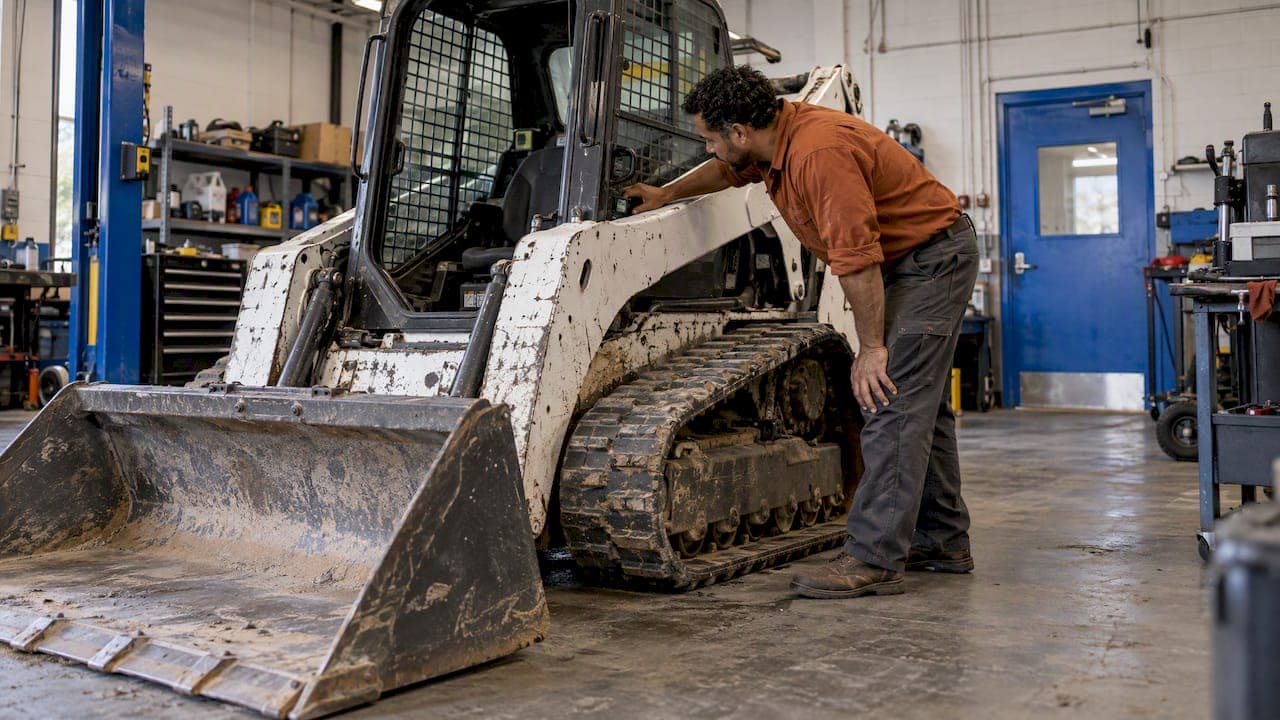
Lenders want to know what the asset is worth if they ever have to repossess and sell it. Hours on the meter, mileage, maintenance history and visible wear all feed that estimate. NerdWallet recommends gathering the equipment's selling price, model or serial number, ownership history and maintenance records, and checking the condition in person or through an inspection. Well-kept records are not just a lender requirement. They also protect you from overpaying.
If your operation runs on maintenance logs already, pulling them together is easy. A business that tracks work orders and parts in a system has a head start, and this piece on keeping repair parts inventory and records shows why that kind of documentation pays off beyond the loan application.
Appraisals
For higher-value or older assets, a lender may order or ask for a third-party appraisal, plus photographs and serial numbers. Budget for that cost and time. An independent appraisal can also support your own negotiation with the seller.
Dealer, auction or private seller
Used equipment can come from a dealer, an auction or a private party, and many lenders will finance purchases from all three. The difference is paperwork. A dealer typically provides an invoice, a serial number and sometimes a limited warranty. An auction sale often moves fast and may offer less documentation. A private sale needs a bill of sale, proof the seller actually owns the machine, and confirmation there are no liens against it. The more of that you can show, the easier the lender's job. If you plan to buy at an auction, get pre-qualified first so you know your budget, and ask the lender what proof of sale it needs before you bid.

Down payment, collateral and guarantees
Down payment
NerdWallet says down payments are not always required, but offering one can improve approval odds and may help you get better rates and terms. Used equipment tends to carry more risk for the lender, so a down payment is more common here than on new equipment. Some lenders lend only a share of the machine's value, which means the gap comes from you.
As a planning figure, expect to put some cash into the deal. Ten to twenty percent is a sensible working assumption for an older asset, but confirm it with each lender.
Collateral
The equipment is usually the collateral. NerdWallet notes many equipment lenders do not need other business or personal assets pledged. That is one reason equipment financing is easier to obtain than an unsecured loan for many small businesses.
Personal guarantee
Smaller businesses and newer companies are often asked for a personal guarantee, which makes the owner personally responsible if the business cannot pay. Read that clause closely and ask whether it applies for the full term or can be released later. If you have questions about your personal liability, talk to a business attorney or your accountant before you sign.
Rates and terms to expect
NerdWallet explains that used-equipment financing often has higher interest rates and shorter repayment terms than new-equipment financing, because used equipment tends to have a shorter remaining lifespan and is more prone to damage. Your exact rate depends on your credit, your time in business, the equipment type and its age, and your down payment.
A shorter term means a higher monthly payment, so run the numbers against your cash flow before you accept. Lenders do. They will typically look at whether your business cash flow supports the payment, not only whether the collateral covers the balance. Our overview of cash flow financing explains how that analysis works in practice.
Documents to gather before you apply
NerdWallet's checklist for used equipment financing includes:
- Personal and business identification and information
- Business and personal bank statements
- Tax returns
- Business financial statements
- Your planned down payment amount
- A written quote or invoice for the equipment
- Model or serial number, ownership history and maintenance records
Some lenders also ask for a business plan or collateral details. Having these in one folder speeds up everything. Our guide to the three documents that speed up equipment financing approval goes through which ones lenders ask for first, and the 10-document prequalification checklist is useful if you want to be ready for any loan type. For the broader picture, see small business loan requirements.
Our perspective
We see the same pattern again and again: businesses assume that buying used means a harder approval, then lose weeks because one piece of paper is missing. The equipment is only half of the story. A lender wants to see that the machine holds its value and that your business can carry the payment.
That is why we built Formosity Funding as a marketplace and not a single lender. Requirements differ widely from one lender to the next, so the right fit for a seven-year-old excavator and a two-year-old company may not be the lender that suits a fresh start-up buying a used delivery van. Our platform is designed to let you pre-qualify with no credit impact, see real offers from a nationwide network of lenders, and work with a dedicated funding specialist who helps you line up the documents before you submit.
Our advice: decide the machine, collect the paperwork, pre-qualify, and compare more than one offer. Do it in that order and you will move faster and with more confidence.
Alvin
A step-by-step path to approval
- Define the purchase. Note the make, model, year, hours or mileage, price and seller type.
- Check the equipment. Inspect it in person or hire an inspector, and request service records.
- Confirm the seller can prove ownership. For private sales and auctions, ask for the title or bill of sale and a lien check.
- Know your numbers. Pull your personal credit score, last two years of tax returns, and recent bank and financial statements.
- Set a down payment. Decide what you can put in without draining working capital.
- Pre-qualify and compare. Look at rate, term, down payment and fees side by side, and check how each lender treats the age of the equipment.
- Decide between lease and loan. If you want to own the machine at the end, a loan is the usual route. Read equipment lease vs. loan before choosing.
- Submit a complete package. Incomplete files are the quickest way to stall. If a file is denied, our guide to common loan denial reasons shows what to fix.
Compare funding options for your purchase
Equipment financing is not the only route. If the machine is cheap, or you need extra cash for installation and training, a business line of credit or working capital may fit alongside it. If you already own equipment, refinancing can sometimes lower your payment, as shown in our walkthrough on refinancing an equipment loan.
Ready to see real offers?
Formosity Funding connects small and medium-sized businesses with a nationwide network of lenders, including equipment financing, working capital, lines of credit, SBA loans and commercial real estate. Pre-qualification does not affect your credit, and a funding specialist can guide you from application to funding.
See the full range on our business funding options page and start pre-qualifying for your used equipment purchase.
FAQ
Can I finance used equipment bought at auction or from a private seller?
Often yes, but the lender needs proof of the purchase. Expect to provide a bill of sale or auction invoice, serial numbers, and evidence the seller owns the item free of liens. Ask your lender what it accepts before you bid or pay a deposit.
What credit score do I need for used equipment financing?
It depends on the lender. Forbes Advisor says traditional lenders often look for a FICO score of 680 or higher, while online lenders may accept lower scores. A lower score typically means a higher rate or larger down payment, not necessarily a denial.
Can a new business get used equipment financing?
Sometimes. Many lenders ask for 2 years in business, but Forbes Advisor reports that some financing providers accept 6 months and that equipment financing may have shorter requirements than term loans. A larger down payment and strong personal credit help.
Do I need a down payment?
Not always. NerdWallet says a down payment is not always required, but offering one can improve approval odds and may secure better rates and terms. Older equipment is more likely to need one.
Is used equipment financing more expensive than new?
Usually, yes. NerdWallet reports that used-equipment financing often comes with higher rates and shorter terms, since used machines have a shorter remaining lifespan. Comparing several offers is the best way to keep the cost down.
Sources
- How to Finance Used Equipment, NerdWallet
- How to Get a Business Loan Successfully, NerdWallet
- Business Loan Requirements: How To Qualify, Forbes Advisor
- Small Business Loans vs. Lines of Credit
- Do You Need Repair Part Inventory?, MPulse Software