

Loan stacking, taking on multiple loans or credit products at the same time or in quick succession, is generally not advisable for most U.S. small businesses because it strains cash flow and can trigger lender or regulatory scrutiny. It might be narrowly workable only when repayment schedules are carefully staggered and fully disclosed. If you are weighing several financing sources, safer alternatives exist, and comparing options through a marketplace like Formosity Funding can help you avoid repeated hard credit pulls.
TL;DR:
- Loan stacking is not banned by federal law, but undisclosed debt or a covenant restricting new borrowing can trigger default or immediate repayment.
- Underwriters flag clusters of hard inquiries, newly reported accounts, rising credit use, and debt payments that exceed cash flow, often during the first review.
- Before borrowing again, total every proposed monthly payment and compare it with conservative revenue forecasts; disclose existing debt and confirm cross default terms in writing.
- A single flexible credit line or consolidation loan can replace overlapping products, while marketplace prequalification can compare offers without affecting credit.
- Bank and SBA funding often takes 24 to 90 days, while online advances may arrive within days, starting repayments before slower financing closes.
Table of Contents
- What Loan Stacking Means and How It Shows Up in Practice
- How Lenders and Underwriting Systems Catch Concurrent Borrowing
- Is Loan Stacking Legal in the United States?
- Financial and Reputational Risks of Stacking Multiple Loans
- Reducing Risk When You Need More Than One Financing Source
- Realistic Alternatives to Stacking Multiple Loans
- How Long the Loan Stacking Process Actually Takes
- Loan Stacking Scenarios at Different Business Stages
- Why We Favor a Marketplace-First Approach to Financing
- How Formosity Funding Helps You Compare Options Safely
- FAQ
- Sources
What Loan Stacking Means and How It Shows Up in Practice
Loan stacking happens when a business takes on two or more loans, lines of credit, or cash advances within a short window, often before the first obligation is paid down. Owners usually do this to smooth uneven cash flow, chase a fast growth opportunity, or bridge a seasonal gap when one source of funding is not enough to cover an immediate need.
The practice can involve several types of credit products stacked on top of each other:
- Term loans from a bank, credit union, or online lender
- Business lines of credit drawn simultaneously with other debt
- Merchant cash advances (MCAs), which carry daily or weekly repayment pulls
- Invoice factoring or receivables financing layered onto existing loans
- SBA loans combined with shorter-term, higher-cost products
Lenders tend to watch for specific timing patterns, such as several applications filed within days of each other, new tradelines appearing right after a recent credit pull, or a sudden jump in total monthly debt service relative to reported revenue. These patterns are exactly what underwriting teams are trained to flag before they approve new credit.
How Lenders and Underwriting Systems Catch Concurrent Borrowing
Lenders rarely rely on a single data point to catch stacking. Instead, they cross-reference several signals that tend to show up together when a business has applied for more credit than it has disclosed.
- Multiple applications filed close together generate a cluster of hard inquiries on the business or owner's credit file, which underwriting software flags automatically.
- New tradelines that appear between the initial application and funding can trigger a manual review or an outright decline.
- A sudden increase in credit utilization, especially on revolving lines, signals that a business may be drawing down several sources at once.
- Automated decision engines often apply debt-service coverage rules that compare total monthly obligations to reported cash flow, and a mismatch halts the process.
- Time-sensitive federal programs use identifiers, such as SBA e-tran tracking numbers, to confirm that an application has not already been processed or funded elsewhere, which is one concrete example of how program-level detection works.
Once a lender spots these signals, the usual response is a request for updated bank statements, a hold on disbursement, or a flat decline. Because this detection happens quickly, often within the first underwriting pass, applying to multiple lenders in the same week rarely goes unnoticed.
Is Loan Stacking Legal in the United States?
There is no blanket federal law that makes loan stacking itself illegal. Legal exposure instead depends on the terms of each loan contract and whether a borrower disclosed existing debt when asked. Many loan agreements include covenants that restrict taking on additional debt without lender consent, and violating those terms can trigger default even if no law was broken.
Where regulators do step in is around deception. The FTC took action in March 2024 against companies that made false claims about pandemic-era loan processing and blocked applicants from seeking funding elsewhere, a case that led to $33 million in damages tied to one of the companies named.
That enforcement action shows regulators treat blocked applications and deceptive lending promises as serious violations, not minor technicalities, which is why following practical budget safeguards rules matters as much as the underlying debt itself.
Before signing anything, check for:
- Cross-default clauses that let one lender call a loan due if you default elsewhere
- Disclosure requirements about existing debt or pending applications
- Prepayment penalties or early-termination fees buried in the contract
Financial and Reputational Risks of Stacking Multiple Loans
The most immediate risk is a cash-flow mismatch. When repayment schedules from several products overlap, daily or weekly debit pulls from an MCA can collide with a term loan payment due the same week, leaving no buffer for payroll or inventory.
- Clustered credit inquiries and new debt can lower your credit score and reduce approval odds on future applications.
- Lenders that discover undisclosed debt can rescind a funding offer even after approval.
- Deceptive or non-disclosed stacking can cross into the kind of practice the FTC has pursued enforcement against.
- Missed payments on stacked debt often get reported to commercial credit bureaus and can be referred to collections.
Lenders that catch undisclosed stacking after funding commonly respond with a holdback on future draws, a demand for immediate repayment, or a formal default notice rather than a quiet renegotiation.
Pro Tip: Pull your own business credit report before applying to a second lender, so you know exactly what a new underwriter will see.
Reducing Risk When You Need More Than One Financing Source
If your business genuinely needs more than one source of capital, the goal is to structure it so repayment never collides and every lender knows what else is on the books.
- Run a reverse stress test: add up total monthly debt service across every loan you are considering, then compare it against a conservative, not best-case, revenue forecast.
- Disclose existing loans whenever a new lender asks, and ask directly whether their agreement includes cross-default or cross-collateral covenants.
- Prioritize lower-cost, staggered products over stacking several short-term, high-cost advances with overlapping draw schedules; our comparison of MCAs and term loans explains why reconciliation clauses matter here.
- Where possible, use secured or collateralized financing, which tends to carry lower rates than unsecured short-term products; our guide to loan collateral covers what most lenders accept.
- Consolidate expensive short-term debt into a single, longer-term facility before it compounds; our debt consolidation guide walks through when that move makes sense.
Pro Tip: Ask every lender in writing whether their loan agreement restricts additional borrowing, before you sign, not after.
Owners who skip the stress test often discover the mismatch only when two repayment pulls land in the same week, which is the exact scenario that pushes a healthy business into a cash crunch.
Realistic Alternatives to Stacking Multiple Loans
Rather than layering products, most businesses are better served by consolidating or choosing a single flexible facility that covers the same need.
- Refinancing or consolidating existing debt into one loan with a longer term and a single payment, as outlined in our debt consolidation guide.
- A business line of credit, which provides on-demand cash without opening several term loans; our guide to revolving credit covers how to structure one without racking up unnecessary fees.
- Invoice factoring or receivables financing, useful for short-term cash needs tied directly to outstanding customer invoices, explained further in our cash flow financing overview.
- SBA-backed loans, which fit businesses that can meet underwriting thresholds for revenue and debt-service coverage and that need longer terms at lower rates than short-term alternatives.
- A lender-matching marketplace, which lets you compare multiple real offers from a single application instead of submitting separate applications that each generate a hard pull.
How Long the Loan Stacking Process Actually Takes
Businesses that pursue stacking usually move through the same rough sequence: application, underwriting review, funding, then the start of repayment, repeated for each product. A single online term loan or MCA application can be approved in a matter of days, while bank loans and SBA products typically take 24 to 90 days from application to funding, though strong documentation and a pre-qualified match can cut that timeline to hours for some products.
The trouble with stacking is that these timelines rarely line up. A business might get fast approval on an MCA while an SBA application is still in underwriting weeks later, and by the time the second loan funds, the first has already started pulling daily payments. That gap, between when one obligation starts and the next one lands, is where most cash-flow shocks originate.

Comparing speed across lender types matters here: our breakdown of online lenders versus banks shows why online products fund faster but often at a higher cost, which is part of why stacking a fast, expensive product on top of a slower bank loan tends to backfire. Understanding this sequence before applying anywhere is what separates a business that stacks safely, if at all, from one that gets caught in overlapping repayment pulls it did not plan for.
Loan Stacking Scenarios at Different Business Stages
A startup in its first year with thin revenue history often turns to stacking out of necessity rather than strategy, pairing a small online term loan with a merchant cash advance because neither alone covers a launch expense. The risk here is acute: thin margins leave little room for two repayment schedules to collide, and a missed payment early on can derail credit for years.
A growth-stage business, two or three years in with established revenue, is more likely to stack a line of credit against an equipment loan to fund expansion while keeping working capital flexible. This scenario carries less risk than the startup case, but existing debt is an increasingly common reason lenders cite for denying additional applications, so even an established business can find a third application declined once its debt load is visible.
A mature business with steady cash flow sometimes layers an SBA loan with a smaller line of credit for seasonal flexibility, a combination that works only when both lenders are aware of each other and the repayment schedules do not overlap in the same week. In each case, the deciding factor is not the business's age but whether the owner disclosed every obligation and modeled the combined repayment burden before signing.

Why We Favor a Marketplace-First Approach to Financing
Stacking spreads risk across multiple undisclosed lenders; a marketplace model spreads options across one transparent search. We connect small and medium-sized businesses with a network of lenders through a single pre-qualification, reducing the repeated hard pulls that stacking tends to generate. Alvin writes funding guides focused on helping owners compare real offers before committing to debt.
— Alvin
How Formosity Funding Helps You Compare Options Safely
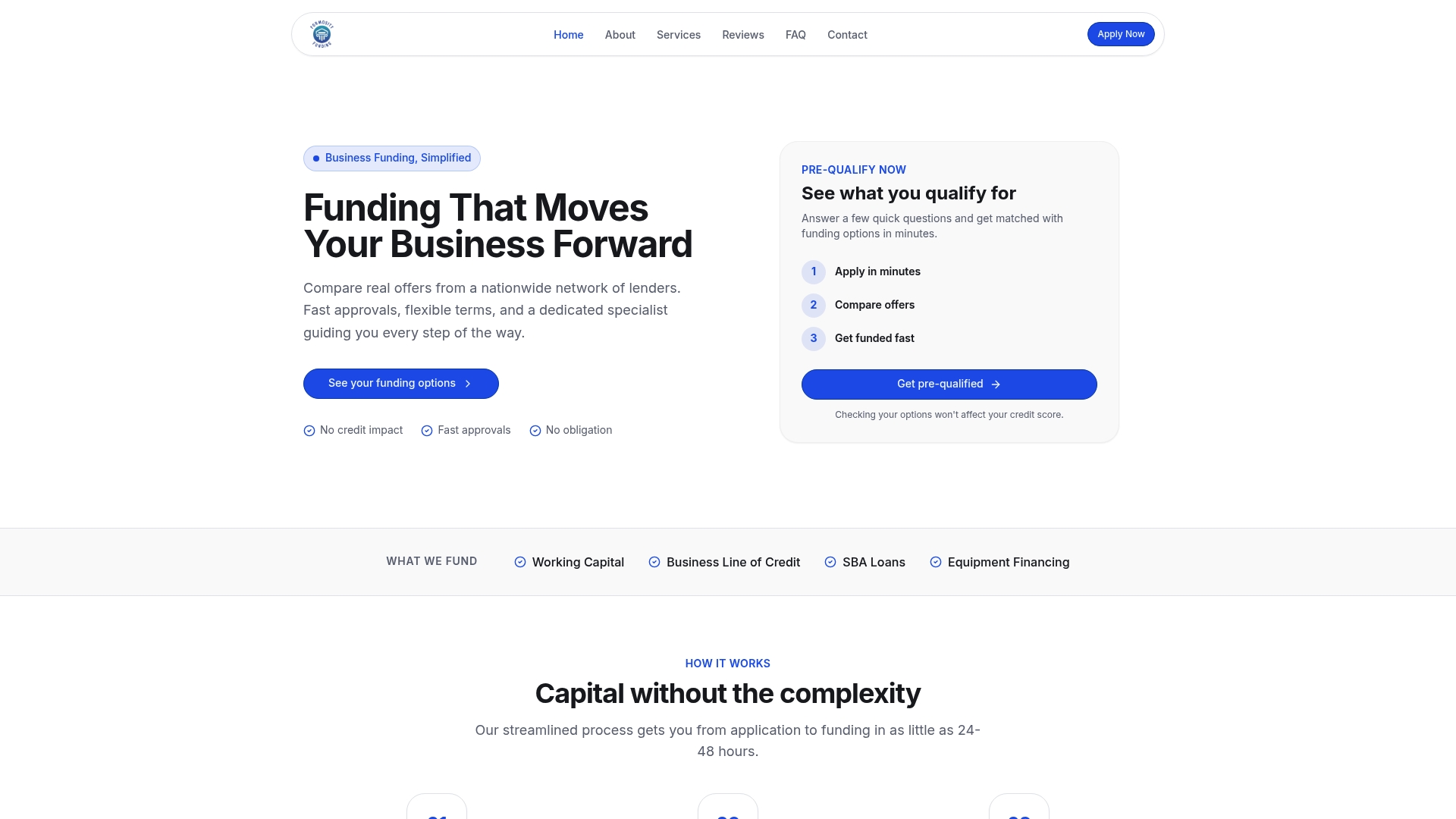
If you are weighing more than one financing source, the safer move is comparing real offers side by side instead of applying separately to several lenders and racking up hard inquiries along the way. Our services page connects you with a nationwide network of lenders across working capital, business lines of credit, SBA loans, equipment financing, and commercial real estate financing, all through a single pre-qualification that does not affect your credit.
For businesses looking to free up equity in commercial property instead of taking on another short-term product, our Business HELOC page outlines a revolving option built on real estate you already own. And if cash-flow pressure is really a payment-timing problem rather than a funding gap, our payment acceptance consultation looks at whether faster receivables processing solves the issue before you borrow at all.
Every application routed through the platform may get matched with a funding specialist who guides you through terms, repayment schedules, and how a new loan would fit alongside existing obligations. That single point of comparison is what lets you avoid the clustered inquiries and overlapping repayment dates that make stacking risky in the first place. Start with pre-qualification on our services page and see your real offers before you commit to anything.
This article is general information, not a substitute for advice from a qualified financial advisor. Consult a qualified financial professional about your own circumstances before acting on anything here.
FAQ
What is the payment on a $1,000,000 business loan?
Monthly payments on a business loan depend heavily on the interest rate, term length, and loan type, so there is no single fixed answer. A lender or funding specialist calculates the exact payment using your specific rate and amortization schedule once you have a real offer in hand.
Did Trump just double the SBA loan limit?
We do not have a verified, current SBA program change to confirm this claim, and figures around SBA lending limits should be checked directly against official SBA guidance before you rely on them. If you are planning around a specific loan limit, confirm the current threshold with an SBA-approved lender or the SBA directly.
What is the biggest killer of credit scores?
Missed or late payments tend to cause the most damage to a business or personal credit score, especially when they stack up across multiple accounts at once. High credit utilization and a cluster of recent hard inquiries, the kind that loan stacking often produces, also weigh heavily on your score.
What is the 20% rule for SBA?
SBA loan rules generally require anyone owning 20% or more of the applicant business to provide a personal guarantee on the loan. This threshold is a long-standing SBA underwriting standard meant to ensure owners with meaningful equity stakes are personally accountable for the debt.
Can stacking multiple loans affect my SBA loan approval?
Yes, existing debt from stacked short-term products can hurt your SBA application because underwriters weigh total debt service against your cash flow. Lenders increasingly cite existing debt as a reason for denial, so clearing high-cost short-term debt before applying for an SBA loan often improves your odds.
Sources
- FTC Actions Against Companies Making Deceptive Pandemic Loan Promises Lead to Record $59 Million in Damages
- 2025 Report on Employer Firms: Findings from the 2024 Small Business Credit Survey