
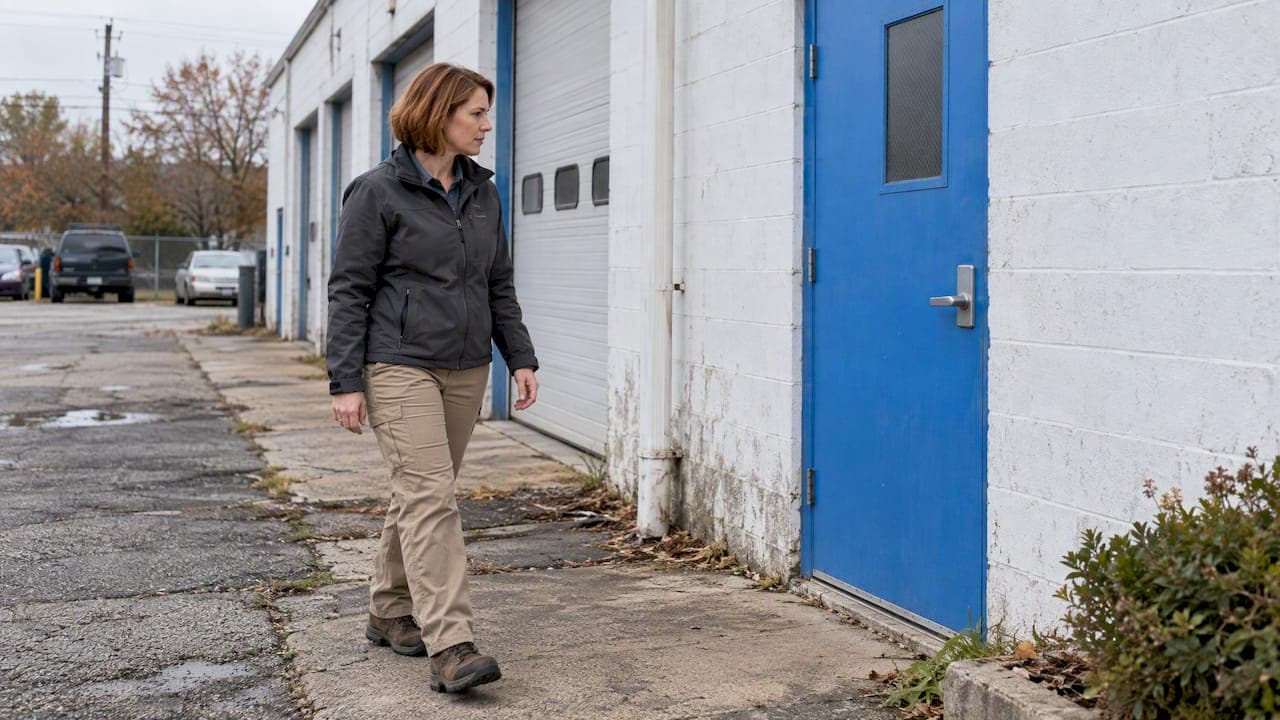
A Phase I environmental site assessment (ESA) is a records-and-inspection review of a commercial property's past and present uses. SBA lenders ask for one when the property could carry contamination risk. Not every SBA loan needs one. Whether yours does depends on the property's current or past use, the loan size and what the earlier screening steps find. Expect a typical Phase I to cost several thousand dollars and take a few weeks, so start early.
This guide explains when the requirement applies, who prepares the report, what it costs, how long it takes and what happens if it flags a problem.
TL;DR
- SBA environmental rules apply when a 7(a) or 504 loan acquires, refinances or improves commercial real estate. Pledging real estate as extra collateral on an unrelated loan generally does not trigger them.
- A Phase I is required up front for properties with a current or prior use on SBA's environmentally sensitive industry list. Otherwise, a questionnaire or a records search decides whether one is needed.
- Expect roughly $4,000 to $10,000 and about 3 to 4 weeks. Complex or industrial sites cost more and take longer.
- A Phase I does not sample soil or water. If it finds a concern, the usual next step is a Phase II or an SBA exception, so build that risk into your closing timeline.
Table of Contents
- What a Phase I ESA actually is
- When SBA requires one
- The standards behind the report
- What the report covers
- What a Phase I costs
- How long it takes
- What happens if it finds something
- Our perspective
- Finding financing that fits the property
- FAQ
- Sources
What a Phase I ESA actually is
A Phase I uses existing information to look at how a site has been used over time and whether anything threatens human health or the environment. EPA describes the typical work as a records review, a government-database search, a visual inspection of the site and neighboring properties, and interviews with owners, neighbors and past workers.
The key point for borrowers is what it leaves out. EPA's Revitalization-Ready Guide notes that a Phase I generally involves no chemical sampling. It relies on inspection, history, interviews and regulatory files. Sampling belongs to later stages.
The assessor is looking for recognized environmental conditions (RECs). The ASTM E1527-21 standard practice exists to identify RECs, meaning releases or likely releases of hazardous substances or petroleum products. You will also see two related terms in reports:
- Historical RECs: past releases that were cleaned up to an acceptable standard.
- Controlled RECs: contamination that remains but is managed, for example with use restrictions.
When SBA requires one
SBA's rules sit in SOP 50 10, the operating procedure for 7(a) and 504 lending. SBA's document library hosts the current edition. Lenders must follow it, and your lender's credit team, not a blog, has the final word on your file. The summary below reflects how environmental consultants describe the framework.
The loan has to touch real estate
The environmental investigation applies to commercial property bought, refinanced or improved with loan proceeds. According to one engineering firm's summary of the SOP 50 10 7 framework, it does not apply just because other real estate is pledged as collateral. If you are only adding collateral to a working capital or acquisition loan, read our guide to SBA loan collateral first.

Step one: the industry check
The lender first checks the property's current use, and any known prior use, against SBA's list of environmentally sensitive industries (organized by NAICS code). Think gas stations, dry cleaners, auto repair, metal finishing and similar uses. According to an environmental consulting guide to SOP 50 10 8.1, a match on that list means a Phase I is required immediately.
Step two: loan size for everything else
For a property that does not match, the same guide describes a tiered approach:
| Situation | Typical first step | Phase I needed? |
|---|---|---|
| Environmentally sensitive current or prior use | Phase I ESA | Yes, immediately |
| Other use, loan up to and including $250,000 | Environmental Questionnaire | Only if the answers raise concerns |
| Other use, loan above $250,000 | Questionnaire plus Records Search with Risk Assessment (RSRA) | Only if either step shows elevated risk |
A Phase I follows when either screening step points to possible contamination or recommends further investigation.
One timing note: SOP 50 10 8.1 takes effect for loans that receive an SBA loan number on or after October 1, 2026. One third-party summary says the screening framework carries forward largely unchanged, but confirm which edition governs your loan with your lender.
Who completes the questionnaire
The questionnaire is not a form you fill out alone. One environmental firm explains that it must be completed or reviewed by a lender who has made at least one site visit and a good-faith effort to interview the current owner or operator. If the owner will not sign it, the lender must obtain at least a Transaction Screen, a lighter review than a full Phase I.
The standards behind the report
Most lender Phase Is follow ASTM E1527-21. The same work can also satisfy EPA's All Appropriate Inquiries (AAI) rule, which is governed by 40 CFR Part 312. AAI compliance can support CERCLA liability protection for innocent landowners, contiguous property owners and bona fide prospective purchasers. That protection is a separate benefit from the loan requirement, and it is one reason buyers often value the report on its own.
AAI requires:
- Interviews and a review of historical sources
- Review of federal, state, Tribal and local records
- A visual inspection of the property and adjoining properties
- Assessment of data gaps
- A written report signed by an environmental professional
That last point matters. EPA says a Phase I must be completed or overseen by an environmental professional, which can include a licensed geologist, engineer or other qualified site professional. A friend with a checklist does not count.
The report also has to be usable by your lender. SBA's closing guidance requires lenders to keep or submit an Environmental Investigation Report as the current SOP requires. Ask your lender before you hire anyone: who must the consultant be, does the lender need a reliance letter, and how old can the report be? Consultants summarizing the SOP mention a one-year age limit, so a report from a previous deal may not carry over.
What the report covers
The Minnesota Pollution Control Agency's Phase I guidance shows what an E1527-21 report contains. Topics include regulatory records, physical-setting resources, historical uses back to the first developed use or 1940 (whichever is earlier), site reconnaissance, interviews, data gaps and an assessment of likely contamination. The same agency stresses that professional judgment drives the result, because the assessor interprets incomplete information rather than ticking boxes.
EPA's AAI final rule fact sheet adds that the report must say whether conditions indicating a release or threatened release were found, disclose significant data gaps, include the professional's qualifications and signature, and address whether more investigation is appropriate.
What you can do to speed it up
The assessor will ask for site access, a contact who knows the property's history, and any older documents you have. Useful items:
- Prior environmental reports, if any
- Deeds, title work and past leases
- Permits, tank registrations and spill records
- Names of previous tenants and operators
- A key to every building, including utility rooms and basements
Gaps in this list tend to cost days, not minutes, because historical research has to fill them.
What a Phase I costs
Prices vary widely. One environmental firm says a Phase I in 2025 typically costs $4,000 to $10,000. It lists the main drivers as property size and complexity, location and travel, access to historical and regulatory records, rush turnaround and the team's experience. A regional assessor's 2026 guide reports $2,800 to $4,500 for typical commercial parcels in Buffalo and Pittsburgh, and $5,500 to $8,000 for industrial or historically complex ones.

Those are consultant-published ranges, not quotes. Your cost depends on your site. A small office condo with a clean history sits near the bottom. A former gas station or a site with decades of industrial use sits near or above the top.
To keep the cost predictable:
- Get two or three written quotes with scope and deadline stated.
- Confirm the report will be addressed to, or can be relied on by, your lender.
- Ask whether a rush fee applies, and avoid needing one by ordering early.
- Ask who pays at closing. Many borrowers pay up front, so plan the cash in your budget.
How long it takes
Plan on about 3 to 4 weeks. Larger properties, slow historical records and difficult site access stretch that. The regional guide above cites 10 to 15 business days as standard turnaround for simpler jobs. Its timing components are historical research, regulatory screening, the site visit, interviews, drafting and quality review.
The practical lesson: do not wait for the lender to order it. If your property is in a sensitive-use category, you already know a Phase I is coming. Line up the consultant while the rest of your file moves, and read our checklist of business loan documents so paperwork elsewhere does not become the delay.
What happens if it finds something
A clean Phase I means the file moves on. A report that identifies a REC is not automatically a dead end, but it changes the path.
EPA says evidence of known or potential contamination generally leads to a Phase II ESA or additional assessment, while little or no evidence often lets reuse or redevelopment proceed. A Phase II is where sampling happens, so it costs more and takes longer than the Phase I.
For SBA lending, an assessor's handbook says that when a Phase I recommends further investigation and the lender still wants to lend, the lender generally must follow the recommendation, typically a Phase II, or seek an exception from SBA's Environmental Committee.
Why are lenders strict? An SBA due-diligence guide explains that contamination can reduce collateral value, weaken a borrower's ability to repay, and expose the lender and SBA to cleanup or third-party claims. An engineering firm's summary adds that contamination found in a Phase I or II can stop approval or disbursement until SBA is satisfied with documentation on remediation, collateral value and mitigating factors.
If you are the buyer and the report is bad, your options are usually to negotiate price or cleanup responsibility with the seller, order the Phase II, choose a different property, or walk away under your contract's due-diligence clause. Have your attorney confirm the contingency language before you sign, because the Phase I clock often runs inside that window.
Our perspective
We see environmental review surprise borrowers more than almost any other part of an SBA real estate deal. The surprise is rarely the cost. It is the calendar. Owners line up their down payment, credit and financials, then find out three weeks before closing that the property sits on the sensitive-use list.
Our advice is practical. Ask what the property was used for before you make an offer, not after. Treat an old gas station, a dry cleaner, a machine shop or a former industrial building as a Phase I deal from day one. Build the cost and the weeks into your plan, and make sure your purchase contract gives you time to act on the findings.
Also remember that environmental review is one piece of a bigger file. Lenders still look at your equity injection, your credit profile and your debt service coverage. A strong borrower can lose a deal to a contaminated site, and a clean site cannot rescue a thin application. Get all of it into shape together.
— Alvin
Finding financing that fits the property
If you are buying or refinancing owner-occupied commercial property, we can match you with lenders in our nationwide network and walk you through the process with a dedicated funding specialist. Pre-qualification does not affect your credit. You can see the products we offer, including SBA loans and commercial real estate financing, on our business funding services page. If you are still sizing up the project, our guide to commercial construction loan requirements covers a related set of documents.
FAQ
Does every SBA loan need a Phase I environmental assessment?
No. The requirement applies to loans that acquire, refinance or improve commercial real estate. Even then, a Phase I is mandatory up front only for sensitive-use properties, while others start with a questionnaire or a records search. Your lender confirms which path applies.
Who pays for the Phase I?
In most deals the borrower pays the environmental consultant, often before closing. Some lenders order the report themselves and pass the cost on. Ask your lender who engages the consultant and who must be named as the party entitled to rely on the report.
Can I reuse an older Phase I report?
Sometimes, but not automatically. Consultant summaries of SBA's rules mention a one-year age limit, and the report must be usable by your lender, often through a reliance letter. Ask your lender before you assume an old report counts.
Is a Phase I the same as a Phase II?
No. A Phase I reviews records, history and the visible site and generally takes no samples. A Phase II involves sampling and lab analysis, and it usually follows only when the Phase I finds evidence of possible contamination.
Sources
- Assessing Brownfield Sites, EPA
- Revitalization-Ready Guide, Chapter 3: Reuse Assessment, EPA
- ASTM E1527 Standard Practice for Environmental Site Assessments
- SBA document library (SOP 50 10)
- SBA Environmental Requirements for 7(a) and 504 Loans
- SBA SOP 50 10 7: Lender & Development Loan Due Diligence
- SBA Environmental Questionnaire guide
- Brownfields All Appropriate Inquiries, EPA
- All Appropriate Inquiries Final Rule fact sheet, EPA
- SOP 50 10 8 (effective June 1, 2025)
- Phase I ESA Report for Brownfield Program Enrollment, Minnesota Pollution Control Agency
- How Much Does a Phase I ESA Cost?
- ASTM E1527-21 Lender Requirements for Phase I ESA
- Everything You Need to Know About Phase I Environmental Site Assessments
- SBA Phase I requirements handbook
- A Guide to Understanding SBA Environmental Due Diligence