

To increase your business credit limit, make your account look like a lower risk and a bigger opportunity to the lender: pay statements in full, let the account age, show higher revenue, and then ask through your issuer's channel or your relationship manager with numbers in hand. If the existing lender says no, a new line of credit from a different lender is often the faster route to more available credit. This guide covers both paths, step by step.
TL;DR
- Lenders look at payment behavior, account age, revenue growth, and how much of your current limit you use. Fix those before you ask.
- Ask for a specific, defensible amount and bring recent financials. Larger requests may require documentation.
- Ask your issuer in advance whether the request triggers a hard or soft credit check, so there are no surprises.
- A denial is information, not a dead end. Fix the stated reason, wait, and re-ask, or add a second line from another lender.
- A higher limit is room, not revenue. Set an internal spending ceiling below it.
Table of Contents
- What lenders weigh when you ask for more credit
- Know which kind of limit you are raising
- Before you ask: a preparation checklist
- How to request the increase
- If your lender says no
- Strengthen your profile while you wait
- Use a higher limit without raising your risk
- When more credit means a new line, not a bigger one
- FAQ
- Sources
What lenders weigh when you ask for more credit
A limit is the lender's estimate of how much it is comfortable losing if your business stops paying. A request for more asks that estimate to move up. According to Forbes Advisor, a business is more likely to qualify for an increase when it consistently pays off the full statement balance (or at least a large portion) each month, the account has been open at least six months, and business revenue has increased. The same source notes that larger requests may require financial documentation.
That gives you four levers you can actually pull:
- Payment history. On-time payments, and ideally payments of the full statement balance, are the strongest signal you control.
- Account age and activity. An account that has been open for at least six months and is used regularly gives the lender data. A dormant account gives it nothing to review.
- Revenue and cash flow. If deposits are up since you opened the account, the lender's original limit is probably out of date.
- Current utilization. Carrying balances near the limit signals strain, even when you pay on time. Keeping balances well below the limit signals headroom.
Personal credit also matters for most small businesses, because owners often sign a personal guarantee. If your personal report has errors or late payments, clean those up first. For the business side, our guide to what PAYDEX, Intelliscore, and SBSS reveal explains which scores lenders may pull and what moves them.
Know which kind of limit you are raising
The method depends on the product. "Business credit limit" covers at least three situations, and each has its own path.
| Product | How an increase usually happens | Best first move |
|---|---|---|
| Business credit card | Request through the issuer's app, website, or phone line, or receive an automatic review | Pay in full for several cycles, then request |
| Bank or online business line of credit | Request a limit review or a renewal with a higher amount | Send updated financials to your relationship manager |
| Working capital or term financing | Usually a new application or a refinance, not an "increase" | Compare offers from several lenders |
If you are unsure which structure fits how you spend, the five quick questions on card versus line of credit can help you choose before you start asking for more of the wrong thing.
Before you ask: a preparation checklist
Most denials come from asking too early or asking without support. Spend a week on this list first.
Tighten the account itself
- Pay the full statement balance for at least two or three consecutive cycles, not the minimum.
- Bring utilization down. If you regularly run near the limit, pay mid-cycle so the statement balance reports lower.
- Make sure autopay is on so nothing is missed by accident.
- Check that the business contact details, legal name, and EIN on the account match your records.
If you carry a balance and want to see what a payoff plan looks like, a credit card payoff calculator shows how payment size changes the time and interest. Paying a balance down before a review is one of the cleanest ways to improve the picture.
Gather the documents
For a smaller card increase you may not need paperwork. For a line of credit or a large jump, expect to document the business. Bankrate notes that each lender sets its own requirements, and that these typically include personal and business financial statements, bank statements, tax returns, and credit scores. Its list for a business line also includes your legal business name and organizing documents, your EIN, profit and loss reports, and details on existing liabilities.
A practical packet for a limit review:
- Last 3 to 6 months of business bank statements
- Most recent year-end profit and loss statement, plus year-to-date numbers
- Last one or two business tax returns
- A short list of current debts and monthly payments
- A one-paragraph explanation of what the extra credit will fund
Our guides to nine business loan documents owners need and the ten documents to prepare for prequalification cover the same ground in more depth, so you can build one packet and reuse it with every lender.
Decide the number
Vague requests get vague answers. Tie the amount to a real figure: your largest monthly vendor spend, a seasonal inventory build, or a payroll gap you have already experienced. A request that matches a documented need is easier for an underwriter to approve than an arbitrary round number. Asking for a moderate step up is generally easier to approve than a doubling, and you can ask again after a few clean months.
How to request the increase

Step 1: Choose the channel
Many issuers let you request a review in the online account or app. For a bank line of credit, a direct message to your banker with your updated numbers usually works better than a generic form, because a person can advocate for you internally.
Step 2: Ask about the credit check first
Before you submit, ask whether the review uses a soft inquiry (no effect on your score) or a hard inquiry (which can lower scores slightly). Policies differ by lender and by product, and some business cards report only to the owner's personal file in specific circumstances. Asking takes one minute and removes the main risk. If the answer is hard, make sure the request is worth it and that you are not about to apply for other credit in the same few weeks.

Step 3: State the amount and the reason
A strong request is two or three sentences: your current limit, the new limit you want, how revenue has changed since you opened the account, and what the credit supports. Attach the financials if asked.
Step 4: Confirm the timeline in writing
Some reviews are decided immediately online. Others take several business days, and a line of credit review with documents can take longer. Ask for an expected decision date and a point of contact so a missing document does not stall the file.
If your lender says no
A denial usually comes with reason codes in a letter or email. Read them. They tell you exactly what to fix.
| Common reason | What to do |
|---|---|
| Account too new | Wait until the account has several months of history, then re-ask |
| High utilization | Pay balances down and let the lower balance report before asking |
| Insufficient revenue or cash flow | Provide fuller bank statements or wait for stronger quarters |
| Personal credit issues | Dispute errors and bring accounts current first |
| Too many recent inquiries | Pause new applications for a few months |
You can also ask for reconsideration. Call, explain what changed, and offer the documents you did not previously provide. If the issuer will not move, the answer may not be a higher limit on that account at all.
Add a second source of credit
When your current lender's ceiling is too low for how fast you are growing, a separate line of credit from another lender may be a better fit than waiting. That adds capacity without depending on one underwriter's view of your business. Rates and fees vary, so see our overview of business line of credit rates for small businesses before you compare offers, and model the fees first so the real cost of the revolving balance is clear.
Our step-by-step plan to build business credit is also worth working through if your business file is thin. Lenders that cannot find a business credit history lean on your personal credit, which usually limits how high they will go.
Strengthen your profile while you wait
Whether you are waiting out a denial or planning your first request, these habits improve how you look on paper over a few months:
- Keep business and personal money separate. A dedicated business checking account with steady deposits gives underwriters clean data.
- Report vendor relationships. Trade accounts that report payments can add to your business credit file.
- Keep revenue visible. Run customer payments through the business account so deposits reflect real sales.
- Avoid maxing out. Spreading spending across accounts keeps each utilization ratio lower.
- Review your reports. Check your business and personal credit files for errors at least once a year and dispute anything wrong.
If your growth is tied to how you take payments, the way customers pay you also shapes the deposits lenders see. Our payment acceptance consultation looks at that side of the business.
Use a higher limit without raising your risk
More available credit is a tool, and it only helps if you control it.
- Set an internal ceiling. Pick a spending level, for example a share of the limit, that your cash flow can repay within one or two cycles, and treat anything above it as off-limits.
- Match credit to purpose. Use revolving credit for short, predictable gaps like inventory or receivables timing, not for long-term assets. Our comparison of revolving versus installment credit explains how each affects utilization.
- Watch utilization monthly. A larger limit lowers your utilization ratio only if you do not spend into it.
- Know your guarantee. If you signed a personal guarantee, the debt is yours if the business cannot pay. Read that clause before you celebrate a higher limit.
- Plan the repayment. Before you draw, write down the month the money comes back in and how the payment fits your budget.
Perspective
We talk with small business owners every week, and the pattern is consistent: the owner who asks for a bigger limit at the moment of need is at a disadvantage. Underwriters respond to a track record, so the best time to prepare is before the cash crunch. That means clean statements, steady deposits, and documents ready to send.
We also believe one lender's ceiling should not define your growth. Our marketplace is built so you can see real offers from a nationwide network of lenders, with no credit impact for pre-qualification, and a dedicated funding specialist to walk you through the process. When an existing line has topped out, comparing several lenders at once is often faster than waiting out another review cycle.
The goal is not the biggest number. It is the right structure for how your business earns and spends.
Alvin
When more credit means a new line, not a bigger one
If your issuer has already declined, or the limit you need is well beyond what your account history supports, a new facility may be the cleaner solution. At Formosity Funding we match small and medium-sized businesses with a nationwide network of lenders, including options such as working capital, business lines of credit, SBA loans, equipment financing, and commercial real estate financing. Pre-qualification has no credit impact, and you can review multiple real offers before deciding.
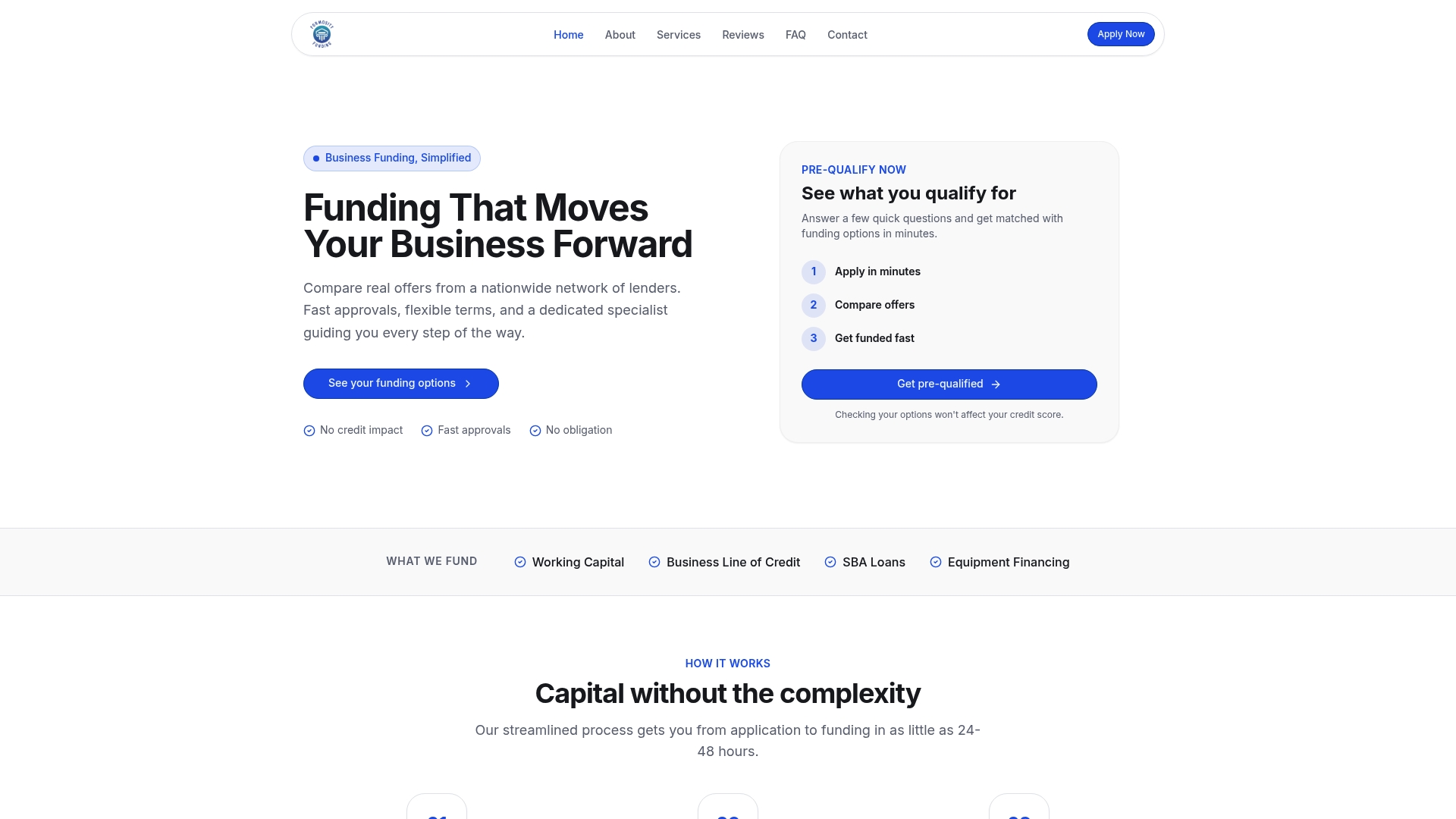
If you own property and want to explore another route, we also offer a Business HELOC. To see all the funding options in one place, visit our funding services page. For a closer look at what lenders will check once you apply, read how to increase business loan approval odds and which document decides a working capital approval.
FAQ
How long should I wait before asking for a higher limit?
Wait until the account has been open for at least six months, which is a threshold Forbes Advisor cites as improving your odds. Use that time to pay statements in full and let your revenue show up in the account. Waiting a few more months after a denial is also sensible.
Will asking for an increase hurt my credit?
It depends on how the lender reviews the request. Some use a soft inquiry, which does not affect your score, and others use a hard inquiry, which can lower it slightly. Ask your issuer or banker which one applies before you submit, and avoid stacking other credit applications in the same period.
What should I send with a limit increase request?
For a card, the request may be handled with no paperwork. For a line of credit or a large increase, send recent business bank statements, a profit and loss statement, and your latest tax return, as Bankrate describes in its list of typical documents. Add a short note explaining what the extra credit will fund.
What if my request is denied?
Read the reasons in the denial notice and fix the specific issue, whether that is utilization, account age, or documentation. Then ask for reconsideration or wait a few months and re-apply. If you need capacity sooner, a separate line of credit from another lender can add room without relying on the first lender's decision.
Is a higher limit always a good idea?
It is useful when you have a defined use for it and a repayment plan. Set a spending ceiling below the limit, watch utilization, and remember that a personal guarantee makes you responsible for the balance. Treat the limit as a safety margin, not a budget.
Sources
- What Is the Average Credit Limit for Business Credit Cards? (Forbes Advisor)
- Documents You Need For A Business Line Of Credit (Bankrate)
- Credit Card Payoff Calculator: Payment, Time and Interest Model