

Business loan preapproval is a lender's early, documented review of your company that tells you how much financing you are likely to receive and on what general terms. It sits between a quick prequalification and a final approval. It is not a guarantee, but it is the step that turns a rough estimate into a realistic plan. This guide shows what preapproval means, what lenders look at, how to prepare, and what still has to happen before money reaches your account.
TL;DR
- Prequalification is a fast estimate from basic details. Preapproval is a deeper review of your documents. Final approval and funding come after that.
- Neither prequalification nor preapproval guarantees a loan, so keep your documents current until closing.
- Lenders weigh your business's financial position, cash flow, credit and collateral. The mix depends on the lender and the loan size.
- SBA loans can be pursued the same way, but the lender still completes underwriting and SBA requirements before funding.
- Our pre-qualification has no credit impact, and our funding specialists help you assemble what lenders ask for.
Table of Contents
- What business loan preapproval means
- Prequalification vs. preapproval: which comes first
- What lenders review before they preapprove you
- How to prepare for business loan preapproval
- Does preapproval affect your credit?
- How long does preapproval take, and how long does it last?
- Can you get preapproved for an SBA loan?
- Can a startup get preapproved?
- What can change or cancel a preapproval
- Perspective: preapproval works best as a comparison tool
- Start with an offer you can compare
- Broker, marketplace or direct lender: where to ask
- FAQ
- Sources
What business loan preapproval means
Preapproval is a lender saying, based on the documents you have shown them, "you look like a fit for roughly this amount, subject to conditions." Lenders use different labels, so the word on the page matters less than what was reviewed.
As Experian explains, prequalification usually needs only basic information such as revenue and the amount you want, while preapproval involves a more in-depth review of documentation. It also notes that neither guarantees the loan will be approved.
Think of it as three stages:
| Stage | What you provide | What you get | Commitment |
|---|---|---|---|
| Prequalification | Basic facts: revenue, time in business, amount needed | An estimate of products and ranges you may fit | None |
| Preapproval | Tax returns, financial statements, bank statements, credit information | A conditional indication of amount and terms, often in writing | Conditional |
| Final approval and funding | Full application, updated documents, any collateral or insurance items | A signed agreement and disbursement | Binding once signed |
Terminology varies. Some lenders call their first soft screen "preapproval," and some call a full underwriting review "prequalification." Ask what was reviewed and what conditions remain.
Prequalification vs. preapproval: which comes first
Start with prequalification. It is quick, it shows which products suit your profile, and it lets you compare several paths without a lot of paperwork. When you are ready to move on one option, preapproval is the deeper step.
At Formosity Funding, our pre-qualification is designed to have no credit impact, so you can see real loan and credit offers across our lender network before you commit to a full application. If you want a checklist for that first step, our guide to the documents to prepare for business loan prequalification covers it.
Why the order helps:
- You avoid wasted effort. Gathering two years of financials for a product you do not fit is time lost.
- You can compare. Several offers side by side show you the real range of amounts and structures.
- You choose the product first. Working capital, a line of credit, equipment financing, SBA and commercial real estate loans all ask for different documents.
What lenders review before they preapprove you
Lenders are answering one question: can this business repay, and what protects the lender if it cannot? The weight they put on each factor depends on who they are.

The FDIC's Small Business Lending Survey shows this clearly. Most small banks (74 to 82 percent) named the business's financial position as the most important aspect of an application regardless of loan size. For a small loan, 59 percent of large banks pointed to credit bureau information as most important, against 11 percent of small banks.
In practice, expect lenders to look at:
- Business financial position. Revenue, profit, cash flow and existing debt, usually from financial statements and bank statements.
- Credit. Your personal credit history and, where it exists, your business credit profile.
- Time in business and experience. How long you have operated and what you know about your industry.
- Purpose and amount. What the funds are for and how that supports repayment.
- Collateral. What you could pledge. Our guide to what small businesses can pledge as collateral lists common options.
Is it hard to get a business loan?
It depends on the product and how prepared you are. Bank and SBA loans tend to carry the lowest rates but also the strictest criteria and longest processes, according to Experian. Other financing types, such as working capital or equipment financing, can fit a wider range of profiles. A marketplace helps here because one profile can be matched to several lender types instead of one lender's narrow box.
What makes the biggest difference is a clean, complete file. Our article on how to increase business loan approval odds walks through the practical levers, and common loan denial reasons shows what to fix before you apply.
How to prepare for business loan preapproval
The SBA's Lender Match guidance recommends that before you talk to lenders you have a business plan, know the amount and use of funds, understand your credit history, prepare financial projections, identify potential collateral and note your industry experience. That list works for most financing, not only SBA loans.

Step 1: Define the amount and the use
Write one sentence: "We need $X to do Y, and it will pay back through Z." Lenders respond to a specific purpose. A vague request invites a vague answer.
Step 2: Put the plan and projections on paper
A short business plan with realistic projections shows how the funds produce repayment. If you are starting from scratch, a beginner's guide to writing a business plan can help you structure it.
Step 3: Collect your core documents
A typical preapproval file includes:
- Business and personal tax returns (commonly the last two years)
- Profit and loss statement and balance sheet
- Recent business bank statements
- Debt schedule listing current obligations
- Business formation documents and licenses
- Identification for the owners
- Accounts receivable aging, if you invoice customers
Lenders differ, so treat this as a starting set. For a fuller breakdown, see our guides to the nine documents that avoid underwriting delays and general small business loan requirements. If you want to understand how lenders read these papers, this explanation of due diligence documents lenders review adds useful context.
Step 4: Check your credit before a lender does
Pull your own personal and business credit reports and fix errors early. Know your score and the story behind any late payment, because you may be asked to explain it.
Step 5: Identify collateral and any guarantor
Know what you could pledge, such as equipment, receivables, inventory or real estate. Some loans ask for a personal guarantee. Knowing your position in advance keeps negotiation calm.
Step 6: Apply to the right product
Match the product to the need. A short-term cash flow gap points toward working capital or a line of credit. A machine purchase points toward equipment financing. A property purchase points toward commercial real estate financing. If you are unsure, our funding specialists can help you sort this out on our funding options page.
Does preapproval affect your credit?
It depends on how the lender checks it. A soft inquiry does not affect your credit score, while a hard inquiry can. Experian describes prequalification checks as soft inquiries that do not affect the score. Formal underwriting at the final application stage can involve a hard credit check, so ask each lender which type they run and when before you agree.
Our own pre-qualification is designed to have no credit impact, which is why we suggest starting there.
How long does preapproval take, and how long does it last?
Timelines depend on the lender, the product and how complete your file is. A prequalification can come back quickly because it rests on basic information. A document-based preapproval takes longer because someone has to read and verify your papers.
The validity window also varies. Preapproval letters are typically conditional and tied to the figures you submitted, so ask for the expiration date in writing. If your bank balances, revenue or debt change materially, expect the lender to ask for updated documents.
You can shorten the wait by sending everything at once, in clear files, with consistent names and figures across documents. Our piece on documents that speed funding through loan matching platforms shows how.
Can you get preapproved for an SBA loan?
Yes, in the sense that you can get early lender feedback and a conditional indication before the full process. SBA loans are made by participating lenders, so the lender does the review. The SBA's 7(a) page says applicants must be an operating, for-profit business located in the U.S., meet SBA size standards, not be an ineligible business type, and be creditworthy with a reasonable ability to repay.
If you do not yet have a lender, the SBA's Lender Match tool says it prepares a summary of interested lenders two business days after you submit a request.
What still has to happen after an SBA preapproval:
- A full application with complete documentation
- Lender underwriting and SBA program checks
- Collateral steps and any required insurance
- Closing documents, then disbursement
SBA lenders also set their own credit expectations. Our article on SBA loan credit scores since March 1, 2026 explains what lenders now look for. Plan for a longer timeline than for other products, and build it into your cash flow plan.
Can a startup get preapproved?
A startup can start the conversation, and some financing types are built with newer businesses in mind. The documents shift toward what you can show: a clear business plan, projections, the owner's personal credit and finances, relevant experience and any collateral. Some programs ask for a minimum operating history, for example the SBA's Working Capital Pilot, which lists at least one year of operating history among the traits of a good fit on the SBA 7(a) page.
If you are still before launch, we offer startup funding among our options. Tell your funding specialist your stage and what you can document, and they can point you to products that fit.
What can change or cancel a preapproval
Because preapproval is conditional, a lender can revise it when facts change. Common triggers:
- Updated financials that differ from what you submitted. Lower revenue or a weaker cash position may reduce the amount.
- New debt. Another loan or credit line changes your repayment capacity.
- A credit change. A late payment or new inquiry can matter.
- Collateral issues. An appraisal that comes in low, or a title problem.
- Missing conditions. Insurance, updated bank statements or other items on the letter.
- Inconsistent paperwork. Figures that do not match across tax returns, statements and the application.
The simple discipline: after preapproval, avoid new credit, keep your bank statements steady, answer lender requests the same day and tell your specialist about any material change before the lender finds it.
Perspective: preapproval works best as a comparison tool
Most owners treat preapproval as a hurdle. We see it as leverage. When you have a complete file and several real offers in front of you, you are no longer asking one lender for a favor. You are choosing.
That is why we built Formosity Funding as a marketplace. One pre-qualification, with no credit impact, connects you to a broad lender network, and our funding specialists guide you from the first form to funding. Working capital, lines of credit, SBA loans, equipment financing and commercial real estate each have different underwriting logic, and a single platform lets us match the product to the business instead of forcing the business into one product.
Our advice: prepare once, compare widely, and keep your documents fresh until closing.
Alvin
Start with an offer you can compare
If you are ready to see what you may qualify for, Formosity Funding gives you instant pre-qualification with no credit impact and access to multiple real loan and credit offers from a nationwide lender network. Our funding specialists help with documents and next steps.
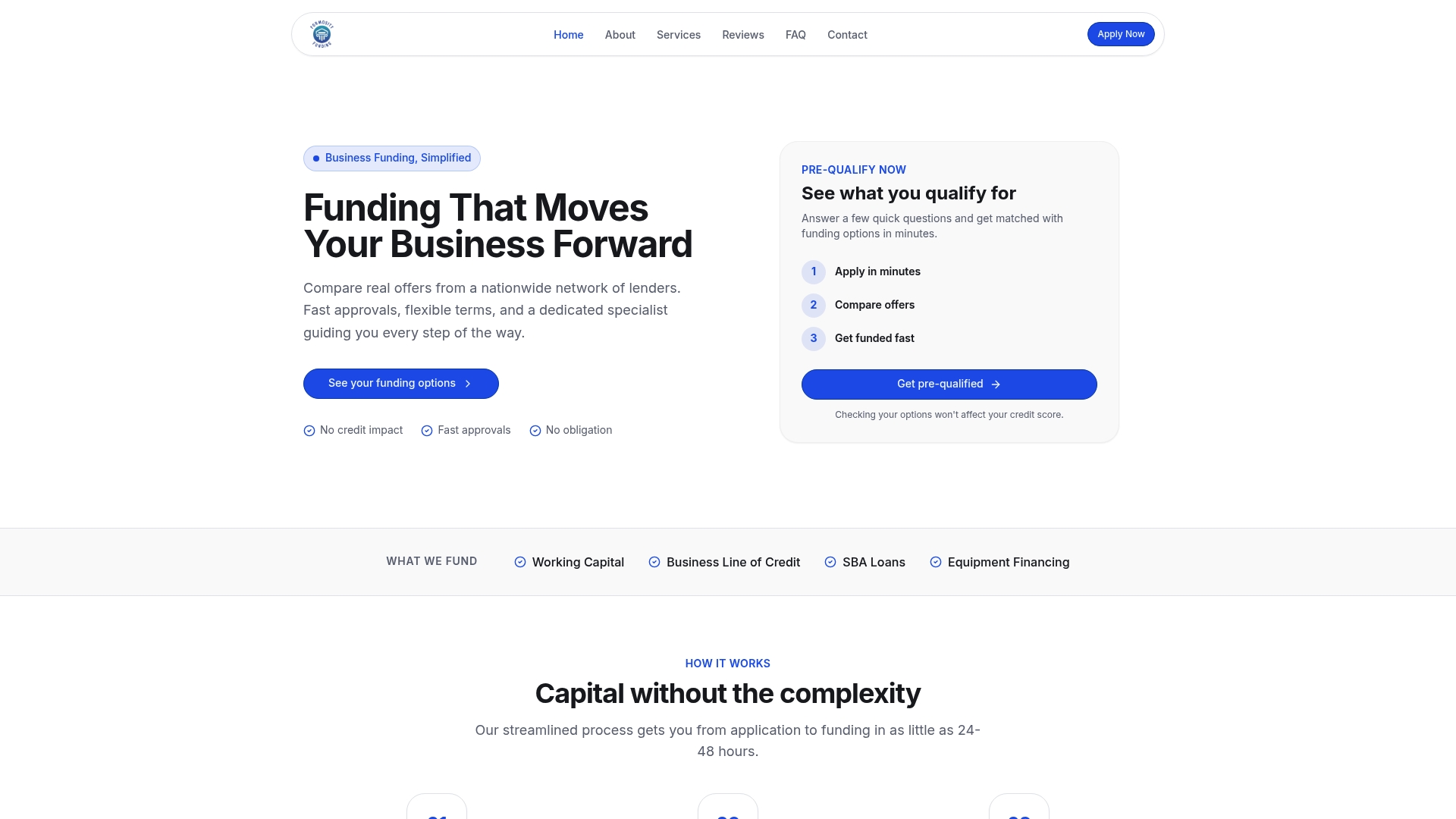
We cover working capital, business lines of credit, SBA loans, equipment financing and commercial real estate financing. See our funding options or start at formosityfunding.com. If you own property, our Business HELOC page explains another route.
Broker, marketplace or direct lender: where to ask
You can request preapproval directly from a bank or lender, or through a marketplace that sends one profile to many lenders. Going direct can make sense when you already have a banking relationship and know the product you want. A marketplace saves time when you want to compare structures and amounts. Our guide to choosing a business loan broker or direct lender lays out five steps for deciding.
If working capital is your need, see which document decides working capital approval.
FAQ
Is business loan preapproval the same as approval?
No. Preapproval is a conditional indication based on the documents reviewed so far. Final approval comes after full underwriting and satisfaction of the lender's conditions. Experian notes that neither prequalification nor preapproval guarantees a loan.
Will getting preapproved hurt my credit score?
That depends on the check the lender runs. Soft inquiries do not affect your score, and hard inquiries can. Our pre-qualification is designed to have no credit impact, and you should ask any other lender which type they use before you proceed.
What do I need to get preapproved?
Bring a clear loan purpose and amount, a business plan or projections, tax returns, financial statements, bank statements, credit information and a list of potential collateral. The SBA recommends preparing most of these before you talk to lenders.
Can I get preapproved for an SBA loan?
Yes, you can get early lender feedback, but SBA loans go through a participating lender's underwriting and SBA requirements before funding. Expect a longer process than with some other financing types and prepare a complete file.
Can a startup get preapproved for a business loan?
Often, yes, depending on the product. Newer businesses lean on a business plan, projections, owner credit and experience and collateral. Share your stage with a funding specialist so they can match you to suitable options.
Sources
- Experian: How to Get a Business Loan
- Experian: Prequalification
- FDIC: Small Business Lending Survey 2024, Section 3
- SBA: Lender Match
- SBA: 7(a) loans
- siift: How to Write Business Plans for First-Time Founders
- BabyLoveRaise: Due Diligence Documents